Bunni, Levite of the Public Confession
A Levite who led the Israelites in a loud, public cry to God during the national confession and covenant renewal following the return from Babylon.
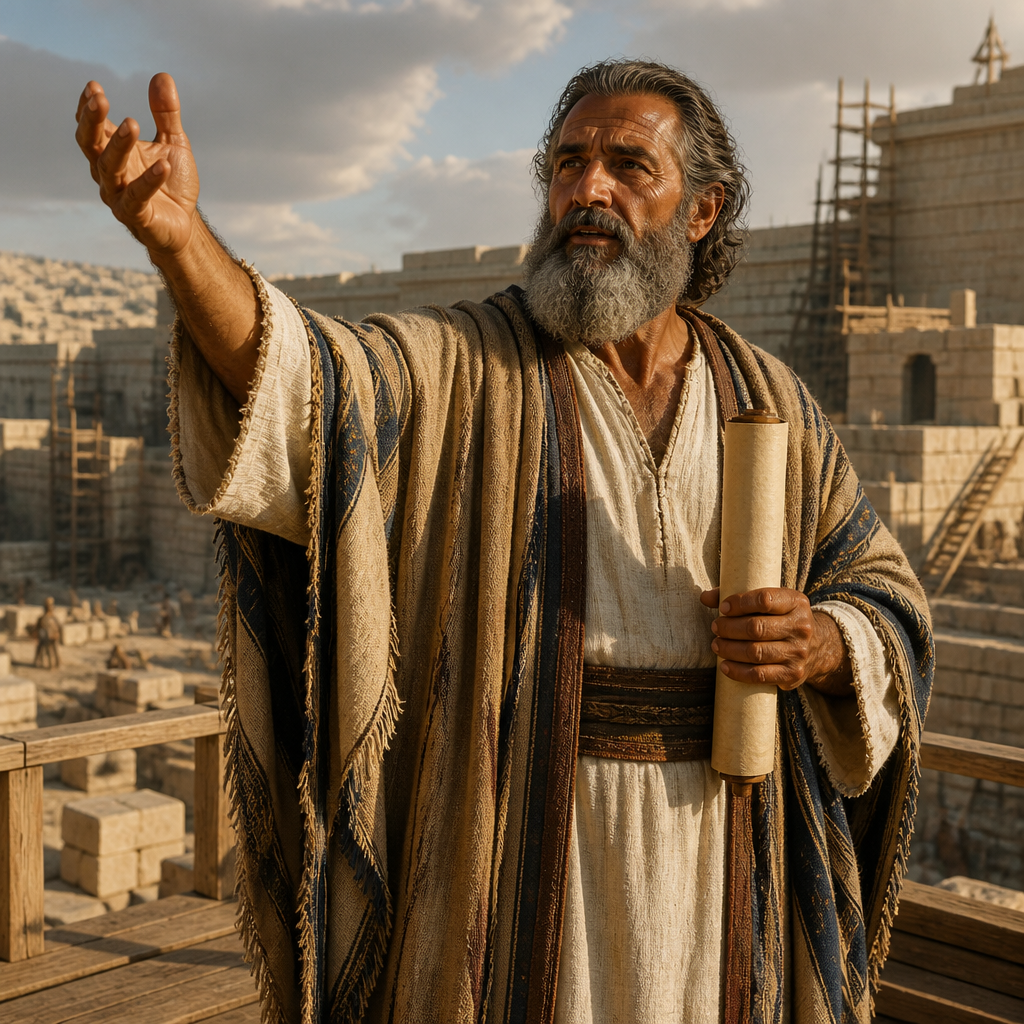
Bunni was a Levite who served during the Post-Exilic Period under the leadership of Nehemiah and Ezra. He is specifically identified in the biblical record for his participation in the solemn assembly held after the walls of Jerusalem had been rebuilt. During this pivotal moment in Jewish history, Bunni stood among a selected group of Levites to facilitate a communal spiritual awakening.
His role was centered on the public reading of the Law and the subsequent national prayer of confession. Bunni was one of the few named individuals tasked with standing on a 'raised platform' to lead the congregation in a loud, heartfelt petition to the LORD, marking the beginning of one of the most significant liturgical prayers in the Old Testament.
Background and Family
Bunni was a member of the tribe of Levi, the priestly class responsible for the spiritual maintenance of Israel and the service of the Temple. His specific family lineage is not detailed in the verse where he appears; he is defined strictly by his office and his participation in the national assembly of 444 BC. He was part of the generation that returned from the Babylonian Exile, a time characterized by the restoration of Jewish identity and the reconstruction of the religious infrastructure in Jerusalem.
Major Life Events
Bunni’s singular mention occurs in the context of the Feast of Tabernacles and the day of fasting that followed. According to Nehemiah 9, the Israelites gathered with fasting, sackcloth, and dust on their heads to separate themselves from foreigners and confess their sins.
Bunni, alongside other prominent Levites such as Jeshua, Bani, and Kadmiel, stood on a 'raised platform' (or stairs). From this elevated position, he 'cried out in a loud voice to the LORD their God' (Nehemiah 9:4). This was not a private prayer but a communal act of intercession, leading the people into a deep historical review of God’s faithfulness and Israel’s repeated rebellion. This event culminated in the signing of a binding agreement to walk in God’s Law.
Relationship to Other Biblical Figures
Bunni served alongside a specific cadre of Levites listed in Nehemiah 9:4, including Jeshua, Bani, Kadmiel, Shebaniah, Sherebiah, and Chenani. These men acted as the spiritual bridge between the civil leadership of Nehemiah and the priestly teaching of Ezra. Though no specific family ties are recorded for this particular Bunni, his proximity to Jeshua and Kadmiel suggests he held a position of recognized authority within the Levitical hierarchy of the restoration period.
Spiritual Significance
Bunni represents the role of the spiritual facilitator. His contribution was his 'loud voice,' which served to vocalize the repentance of a broken nation. In the narrative of Nehemiah, Bunni’s actions signify the necessity of public confession and the importance of leadership in guiding a community back to its foundational scriptures. He stands as a witness to the transition of Israel from a dispersed people back into a covenant-keeping nation centered on the worship of Yahweh.
Spiritual Significance
Bunni's significance lies in his role as a catalyst for national repentance. By standing on the platform and crying out to God, he helped bridge the gap between the formal reading of the Law and the people's emotional and spiritual response. His inclusion by name in the record of Nehemiah highlights the importance of the Levites in maintaining the liturgical and prayer life of the Second Temple period.
Furthermore, Bunni is a representative of the 'remnant'—those who returned from exile to rebuild not just physical walls, but the spiritual character of the people. His life, though briefly recorded, underscores the biblical theme that God uses specific individuals to lead the community in returning to Him through prayer and confession.
Frequently Asked Questions
What does the name Bunni mean?
The name Bunni is of Hebrew origin, likely meaning 'built' or 'my building,' sharing a root with other names like Bani.
What specific action did Bunni take in the Bible?
Bunni stood on a raised platform with other Levites and cried out in a loud voice to the LORD during a day of national fasting and confession.
When did Bunni live?
Bunni lived during the Post-Exilic Period, specifically during the time of Nehemiah and Ezra in the mid-5th century BC.
Was Bunni a priest?
While he was a Levite, the text specifically identifies him as a Levite involved in the public service and confession, rather than one of the high priests.
In which book of the Bible is Bunni mentioned?
This specific Bunni is mentioned only in the book of Nehemiah, specifically in chapter 9.
Connected Figures
Categories
Mentions by Book
- Nehemiah1
Others Named Bunni
Bunni, Ancestor of ShemaiahNehemiah 11:15
A Levite whose descendant Shemaiah was a prominent leader among the Jewish exiles who resettled in Jerusalem during the Post-Exilic period.
Bunni, Signer of the CovenantNehemiah 10:15
A leader or representative of the Jewish people who signed Nehemiah’s binding covenant to keep the Law of Moses during the Post-Exilic period.