Ram, Son of Jerahmeel
Who was Ram, Son of Jerahmeel, in the Bible?
The firstborn son of Jerahmeel within the Tribe of Judah and the father of Maaz, Jamin, and Eker during the Egypt and Wilderness era.
This is one of 3 people named Ram in the Bible. See all 3 →
Ram was a member of the Tribe of Judah, specifically belonging to the influential Jerahmeelite clan. As the firstborn son of Jerahmeel, who was himself the firstborn of Hezron, Ram held a position of genealogical priority within his immediate family line. His existence and lineage are documented exclusively in the chronicler’s records, which trace the complex ancestral heritage of the southern tribes of Israel.
His life is situated during the broader era of the Egypt and Wilderness era, though the biblical record focuses solely on his placement within the tribal registry rather than his personal exploits. He is primarily recognized as a link in the preservation of the Jerahmeelite heritage, ensuring the continuity of the clan through his three sons. While his presence in the text is brief, he represents the administrative and familial organization that characterized the early history of Judah.
Background and Family
Ram appears in the genealogical records of the Tribe of Judah, specifically within the lineage of Hezron. According to 1 Chronicles 2:25, he was the firstborn son of Jerahmeel. His grandfather, Hezron, was one of the foundational figures of the Judean tribe, having entered Egypt with Jacob. By the time of the Egypt and Wilderness era, when these records were synthesized, the Jerahmeelites represented a significant sub-group within the Judean territory, often occupying the southern regions known as the Negeb of the Jerahmeelites.
Ram was born to Jerahmeel and an unnamed wife. The text identifies several of his siblings, including Bunah, Oren, Ozem, and Ahijah. As the eldest son, Ram occupied the traditional role of the firstborn, which in ancient Israelite culture typically included a double portion of the inheritance and the responsibility of leading the family unit upon the father's passing.
Major Life Events
The biblical narrative does not record specific deeds, speeches, or military actions for Ram. His life is defined by his inclusion in the sacred registers of Israel. 1 Chronicles 2:27 records that Ram became the father of three sons: Maaz, Jamin, and Eker. Through these children, the line of the firstborn Jerahmeelites was extended into subsequent generations. The mention of these specific names suggests that his descendants were likely established families or heads of households within the Judean community during the transition toward the centralized monarchy of David and Solomon.
Relationship to Other Biblical Figures
Ram’s primary significance lies in his connections to the broader Hezronite family tree. While he is the firstborn of Jerahmeel, he is part of a larger tribal structure that includes the families of Caleb and Ram (the son of Hezron, his uncle). These interlocking lineages define the social and political fabric of the Tribe of Judah. Within his immediate nuclear family, he is distinguished from his half-brother Onam, who was the son of Jerahmeel by another wife named Atarah. This distinction highlights the internal divisions and branches that existed even within a single patriarch's household.
Spiritual Significance
Though Ram is a minor figure in terms of narrative weight, his inclusion in the Chronicles serves a specific theological purpose. The Chronicler sought to demonstrate the continuity and legitimacy of the people of Israel following the Babylonian exile. By meticulously recording names like Ram, Maaz, Jamin, and Eker, the text affirms that God had preserved the specific families of Judah throughout the centuries.
Ram represents the quiet continuity of the covenant people. Not every individual in the biblical record is called to be a king or a prophet; many, like Ram, serve as the essential biological and cultural bridges that allow the promise of God to move from one generation to the next. His presence in the scripture validates the importance of family heritage and the divine oversight of the tribal structures that eventually produced the Davidic line.
Ram serves as a primary genealogical link in the Jerahmeelite branch of the Tribe of Judah. His inclusion in the records of 1 Chronicles highlights the importance of the 'firstborn' status and the meticulous preservation of tribal identities during the Egypt and Wilderness era.
Frequently Asked Questions
Who was Ram's father?
Ram was the firstborn son of Jerahmeel, who was the son of Hezron from the Tribe of Judah.
Did Ram have any children?
Yes, according to 1 Chronicles 2:27, Ram was the father of three sons: Maaz, Jamin, and Eker.
Who were Ram's brothers?
Ram's brothers included Bunah, Oren, Ozem, and Ahijah, as well as his half-brother Onam.
Where is Ram mentioned in the Bible?
Ram is mentioned in the genealogical records of 1 Chronicles 2:25 and 1 Chronicles 2:27.
What tribe did Ram belong to?
Ram belonged to the Tribe of Judah, specifically the Jerahmeelite clan.
Family & Relationships
Parents
 Jerahmeel, Son of HezronFather1 Chronicles 2:25Stated
 AtarahMother1 Chronicles 2:26Stated
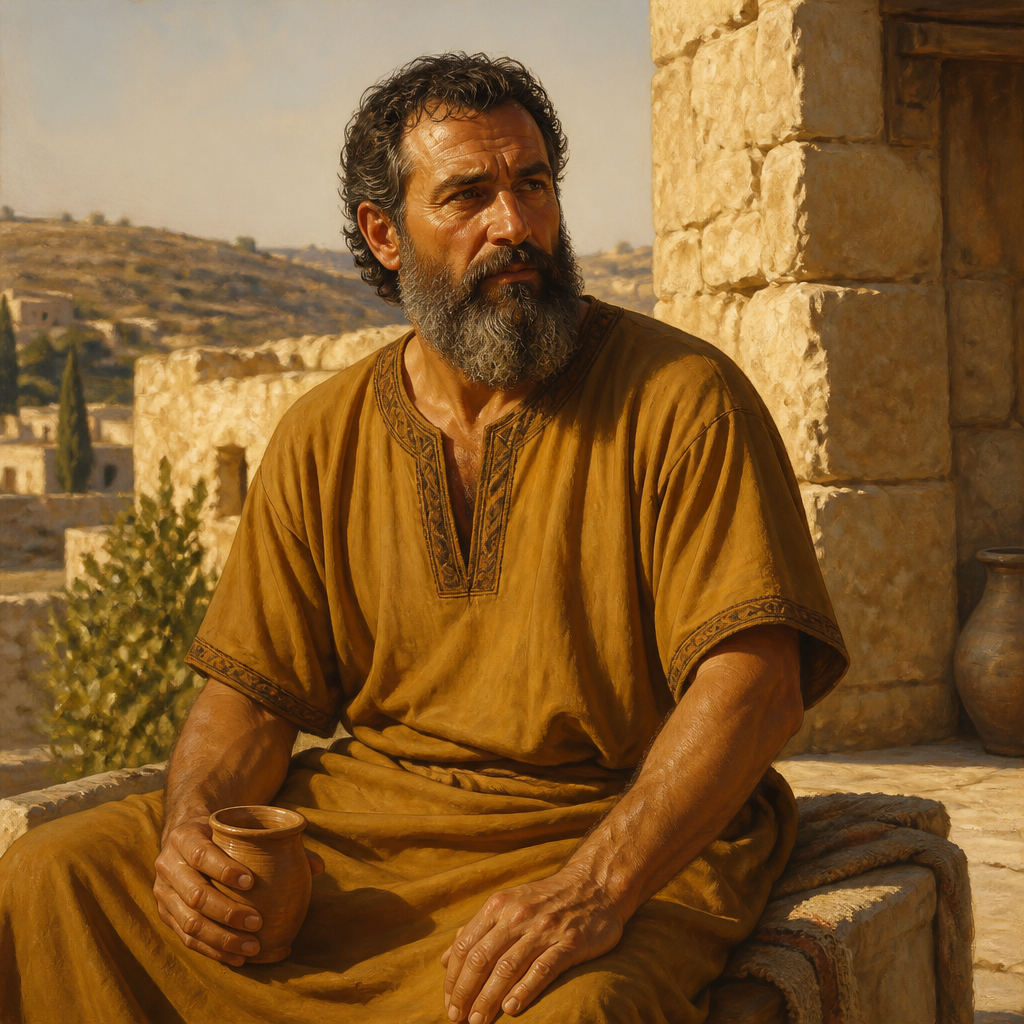 Ram, Son of JerahmeelThis page
 Ahijah, Son of JerahmeelBrother1 Chronicles 2:25Stated
 BunahBrother1 Chronicles 2:25Stated
 Onam, Son of JerahmeelBrother1 Chronicles 2:25Stated
 OrenBrother1 Chronicles 2:25Stated
 Ozem, Son of JerahmeelBrother1 Chronicles 2:25Stated
Children
 EkerSon1 Chronicles 2:27Stated
 Jamin, Son of RamSon1 Chronicles 2:27Stated
 MaazSon1 Chronicles 2:27Stated
Connected Figures
Family
Father · 1 Chronicles 2:25
The firstborn son of Hezron and a significant clan founder within the tribe of Judah, whose descendants occupied the southern Negev region.
Mother · 1 Chronicles 2:26
Atarah was a wife of Jerahmeel and the mother of Onam within the genealogical records of the Tribe of Judah during the Egypt and Wilderness era.
Egypt and WildernessFirst: 1 Chronicles 2:262 versesMatriarchJudah
Son · 1 Chronicles 2:27
A descendant of Judah through the line of Jerahmeel, identified as the son of Ram in the genealogical records of the Egypt and Wilderness era.
Son · 1 Chronicles 2:27
A descendant of Judah through the line of Jerahmeel, identified as the second son of Ram during the Egypt and Wilderness era.
Son · 1 Chronicles 2:27
A member of the tribe of Judah and the house of Jerahmeel during the Egypt and Wilderness era.
Brother · 1 Chronicles 2:25
A descendant of the tribe of Judah and the house of Hezron during the Egypt and Wilderness era.
Brother · 1 Chronicles 2:25
Bunah was a member of the Tribe of Judah and a son of Jerahmeel, documented within the genealogical records of the Egypt and Wilderness era.
Brother · 1 Chronicles 2:25
A descendant of Judah through the line of Jerahmeel, recognized in biblical genealogies as the father of Shammai and Jada.
Brother · 1 Chronicles 2:25
Oren was a descendant of the tribe of Judah and a son of Jerahmeel, documented within the genealogical records of the Egypt and Wilderness era.
Brother · 1 Chronicles 2:25
Ozem was a descendant of Judah through the line of Jerahmeel, recorded in the genealogies of 1 Chronicles during the Egypt and Wilderness era.
Mentions by Book
- 1 Chronicles3
Scripture References
All 3 indexed verses, in canonical order, from the Berean Standard Bible.
1 Chronicles · 3
- 1 Chronicles 2:25
The sons of Jerahmeel the firstborn of Hezron: Ram his firstborn, Bunah, Oren, Ozem, and Ahijah.
- 1 Chronicles 2:26Partial
Jerahmeel had another wife named Atarah, who was the mother of Onam.
Cited as evidence on a family card; added so References, Key Verses and Mentions by Book share one index.
- 1 Chronicles 2:27
The sons of Ram the firstborn of Jerahmeel: Maaz, Jamin, and Eker.
Others Named Ram
Compare all 3 bearers →Ram, Son of HezronRuth 4:19
A high-ranking member of the Tribe of Judah and a crucial link in the Davidic and Messianic genealogies, serving as the grandfather of Nahshon.
Ram, Ancestor of ElihuJob 32:2
A patriarch mentioned in the Book of Job as the head of a family from which Elihu the Buzite descended.