Eliasaph son of Deuel, Prince of Gad
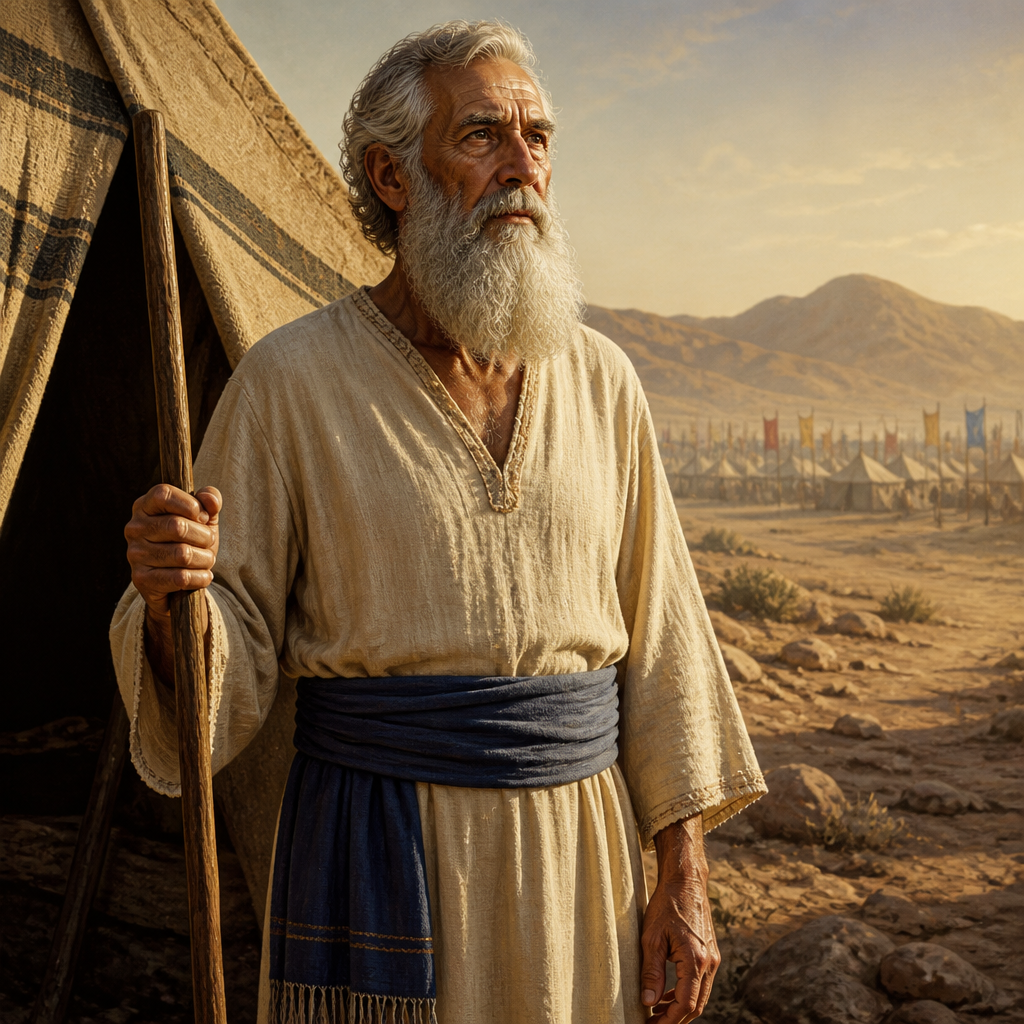
Eliasaph son of Deuel was the tribal leader and military commander of the tribe of Gad during the Israelite wandering in the wilderness.
Eliasaph, the son of Deuel, was a prominent tribal leader of the Gadites during the early years of the Israelite Exodus from Egypt. As the appointed prince (nasi) of his tribe, he functioned as a primary administrative and military authority under the leadership of Moses. His name, which translates roughly to 'God has added,' reflects the naming conventions of the period that emphasized divine providence.
Eliasaph’s role was established shortly after the Exodus, specifically during the first census at Mount Sinai. As the head of the tribe of Gad, he was responsible for the organization, census-taking, and logistical movement of his people. His presence in the biblical narrative is confined to the Book of Numbers, where he represents the south-western camp of Israel during their journey through the desert toward the Promised Land.
Background and Family
Eliasaph was the son of Deuel (identified in some manuscripts as Reuel) and a member of the tribe of Gad. The tribe of Gad descended from the seventh son of Jacob, born to Zilpah, Leah’s handmaid. By the time of the Exodus, Gad had grown into a significant military force within the congregation of Israel. Eliasaph appears in the biblical record during the second year after the Israelites left Egypt, around 1445 BC.
His family lineage placed him at the head of one of the tribes assigned to the southern side of the Tabernacle. In the camp hierarchy, the tribe of Gad served under the standard of the tribe of Reuben, alongside the tribe of Simeon. As the leader of this group, Eliasaph would have been a man of significant status, likely an elder who possessed the respect and authority required to govern thousands of clansmen.
Major Life Events
Eliasaph’s service is documented through several key administrative and liturgical events in the wilderness:
The First Census
In Numbers 1, God commanded Moses to take a census of all men twenty years old and upward who were able to go to war. Eliasaph was specifically named as the representative for the tribe of Gad to assist Moses and Aaron in this task (Numbers 1:14). Under his supervision, the tribe of Gad was numbered at 45,650 men, making it a substantial component of Israel’s total fighting force.
The Dedication of the Altar
One of the most significant recorded acts of Eliasaph occurred during the dedication of the Tabernacle altar. Each of the twelve tribal leaders brought an identical, lavish offering to the Lord over a twelve-day period. Eliasaph presented his offering on the sixth day (Numbers 7:42).
His offering was one silver plate weighing a hundred and thirty shekels, and one silver sprinkling bowl weighing seventy shekels... both filled with fine flour mixed with oil for a grain offering; one gold dish weighing ten shekels, filled with incense; one young bull, one ram, and one male lamb a year old, for a burnt offering; one male goat for a sin offering; and for the sacrifice of a peace offering: two oxen, five rams, five male goats, and five male lambs a year old. (Numbers 7:43–47)
Military Leadership
Eliasaph is further identified as the commander of the division of the tribe of Gad (Numbers 10:20). When the Cloud of Glory lifted from the Tabernacle, signaling the camp to move, the tribes marched in a specific order. Eliasaph led the Gadites as they followed the divisions of Reuben and Simeon, providing protection and order for the central components of the Tabernacle during transit.
Relationship to Other Biblical Figures
Eliasaph worked directly under the leadership of Moses and Aaron. As one of the twelve princes of Israel, he was a peer to other notable leaders such as Nahshon son of Amminadab (tribe of Judah) and Elishema son of Ammihud (tribe of Ephraim). His relationship with his father, Deuel, is the only genealogical connection provided, identifying him as part of a recognized noble line within the Gadite tribal structure.
Spiritual Significance
Eliasaph represents the principle of orderly service and tribal accountability within the early community of faith. His repeated mentions in the context of the census and the dedication of the altar highlight the importance of individual tribal identities contributing to a unified national purpose. His specific offering in Numbers 7 demonstrates a commitment to the sacrificial system and the support of the Levites, who were tasked with the physical transport of the Tabernacle items that Eliasaph’s division guarded.
Spiritual Significance
Eliasaph’s primary significance lies in his role as a foundational leader during the formation of Israel as a structured nation. He exemplifies the 'prince' (nasi) figure who bridges the gap between the supreme leadership of Moses and the individual families of his tribe. By overseeing the census and providing for the altar, he ensured that the tribe of Gad remained spiritually and numerically integrated into the covenant community.
Furthermore, his leadership over the 'division' of Gad emphasizes the military readiness required of the Israelites during the wilderness wandering. While he is not the subject of personal narrative drama, his consistent presence in the administrative records of Numbers underscores the biblical value placed on logistical faithfulness and the organized worship of God.
Frequently Asked Questions
Which tribe did Eliasaph lead?
Eliasaph was the leader (prince) of the tribe of Gad.
Who was Eliasaph’s father?
He was the son of Deuel (referred to as Reuel in some contexts like Numbers 2:14).
What was Eliasaph's role during the wilderness journey?
He was the head of the tribal division of Gad, responsible for census-taking, leading the tribe during marches, and presenting offerings for the Tabernacle.
When did Eliasaph present his offering at the Tabernacle?
He presented his offering on the sixth day of the dedication of the altar.
How many soldiers were in the tribe of Gad under Eliasaph?
According to the census in Numbers 1, there were 45,650 men able to go to war.
Connected Figures
Categories
Mentions by Book
- Numbers5
Family & Relationships
Parent
Numbers 1:14
Others Named Eliasaph son of Deuel
Eliasaph son of LaelNumbers 3:24
A Levite leader of the Gershonite families appointed to manage the sanctuary during the Israelite wilderness wanderings.