Beor, Father of Balaam
Who was Beor, Father of Balaam, in the Bible?
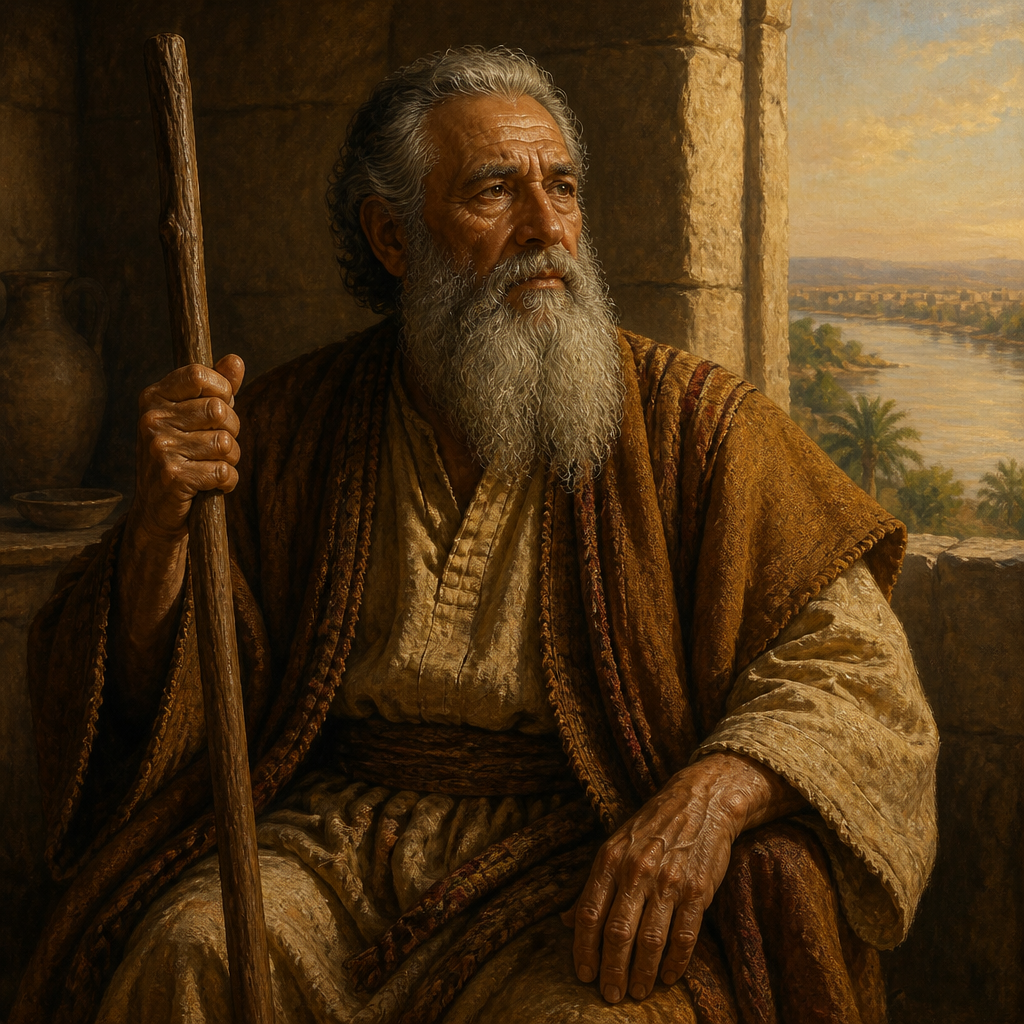
Beor was the father of the Mesopotamian diviner Balaam and a resident of Pethor during the period of the Israelite wilderness wanderings.
This is one of 2 people named Beor in the Bible. See all 2 →
Beor is a figure mentioned in the Old Testament primarily as the father of Balaam, the prophet or diviner hired by Balak of Moab to curse the Israelites. While Beor does not appear as an active participant in the narratives of the Exodus or the conquest of Canaan, his name is consistently invoked to identify his son, Balaam, across several books of the Bible. He is associated with the region of Pethor, located near the Euphrates River in Upper Mesopotamia (Aram-naharaim).
Historically and geographically, Beor represents a lineage of spiritual practitioners outside the covenant community of Israel. His identity is firmly rooted in the landscape of the ancient Near East during the 15th or 13th century BC (depending on the dating of the Exodus). Although the biblical text provides no details regarding Beor’s own deeds or character, the repetitive use of his name suggests a lineage of some standing or recognition in the region of Midian and Moab.
Background and Family
Beor resided in Pethor, a location described in Numbers 22:5 as being "by the Euphrates in the land of his people." This area, also referred to as Aram-naharaim in Deuteronomy 23:4, was a significant cultural and religious hub in Upper Mesopotamia. While the Bible does not explicitly state Beor’s occupation, he is the patriarch of a family that achieved international renown for divination and prophetic oracles.
His primary biblical footprint is established through his son, Balaam. In the ancient Near Eastern context, a man's identity was inextricably linked to his father’s name, and Beor is mentioned nine times in the biblical record, almost exclusively as a patronymic identifier for Balaam. This consistent identification—"Balaam son of Beor"—serves to distinguish this specific diviner from others and perhaps to denote a specific school or tradition of Mesopotamian seer-craft.
Major Life Events
Because the biblical record focuses on the interaction between the Israelites and his son, there are no recorded events in which Beor himself acts. However, his presence is felt through the geographic and social setting of his household. When Balak, the king of Moab, sought to curse the rising power of Israel, he sent messengers to the home of Beor in Pethor (Numbers 22:5).
Beor’s legacy is ultimately colored by the tragic end of his lineage in the plains of Moab. During the final stages of the wilderness journey, the Israelites engaged in a war against the Midianites. During this conflict, Balaam son of Beor was executed by the sword (Numbers 31:8; Joshua 13:22). While Beor’s own death is not recorded, the biblical narrative concludes the story of his house with the judgment falling upon his son for leading Israel into the idolatry of Baal-Peor.
Relationship to Other Biblical Figures
The most significant relationship recorded for Beor is that with his son, Balaam. The relationship is one of lineage and perhaps professional inheritance, as Balaam is referred to as a "diviner" (Joshua 13:22). Beor is also indirectly linked to Balak, the King of Moab, who communicated with Beor’s household to secure spiritual services against the Israelites.
In the New Testament, the apostle Peter refers back to the lineage of Beor when discussing false teachers. In 2 Peter 2:15, the text mentions "Balaam son of Beor, who loved the wages of wickedness," linking the name of Beor to a cautionary tale of greed and spiritual compromise. This indicates that even centuries later, the identity of Beor remained the standard genealogical marker for one of the Bible's most complex and controversial figures.
Spiritual Significance
Beor serves as a marker of the "other"—the nations and traditions existing alongside Israel during the Exodus. The fact that God spoke to a man from the house of Beor (Balaam) indicates that during the wilderness period, divine communication was not strictly limited to the camp of Israel, though it was uniquely directed toward Israel's protection.
In the prophetic book of Micah, the dialogue between Balak and the son of Beor is recalled as a testament to the "righteousness of the LORD" (Micah 6:5). Here, Beor’s name is part of a liturgical remembrance of how God turned a potential curse into a blessing. The theological weight of Beor’s name lies in its association with the "way of Balaam." While Beor himself is not condemned, his name becomes synonymous with a household that encountered the living God but ultimately perished due to a preference for political gain and pagan influence over obedience to Yahweh.
Beor’s theological significance is primarily genealogical and contextual. He represents the ancestral source of Balaam, a figure who stands as a prototype for the 'false prophet' in both the Old and New Testaments. By providing a specific father and location (Pethor) for Balaam, the biblical text grounds the narrative in historical reality, emphasizing that the obstacles Israel faced were not merely spiritual but originated from specific families and regions in the ancient world.
Furthermore, the mention of Beor in the New Testament (2 Peter 2:15) reinforces the longevity of his identity in the biblical canon. He is used to anchor the historical reality of Balaam’s error. Beor’s presence in the text ensures that the reader understands Balaam as a real individual with a specific heritage, making the lessons drawn from his son’s life more tangible and grounded in the history of the Egyptian Sojourn and Wilderness era.
Frequently Asked Questions
Where did Beor live?
Beor lived in Pethor, which was located by the Euphrates River in the region of Aram-naharaim (Upper Mesopotamia).
Was Beor an Israelite?
No, Beor was not an Israelite. He lived in Mesopotamia and was likely of Aramean or Midianite cultural affiliation.
What was Beor's occupation?
The Bible does not state Beor's occupation, though his son Balaam was a well-known diviner and seer, suggesting a family tradition in these practices.
Is Beor mentioned in the New Testament?
Yes, Beor is mentioned in 2 Peter 2:15 in the context of identifying his son, Balaam.
What does the name Beor mean?
The name Beor (Hebrew: Be'or) is often translated to mean 'burning' or 'torch,' though its exact etymological significance in the narrative is not explicitly discussed in scripture.
Family & Relationships
 Beor, Father of BalaamThis page
Children
 BalaamSonNumbers 22:5Stated
Connected Figures
Family
Son · Numbers 22:5
A non-Israelite diviner and son of Beor who, despite hearing the voice of God, attempted to curse Israel for profit and later led them into apostasy.
Egypt and WildernessFirst: Numbers 22:561 versesDiviner and Prophet
Categories
Mentions by Book
- Numbers4
- Deuteronomy1
- Joshua2
- Micah1
- 2 Peter1
Scripture References
All 9 indexed verses, in canonical order, from the Berean Standard Bible.
Numbers · 4
- Numbers 22:5
he sent messengers to summon Balaam son of Beor at Pethor, which is by the Euphrates in the land of his people. “Behold, a people has come out of Egypt,” said Balak. “They cover the face of the land and have settled next to me.
- Numbers 24:3
and he lifted up an oracle, saying: “This is the prophecy of Balaam son of Beor, the prophecy of a man whose eyes are open,
- Numbers 24:15
Then Balaam lifted up an oracle, saying, “This is the prophecy of Balaam son of Beor, the prophecy of a man whose eyes are open,
- Numbers 31:8
Among the slain were Evi, Rekem, Zur, Hur, and Reba—the five kings of Midian. They also killed Balaam son of Beor with the sword.
Deuteronomy · 1
- Deuteronomy 23:4
For they did not meet you with food and water on your way out of Egypt, and they hired Balaam son of Beor from Pethor in Aram-naharaim to curse you.
Joshua · 2
- Joshua 13:22
The Israelites also killed the diviner Balaam son of Beor along with the others they put to the sword.
- Joshua 24:9
Then Balak son of Zippor, the king of Moab, set out to fight against Israel. He sent for Balaam son of Beor to curse you,
Micah · 1
- Micah 6:5
My people, remember what Balak king of Moab counseled and what Balaam son of Beor answered. Remember your journey from Shittim to Gilgal, so that you may acknowledge the righteousness of the LORD.’”
2 Peter · 1
- 2 Peter 2:15
They have left the straight way and wandered off to follow the way of Balaam son of Beor, who loved the wages of wickedness.
Others Named Beor
Compare all 2 bearers →Beor, Father of King BelaGenesis 36:32
An early Edomite patriarch recognized as the father of Bela, the first recorded king to rule in the land of Edom.