Ammishaddai
Who was Ammishaddai in the Bible?
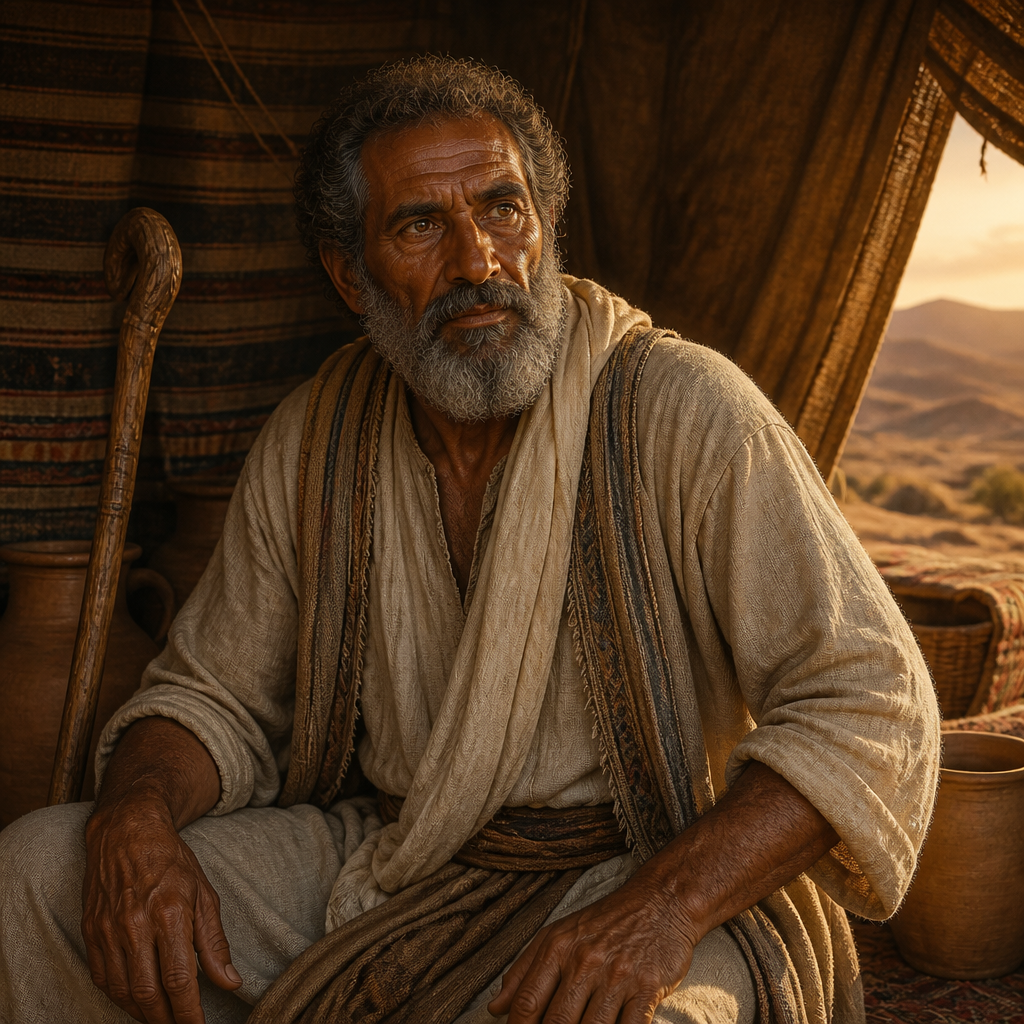
Ammishaddai was a member of the Tribe of Dan during the Exodus and the father of the tribal prince Ahiezer.
Ammishaddai was a figure of the Tribe of Dan who lived during the pivotal era of the Egyptian Sojourn and the subsequent Exodus. While he does not appear as a direct participant in the narrative actions recorded in the Pentateuch, he is identified as a patriarch of high status within his tribe, specifically as the father of Ahiezer, who served as the chief and prince of the Danites during the wilderness wanderings.
His name is significant in Hebrew onomastics, as it incorporates the divine title 'Shaddai' (Almighty), suggesting a family heritage of devotion to the God of the patriarchs even during the period of Egyptian servitude. He is mentioned exclusively in the Book of Numbers, serving as a genealogical marker for the leadership of one of Israel’s largest tribal divisions.
Background and Family
Ammishaddai was a descendant of Dan, the son of Jacob and Bilhah. He lived during the transition from the Israelite oppression in Egypt to the establishment of the nation in the wilderness under the leadership of Moses. Although the biblical text does not provide the names of his ancestors or his specific lifespan, his position is firmly established through his son, Ahiezer. In the social structure of ancient Israel, a man’s status was often reflected in the leadership roles assumed by his progeny. As the father of the 'prince' (Hebrew: nasi) of the tribe, Ammishaddai would have been a man of considerable standing among the Danite clans.
The name Ammishaddai (עַמִּישַׁדָּ֑י) is often translated by scholars as 'people of the Almighty' or 'my kinsman is the Almighty.' This is one of the few instances in the early biblical record where the divine name Shaddai is used as a component of a personal name. This suggests that the theological traditions of the patriarchal period—specifically the revelation of God as El Shaddai to Abraham, Isaac, and Jacob—remained vibrant within Ammishaddai’s family line during the centuries spent in Egypt.
Major Life Events
While the biblical record does not describe Ammishaddai’s personal deeds, he is cited five times in the Book of Numbers to identify his son’s lineage and authority.
The First Census
Ammishaddai is first mentioned in Numbers 1:12 during the census taken in the Wilderness of Sinai. As God commanded Moses to count the men of war, Ahiezer son of Ammishaddai was appointed as the representative leader for the Tribe of Dan. This census established the military strength of the tribe, which at the time numbered 62,700 men.
The Tabernacle Offerings
Following the completion of the Tabernacle, the leaders of the twelve tribes brought offerings for its dedication. According to Numbers 7:66-71, Ahiezer son of Ammishaddai presented his tribe's offering on the tenth day. This ceremonial duty included the presentation of silver plates, bowls filled with fine flour and oil, and various animals for burnt offerings and peace offerings. In these liturgical records, the name of Ammishaddai is repeated to validate the legitimacy of the Danite leadership.
The Order of March
When the Israelites set out from Sinai to continue their journey toward Canaan, the tribes moved in a specific, divinely ordained order. The Tribe of Dan was designated as the 'rear guard' for all the units (Numbers 10:25). Ahiezer son of Ammishaddai was the commander of this significant division, placing the legacy of Ammishaddai at the literal conclusion of the massive Israelite caravan, ensuring the security of the people from behind.
Relationship to Other Biblical Figures
Ammishaddai’s primary biblical relationship is with his son, Ahiezer. As a tribal prince, Ahiezer worked directly under the authority of Moses and Aaron. Because the Danites were positioned on the north side of the Tabernacle during encampment (Numbers 2:25), Ammishaddai’s family line was strategically linked with the tribes of Asher and Naphtali, who marched under the standard of Dan.
Spiritual Significance
The presence of Ammishaddai in the biblical text highlights the importance of lineage and the preservation of faith across generations. Even though he is a background figure, his name serves as a bridge between the era of Egyptian slavery and the era of the Law. The inclusion of the 'Shaddai' element in his name provides evidence that the knowledge of the 'Almighty' was preserved among the Israelites prior to the burning bush revelation to Moses. His name stands as a testament to a family that maintained its identity and its God-given tribal heritage during a period of national transition.
Ammishaddai is significant primarily for his role in the genealogical and administrative structure of the nation of Israel during the Exodus. By providing the lineage for Ahiezer, the prince of Dan, he ensures that the Tribe of Dan—one of the largest tribes—has a clear and legitimate leadership line during the census, the Tabernacle dedication, and the military organization of the camp.
Theological interest in Ammishaddai also centers on his name, which is one of the oldest compound names in the Bible using the title 'Shaddai.' This suggests that the specific name for God revealed to the patriarchs (Genesis 17:1) was still being used by families in the Tribe of Dan during the Egyptian sojourn, indicating a continuity of faith that predates the Sinaitic covenant.
Frequently Asked Questions
What tribe did Ammishaddai belong to?
Ammishaddai belonged to the Tribe of Dan, one of the twelve tribes of Israel descended from Jacob's son Dan.
Who was Ammishaddai’s son?
His son was Ahiezer, who served as the prince and leader of the Danites during the time of Moses.
What does the name Ammishaddai mean?
The name is generally understood to mean 'people of the Almighty' or 'the Almighty is my kinsman,' utilizing the Hebrew word 'Shaddai'.
Is Ammishaddai mentioned in the New Testament?
No, Ammishaddai is only mentioned in the Old Testament, specifically in the Book of Numbers.
What was Ammishaddai’s role in the Exodus?
Ammishaddai is not recorded as performing specific actions; he is noted as the father of the tribal leader Ahiezer, who managed the census and the tribe's military movements.
Family & Relationships
 AmmishaddaiThis page
Children
 Ahiezer, Prince of the Tribe of DanSonNumbers 1:12Stated
Connected Figures
Family
Son · Numbers 1:12
Ahiezer son of Ammishaddai was the tribal leader and prince of Dan during the Israelite exodus from Egypt and their subsequent wilderness wanderings.
Egypt and WildernessFirst: Numbers 1:125 versesTribal Prince and Military CommanderDan
Categories
Mentions by Book
- Numbers5
Scripture References
All 5 indexed verses, in canonical order, from the Berean Standard Bible.
Numbers · 5
- Numbers 1:12
from Dan, Ahiezer son of Ammishaddai;
- Numbers 2:25
On the north side, the divisions of Dan are to camp under their standard: The leader of the Danites is Ahiezer son of Ammishaddai,
- Numbers 7:66
On the tenth day Ahiezer son of Ammishaddai, the leader of the Danites, drew near.
- Numbers 7:71
and a peace offering of two oxen, five rams, five male goats, and five male lambs a year old. This was the offering of Ahiezer son of Ammishaddai.
- Numbers 10:25
Finally, the divisions of the camp of Dan set out under their standard, serving as the rear guard for all units, with Ahiezer son of Ammishaddai in command.