Zabdi the Shiphmite
An official under King David responsible for managing the wine produce and storage during the Divided Monarchy period.
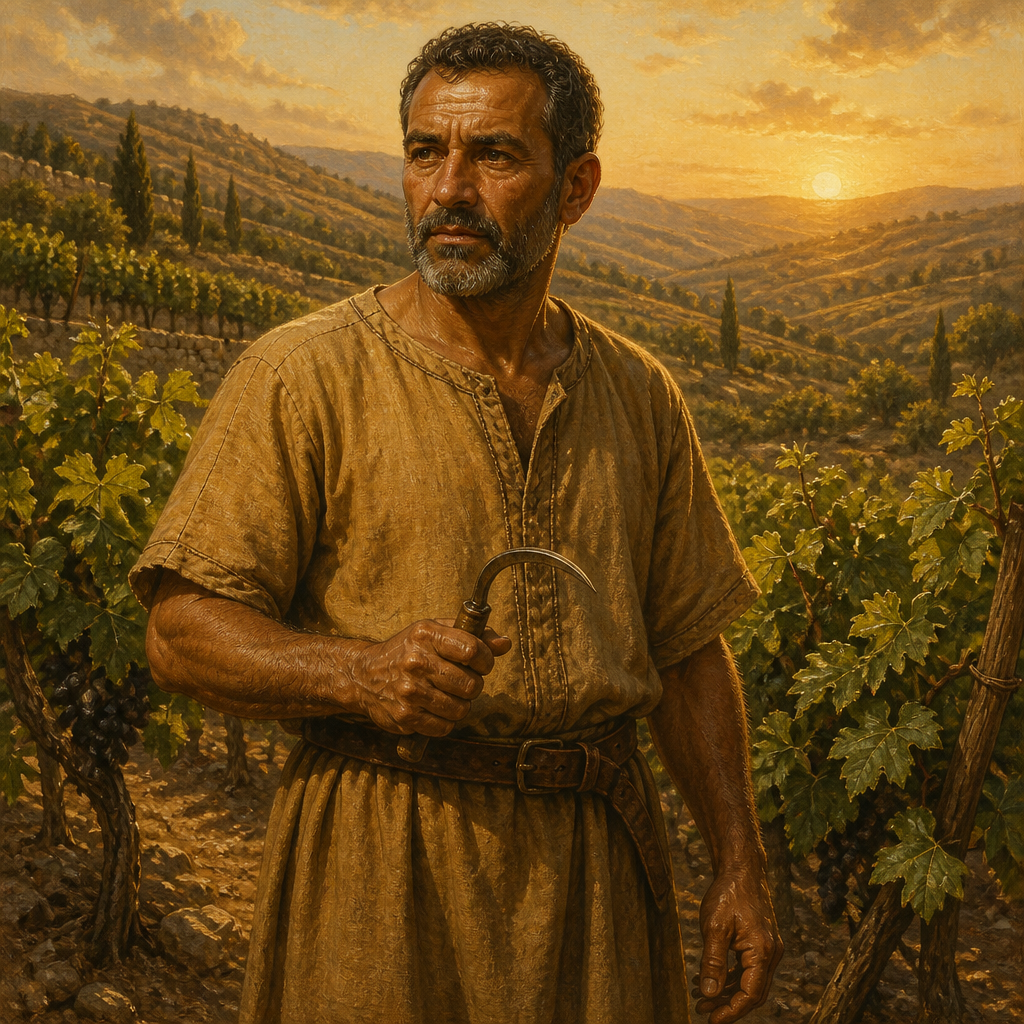
Zabdi the Shiphmite was a royal official serving in the administrative hierarchy of King David. His specific role was the oversight of the produce of the vineyards, particularly the management of the wine vats and the storage of the kingdom's wine supply. This position was critical to the economic and logistical stability of the Judean monarchy, as wine was a primary agricultural commodity.
Historically, Zabdi is identified by the descriptive title 'the Shiphmite.' While the exact location of his hometown, Siphmoth, is debated by scholars, it is generally associated with the southern territory of Judah. His inclusion in the list of David’s chief officials underscores the high level of specialization and organization present in the royal administration during the 10th century BC.
Background and Family
The biblical record for Zabdi the Shiphmite is contained within the administrative lists of 1 Chronicles. He is identified by his toponym, 'the Shiphmite,' which indicates he hailed from a place called Siphmoth. This location is mentioned elsewhere in scripture as one of the areas where David and his men roamed during their period of flight from King Saul (1 Samuel 30:28), suggesting that Zabdi may have been a local loyalist who supported David before his ascension to the throne. Beyond his geographical origin, the Bible provides no specific genealogical data regarding his parents or descendants.
Major Life Events
Zabdi’s life is defined by his service to the crown during the transition into the period of the Divided Monarchy’s foundations. While Shimei the Ramathite was responsible for the physical cultivation of the vineyards, Zabdi was entrusted with the secondary stage of production. His duties involved the collection of the harvest, the processing of the grapes, and the supervision of the wine vats.
Shimei the Ramathite was in charge of the vineyards. Zabdi the Shiphmite was in charge of the produce of the vineyards for the wine vats. (1 Chronicles 27:27)
This role required not only agricultural knowledge but also rigorous accounting and security skills. In the ancient Near East, wine was not merely a beverage but a form of liquid currency and a vital military provision. Zabdi’s management of these stores ensured that the king’s resources were preserved and available for trade, royal banquets, and the sustenance of the army.
Relationship to Other Biblical Figures
Zabdi served alongside a cohort of specialized administrators under King David. His most direct peer was Shimei the Ramathite. While Shimei oversaw the land and the vines, Zabdi oversaw the product. This division of labor illustrates the sophisticated nature of David's government. Zabdi reported to the central authority of the king, contributing to the overall wealth and organized infrastructure that David would eventually pass on to his son, Solomon.
Spiritual Significance
Though his mention is brief, Zabdi represents the biblical principle of stewardship. The Chronicler includes figures like Zabdi to demonstrate that every facet of the kingdom—including agricultural storage—was under divine order and human accountability. In the context of 1 Chronicles, his service is viewed as a contribution to the God-ordained prosperity of Israel. He exemplifies the diligent worker whose 'behind-the-scenes' labor supports the greater mission of the nation.
Spiritual Significance
Zabdi’s significance lies in his role as a steward of the king’s resources. His inclusion in the Holy Scripture highlights the importance of faithfulness in practical, earthly duties. In the theological framework of the Chronicler, the meticulous organization of David’s kingdom was a reflection of God’s blessing and order.
Furthermore, Zabdi provides a glimpse into the economic reality of ancient Israel. By preserving the wine vats, he maintained the 'produce of the vineyards,' which was often used as a symbol of peace and prosperity in prophetic literature. His presence in the text confirms that even logistical roles are worthy of record in the history of God's people.
Frequently Asked Questions
What does the name Zabdi mean?
The name Zabdi is derived from the Hebrew root meaning 'my gift' or 'endowment,' suggesting a sense of being a gift from God.
What was a Shiphmite?
A Shiphmite was an inhabitant of Siphmoth, a town in the Negev region of southern Judah.
What were Zabdi's primary responsibilities?
He was responsible for the 'produce of the vineyards,' specifically the management of wine vats and the storage of wine, rather than the growing of the grapes themselves.
In which book of the Bible is Zabdi mentioned?
Zabdi the Shiphmite is mentioned exclusively in 1 Chronicles 27:27.
Connected Figures

David
King and employer
Shimei the Ramathite
Peer official (vineyard manager)
Joab
Commander of David's army (contemporary)
Categories
Mentions by Book
- 1 Chronicles1
Others Named Zabdi the Shiphmite
Zabdi, Son of Shimei1 Chronicles 8:19
Zabdi, the son of Shimei, was a member of the tribe of Benjamin listed in the genealogical records of the Divided Monarchy period.
Zabdi, Grandson of ZerahJoshua 7:1
A patriarch within the tribe of Judah, Zabdi was the grandson of Zerah and the grandfather of Achan, figuring prominently in the genealogical records of the conquest of Canaan.