Unni, Levite of the Divided Monarchy
A Levite musician and harpist appointed by King David to participate in the procession bringing the Ark of the Covenant to Jerusalem.
Unni was a Levite of the second rank who served during the early years of the Divided Monarchy’s foundational transition—specifically during the reign of King David as he established Jerusalem as the spiritual center of Israel. His name, derived from a Hebrew root meaning "answered" or "afflicted," appears within the detailed genealogical and liturgical records of 1 Chronicles.
Unni is primarily identified by his specialized musical skill. As a member of the tribe of Levi, he was part of the select group chosen to provide musical accompaniment for one of the most significant religious events in Israelite history: the transport of the Ark of the Covenant from the house of Obed-edom to the City of David. While the biblical text provides no personal details regarding his family or longevity, his inclusion in the official register of the sanctuary indicates his standing as a professional minister of worship.
Background and Family
The biblical record for Unni is found exclusively within the liturgical registers of 1 Chronicles chapters 15. As a Levite, Unni belonged to the tribe set apart by God for the service of the Tabernacle and, later, the Temple. Although his specific sub-clan (Kohathite, Gershonite, or Merarite) is not explicitly named in the immediate context of 1 Chronicles 15:18-20, he is grouped with other prominent Levites like Zechariah, Eliab, and Benaiah.
His status is described as being among the "brothers next in rank" (or "of the second degree"). This classification suggests a hierarchical structure within the Levite musicians, where Unni served under the primary leadership of figures such as Asaph, Heman, and Ethan. The absence of specific genealogical markers in this passage is common for secondary officials, as the text focuses more on their functional roles in the national liturgy rather than their lineage.
Major Life Events
The life of Unni is defined by a single, monumental event: the successful relocation of the Ark of the Covenant. After a previous failed attempt to move the Ark, King David organized a meticulously planned procession that strictly followed the Mosaic Law, requiring the Levites to carry the Ark and provide continuous music.
Unni was specifically appointed as a musician for this ceremony. According to 1 Chronicles 15:20, he was among those assigned to "play the harps according to Alamoth." The term Alamoth is a musical notation that most scholars believe refers to a high-pitched or soprano register (possibly related to the Hebrew word for "maidens"). This indicates that Unni was a skilled instrumentalist capable of performing complex, specialized arrangements required for sacred processionals.
Relationship to Other Biblical Figures
Unni worked in close proximity to the highest levels of Israelite leadership. He served directly under the appointment of the chief Levites, who had been commanded by King David to mobilize the musicians. He performed alongside famous biblical figures such as Obed-edom (the gatekeeper) and Benaiah. While he was a contemporary of King David, the text characterizes their relationship as one of a sovereign and a specialized servant of the sanctuary.
Spiritual Significance
Though Unni’s mention is brief, his presence in the biblical canon underscores the importance of the "unseen" worker in the community of faith. The Chronicler’s decision to record Unni by name reflects a theological conviction that every individual assigned to the service of God—regardless of their "rank"—is worthy of remembrance.
Furthermore, Unni’s role as a harpist playing in the Alamoth style highlights the intentionality and beauty of biblical worship. Worship was not merely spontaneous but was an art form that required dedicated professionals like Unni to master specific instruments and registers to honor the presence of God. His life serves as a testament to the transition of Israel from a wandering people to a settled nation with a sophisticated, centralized system of praise.
Spiritual Significance
Unni represents the professionalization and organization of worship during the establishment of the Davidic cultus. His role signifies that the transition of the Ark was not merely a military or political move, but a musical and liturgical one. By specifically noting his proficiency in the 'Alamoth' style, the text emphasizes the diversity and technical skill required in the service of the Lord.
In a broader sense, Unni is part of the 'great cloud of witnesses' whose specific duties contributed to the restoration of the presence of God to the heart of Israel. His inclusion in the eternal record of Scripture validates the ministry of those who serve in supportive, artistic, or secondary roles within the religious community.
Frequently Asked Questions
What does the name Unni mean?
The name Unni is derived from the Hebrew root 'anah,' which can mean 'answered' or 'afflicted.'
What instrument did Unni play?
Unni was a harpist. The text specifically mentions he played the harp (nebel) according to the Alamoth style.
What was Unni's tribe?
Unni was a member of the tribe of Levi, the tribe designated for the care of the Tabernacle and leading worship.
During which king's reign did Unni live?
Unni lived during the reign of King David, specifically during the time when David brought the Ark of the Covenant to Jerusalem.
What is the 'Alamoth' style mentioned in relation to Unni?
'Alamoth' is a musical term generally understood to refer to a high-pitched or soprano register, suggesting Unni played the higher strings or melodies on the harp.
Connected Figures
David
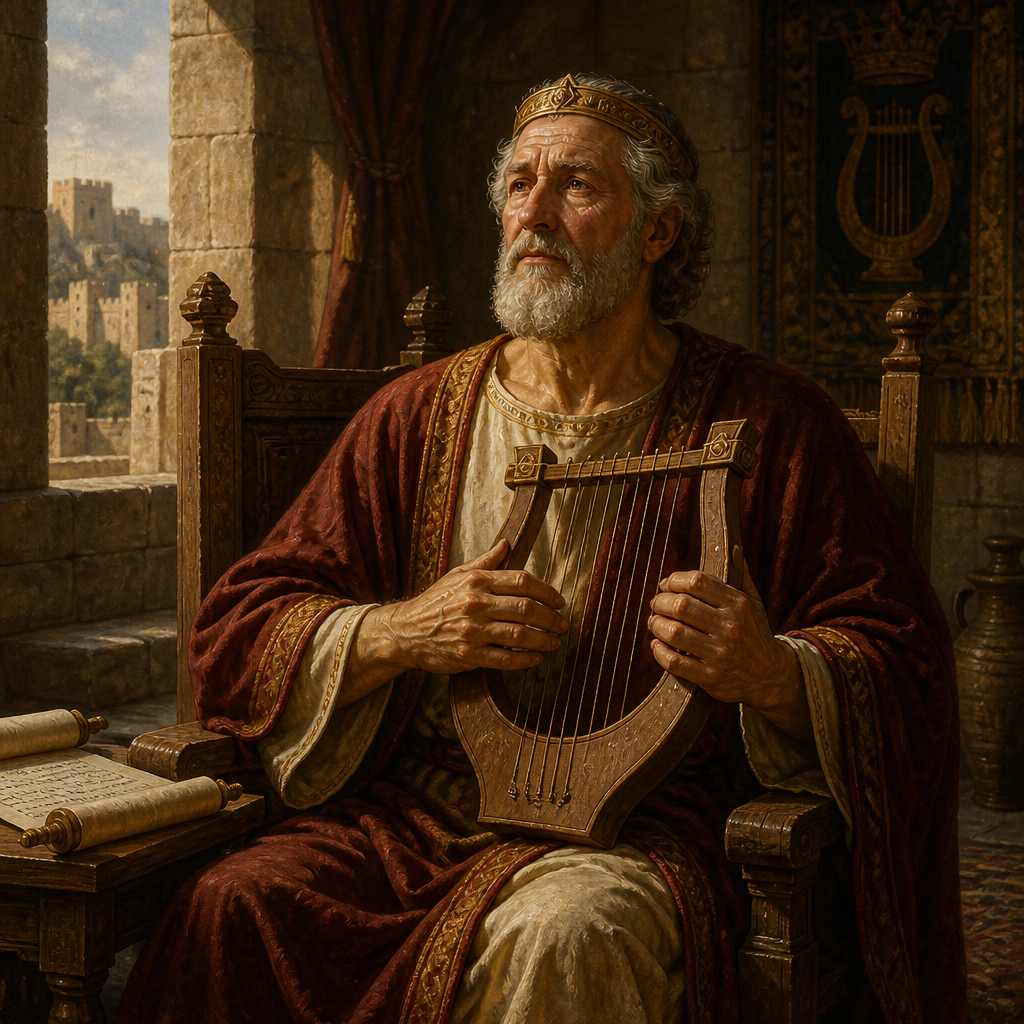
King who appointed him
Asaph
Leader of the musicians
Obed-edom
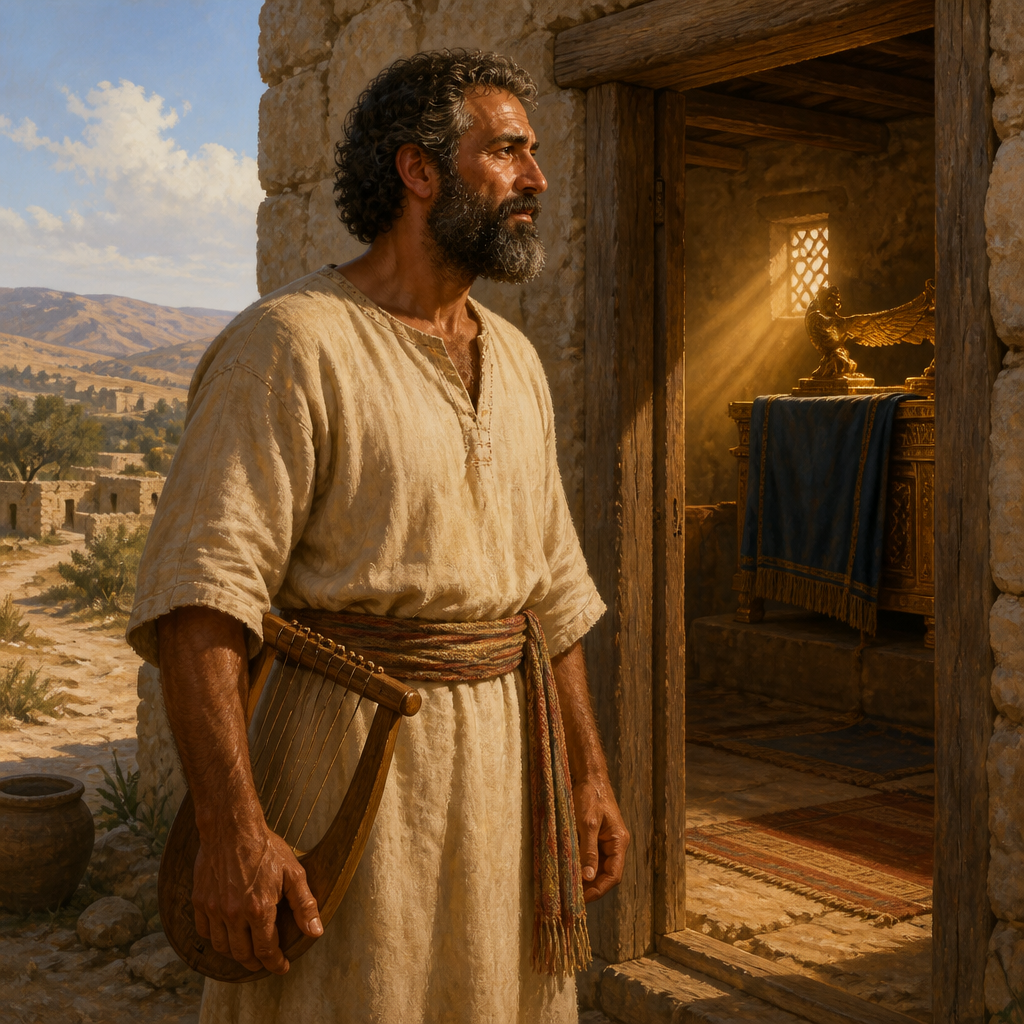
Fellow minister in the Ark procession
Benaiah
Fellow musician in the sanctuary service
Categories
Mentions by Book
- 1 Chronicles2
Others Named Unni
Unni, Levite of the ReturnNehemiah 12:9
A Levite who served in the liturgical ministrations of the second temple following the Babylonian exile.