Tartan
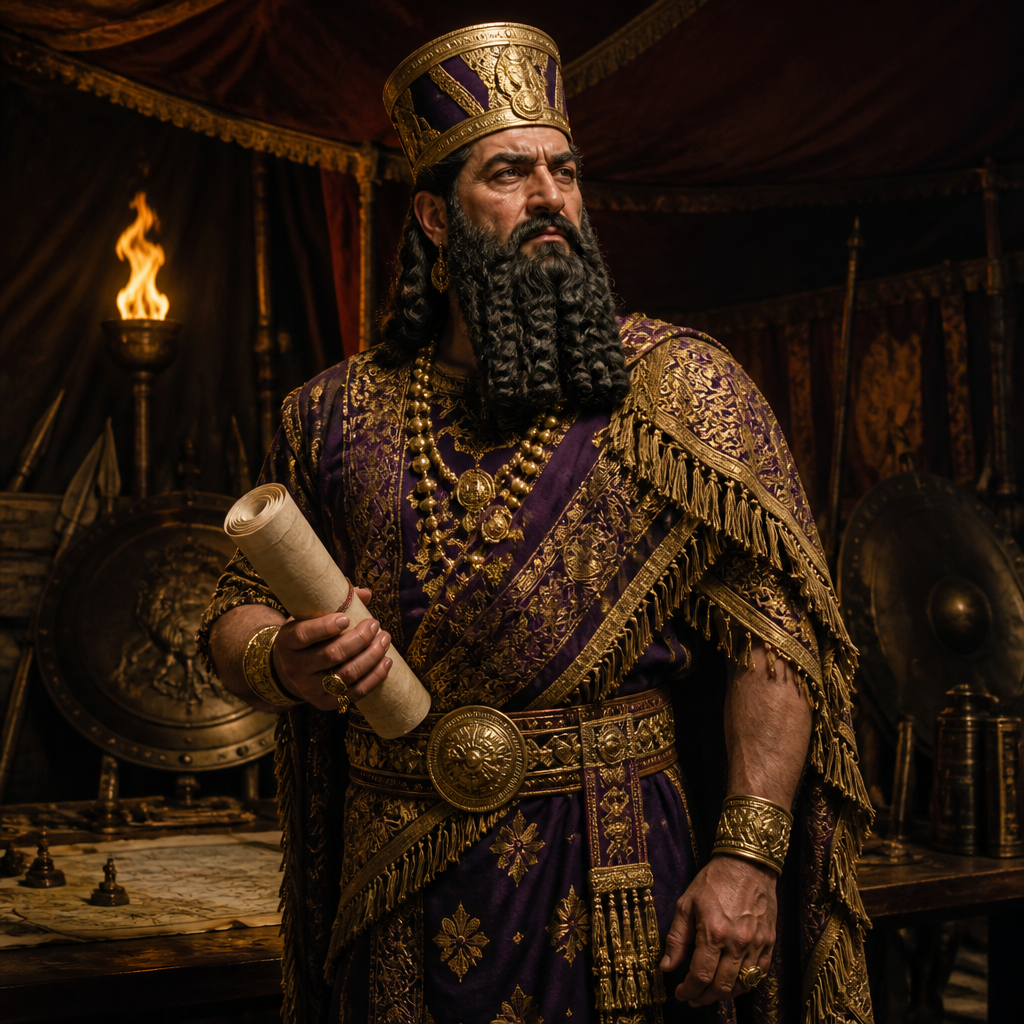
A high-ranking Assyrian military official and chief commander who served during the reigns of Sargon II and Sennacherib.
In the biblical narrative, Tartan is not a personal name but rather a formal title for the commander-in-chief of the Assyrian army, second only to the king himself. The term appears in the context of the Neo-Assyrian Empire’s expansion and its direct threats against the Kingdom of Judah and surrounding regions during the late 8th century BC. As a representative of the Assyrian crown, Tartan played a pivotal role in the psychological and military warfare directed at Jerusalem and its neighbors.
The biblical record identifies this figure in two distinct military campaigns: the siege of Ashdod under Sargon II and the later intimidation of King Hezekiah under Sennacherib. While the specific individuals holding the title may have differed across these decades, the office represented the absolute might of the world's then-dominant superpower. The Tartan’s presence signaled a state of total war and the imminent threat of imperial annexation.
Background and Family
Little is known of the personal genealogy of the individuals who held the title of Tartan, as the biblical text focuses strictly on their official capacities as agents of the Assyrian Empire. The Hebrew term Tartan is a transliteration of the Akkadian tartānu, signifying a "chief commander" or "generalissimo." Within the Assyrian administrative hierarchy, the Tartan was the highest-ranking military officer, often acting as a provincial governor and the king's primary deputy in field operations. Because the Bible does not provide a personal name or tribal affiliation, he remains a figure defined entirely by his loyalty to the Assyrian throne and his role as a bringer of judgment and imperial pressure.
Major Life Events
The Tartan appears in two significant historical junctions within the Old Testament. The first chronological mention is found in Isaiah 20:1, which dates to the reign of Sargon II (c. 722–705 BC). During this period, the Tartan was dispatched to the Philistine city of Ashdod. The biblical text records that he "came to Ashdod and attacked and captured it," an event corroborated by Assyrian annals. This victory was used by the prophet Isaiah as a visual sign to Judah that relying on foreign alliances, such as Egypt or Cush, was futile against the Assyrian machine.
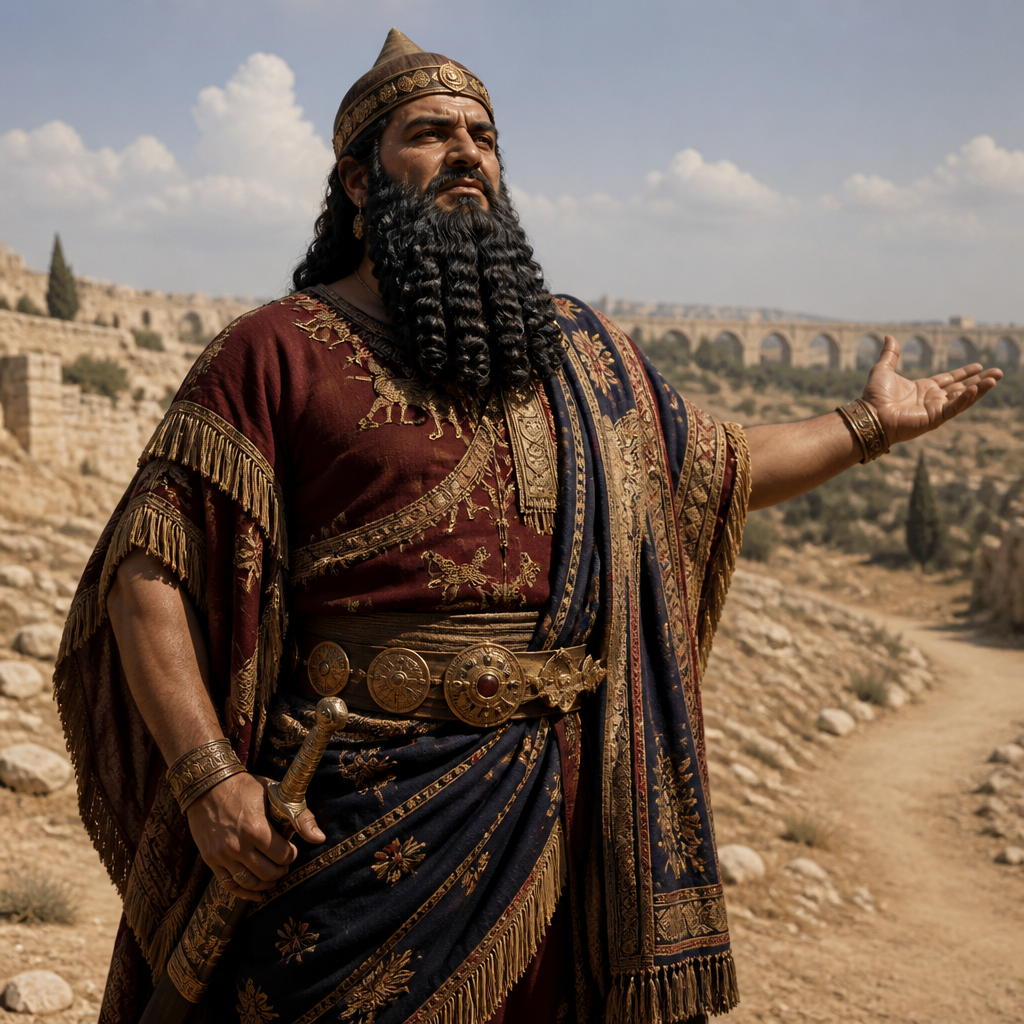
The second major appearance occurs in 2 Kings 18:17 during the fourteenth year of King Hezekiah's reign (c. 701 BC). Following the capture of the Judean fortress of Lachish, King Sennacherib sent a high-level delegation to Jerusalem to demand Hezekiah's surrender. The Tartan led this group, accompanied by two other high officials—the Rabsaris (chief officer) and the Rabshakeh (chief speaker)—and a "great army." They stationed themselves by the aqueduct of the upper pool, a strategic location intended to intimidate the inhabitants of Jerusalem by threatening their water supply.
Relationship to Other Biblical Figures
The Tartan’s primary interactions are adversarial. In 2 Kings 18, he stands as a representative of Sennacherib in direct opposition to King Hezekiah. While the Rabshakeh did the majority of the speaking to Hezekiah’s officials—Eliakim, Shebna, and Joah—the Tartan’s presence as the ranking military authority provided the physical threat backing the verbal taunts. His relationship to the prophets is also notable; his military success in Ashdod served as the catalyst for Isaiah's prophetic act of walking stripped and barefoot for three years as a warning to Israel regarding the coming Assyrian captivity.
Spiritual Significance
In the broader biblical context, the Tartan serves as a symbol of the "rod of God’s anger" (Isaiah 10:5). He represents the worldly power that God allowed to rise to discipline His people, yet he also embodies the arrogance of empires that fail to recognize the sovereignty of Yahweh. The Tartan's presence at the gates of Jerusalem set the stage for one of the most significant divine interventions in the Old Testament, where the pride of the Assyrian military was ultimately humbled when the siege failed to topple Hezekiah’s capital. The figure of the Tartan thus highlights the tension between the visible might of human armies and the invisible authority of the God of Israel.
Spiritual Significance
Theological significance of the Tartan lies in his role as a harbinger of divine judgment and a test of faith for the Judean monarchy. By capturing Ashdod and threatening Jerusalem, the Tartan forced the people of God to choose between worldly alliances and divine trust. His historical presence validates the geopolitical reality of the prophetic warnings issued by Isaiah.
Furthermore, the Tartan illustrates the biblical theme of the 'haughty official.' As a representative of a king who claimed deity-like status, the Tartan’s failure to take Jerusalem despite his military pedigree serves as a scriptural reminder that human strategy and imperial strength are secondary to the will of God.
Frequently Asked Questions
Is Tartan a proper name or a title?
Tartan is a title, derived from the Akkadian word 'tartānu', meaning 'chief commander' or 'commander-in-chief' of the Assyrian army.
Which Assyrian kings did the Tartan serve?
The Bible mentions the Tartan serving under Sargon II (Isaiah 20:1) and Sennacherib (2 Kings 18:17).
What did the Tartan do at Ashdod?
According to Isaiah 20:1, the Tartan attacked and captured the city of Ashdod, which was a significant Philistine stronghold at the time.
Who accompanied the Tartan to Jerusalem?
He was accompanied by two other high-ranking officials: the Rabsaris and the Rabshakeh, along with a large military force.
Why did the Tartan station himself at the aqueduct?
Positioning at the aqueduct of the upper pool allowed the Assyrians to control or threaten the city's water supply, a standard siege tactic intended to force surrender.
Connected Figures
Hezekiah
Adversary and King of Judah
Sargon II
Sovereign/King he served
Sennacherib
Sovereign/King he served
Rabshakeh
Colleague/Subordinate official