Shecaniah, the Priest
Shecaniah was a priest during the Divided Monarchy who was chosen by lot to serve as the head of the tenth priestly division in the Temple.
Shecaniah was a member of the Aaronic priesthood who lived during the period of the Divided Monarchy. His primary distinction in the biblical record is his appointment as the head of the tenth division of priests. This organization occurred when King David, along with the high priests Zadok and Ahimelech, sought to bring order and structure to the liturgical life of Israel, ensuring that the service of the Tabernacle—and eventually the Temple—would be conducted with systematic dignity.
Although the specific details of Shecaniah’s personal life and lineage are not extensively detailed in the text of 1 Chronicles, his inclusion in the list of the twenty-four priestly courses highlights his status as a leader among the Levites. As the head of the tenth course, he represented a significant family line within the house of Eleazar or Ithamar, responsible for leading a segment of the priesthood in their bi-annual duties at the sanctuary.
Background and Family
The identity of Shecaniah is rooted in the sacred lineage of Aaron, the first High Priest of Israel. During the latter years of the Divided Monarchy’s foundational period, the priesthood had grown significantly in number. To manage the vast responsibilities of sanctuary service, the descendants of Aaron were organized into twenty-four distinct groups or "courses." Shecaniah emerged as the leader of one of these houses. While the text of 1 Chronicles 24:11 does not explicitly name his father or his specific tribe beyond the broader Levite/priestly classification, his position as the tenth lot indicates he was a man of recognized standing and ritual purity.
Major Life Events
The defining moment of Shecaniah’s recorded life was the casting of lots to determine the order of priestly service. This process was overseen by King David and the leading ecclesiastical authorities of the day. The use of the lot was intended to prevent human favoritism and to demonstrate that the divine will governed the selection of the sanctuary's ministers.
The seventh to Hakkoz, the eighth to Abijah, the ninth to Jeshua, the tenth to Shecaniah (1 Chronicles 24:10–11).
When the tenth lot fell to Shecaniah, he was formally tasked with the oversight of all priests within his family group. This meant that twice a year, for one week at a time, Shecaniah and his house would travel to the central sanctuary to perform the sacrifices, tend the lamps, and manage the ritual requirements of the nation. During the great festivals, his division would have served alongside the other twenty-three courses, facilitating the worship of the entire congregation of Israel.
Relationship to Other Biblical Figures
Shecaniah’s role placed him in direct cooperation with the highest officials of the Israelite religious system. He served under the logistical framework established by King David and worked in coordination with Zadok (representing the line of Eleazar) and Ahimelech (representing the line of Ithamar). His placement as the "tenth" follows Jeshua, another prominent priestly head. This sequential relationship was not merely chronological but functional, as it determined the rhythm of the liturgical calendar and the transition of duties within the holy place.
Spiritual Significance
The spiritual significance of Shecaniah lies in the principle of order and representation. His life illustrates that in the biblical economy, every role—even those described in a single verse—was essential for the maintenance of the covenant relationship between God and Israel. By faithfully leading the tenth division, Shecaniah ensured that the "perpetual incense" and the morning and evening sacrifices remained uninterrupted. In the broader context of biblical theology, the system of priestly courses that Shecaniah participated in serves as a shadow of the organized and perfect ministry of the ultimate High Priest. His name, which can be translated as "Yahweh has dwelt," serves as a reminder of the primary purpose of the priesthood: to facilitate the dwelling of God among His people through disciplined and sanctified service.
Spiritual Significance
Shecaniah represents the institutionalization of worship in Israel, where individual identity was often subsumed into the collective duty of the priesthood. His role as the tenth division head ensured the systematic administration of the Law of Moses concerning offerings and sanctuary maintenance.
Theologically, Shecaniah’s presence in the genealogies of 1 Chronicles serves to validate the continuity of the Aaronic priesthood through the turbulent era of the Divided Monarchy. It demonstrates that despite the political shifts in the kingdom, the liturgical structures remained a priority for the faithful administration of the Hebrew faith.
Frequently Asked Questions
What was the 'tenth lot' mentioned in relation to Shecaniah?
The tenth lot refers to the order in which Shecaniah’s priestly division was chosen to serve in the sanctuary. There were twenty-four divisions in total, and Shecaniah's group was responsible for the tenth period of service in the annual cycle.
To which tribe did Shecaniah belong?
Shecaniah was a member of the Tribe of Levi, specifically from the house of Aaron, as he was a designated priest responsible for sanctuary duties.
Who organized the priestly divisions that Shecaniah led?
The divisions were organized by King David, with the assistance of the high priests Zadok and Ahimelech, to ensure orderly worship in the Temple.
Does Shecaniah appear in any other books of the Bible?
This specific Shecaniah, the priest of the tenth division, is only mentioned in the book of 1 Chronicles.
Connected Figures
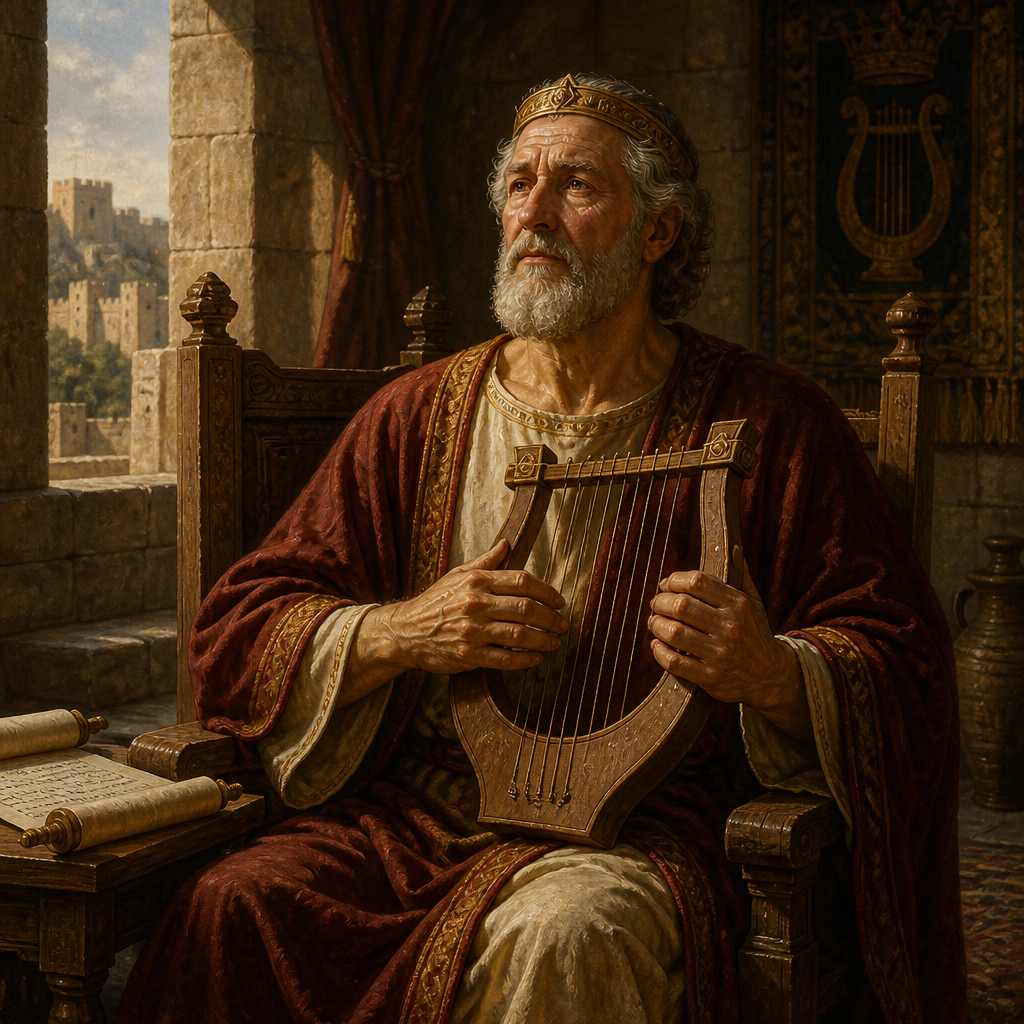
David
King who organized his priestly division
Zadok
High Priest who oversaw his appointment
Jeshua
Priestly head of the ninth division preceding him
Categories
Mentions by Book
- 1 Chronicles1
Others Named Shecaniah
Shecaniah, Ancestor of ZechariahEzra 8:3
An ancestral figure whose lineage included Zechariah and 150 men who returned to Jerusalem with Ezra during the reign of Artaxerxes.
Shecaniah, Distributer under Hezekiah2 Chronicles 31:15
A faithful Levite or priestly assistant who managed the distribution of sacred offerings to the priestly divisions during the religious reforms of King Hezekiah.
Shecaniah, Son of ArahNehemiah 6:18
A prominent Judean whose familial ties to Tobiah the Ammonite created significant political challenges for Nehemiah during the reconstruction of Jerusalem.
Shecaniah, son of JahazielEzra 8:5
A leader among the descendants of Zattu who returned from Babylonian exile to Jerusalem under the leadership of Ezra.
Shecaniah, son of Jehiel the ElamiteEzra 10:2
A leader in the post-exilic community who confessed Israel's unfaithfulness and urged Ezra to initiate a covenantal reform regarding foreign marriages.
Shecaniah, Descendant of David1 Chronicles 3:21
A descendant of King David through the line of Zerubbabel, serving as a vital genealogical link in the post-exilic Davidic lineage during the Divided Monarchy era.