Shear-jashub
Who was Shear-jashub in the Bible?
The eldest son of the prophet Isaiah whose name, meaning 'a remnant shall return,' served as a prophetic sign to King Ahaz during the Syro-Ephraimite War.
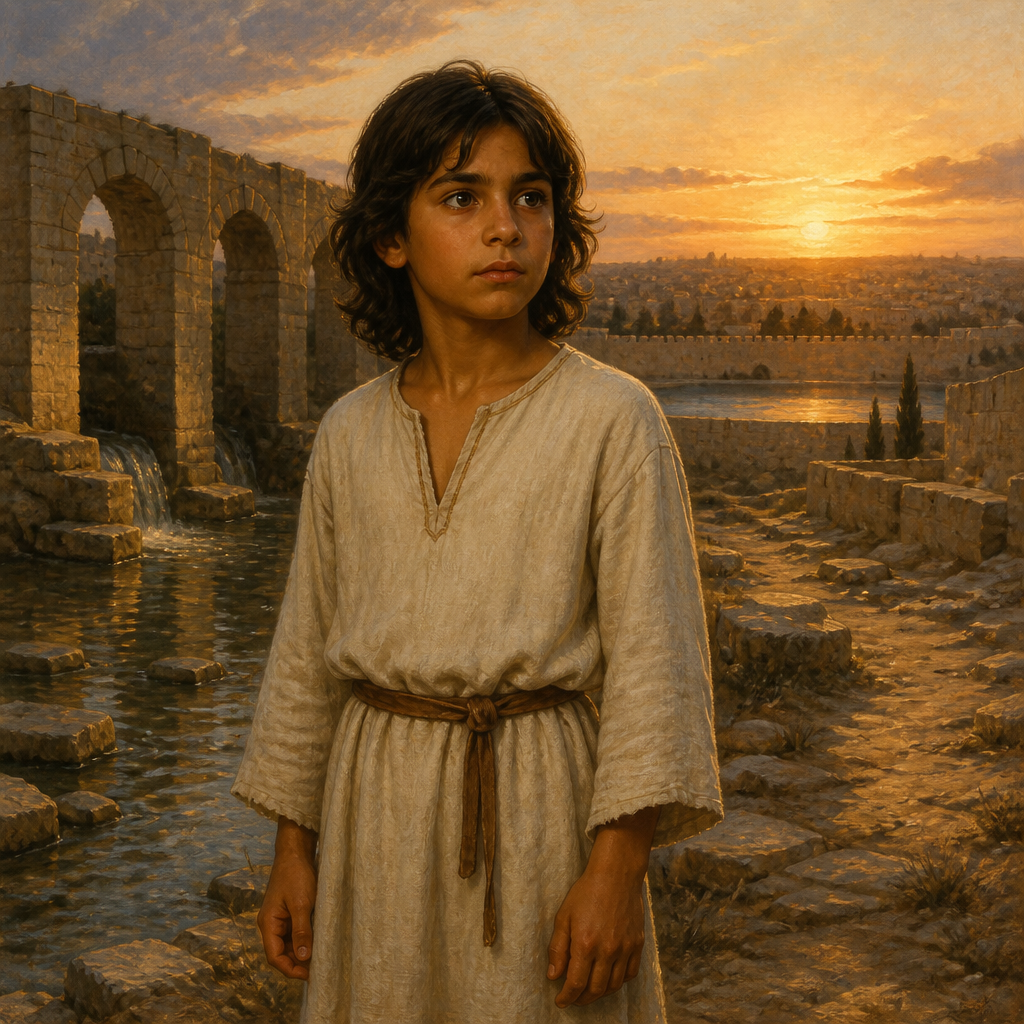
Shear-jashub was the son of the prophet Isaiah, living during the 8th century BC in the Kingdom of Judah. His primary role in the biblical narrative is serving as a living sign to King Ahaz during a time of intense geopolitical crisis. By God's specific instruction, Shear-jashub accompanied his father to meet the king at a critical location near the upper pool in Jerusalem.
His presence during this encounter was not incidental but symbolic. In the Hebrew prophetic tradition, the names of Isaiah's children were intended to carry messages from God to the nation. While Shear-jashub's individual actions are not recorded, his inclusion in the divine mission to the king emphasizes the theological theme of the 'remnant'—a core concept in Isaiah's ministry regarding the survival of a faithful portion of Israel.
Background and Family
Shear-jashub was born into the family of Isaiah, the son of Amoz, during the era of the Divided Monarchy. The biblical record identifies him as the brother of Maher-shalal-hash-baz (Isaiah 8:3). His family functioned as a prophetic household; Isaiah famously stated, "Here am I, and the children the Lord has given me. We are signs and symbols in Israel from the Lord Almighty" (Isaiah 8:18). Consequently, Shear-jashub's identity was inextricably linked to his father's vocational calling.
Major Life Events
The single recorded event involving Shear-jashub occurs in Isaiah 7:3. During the Syro-Ephraimite War (c. 735–732 BC), King Rezin of Aram and King Pekah of Israel moved to besiege Jerusalem. King Ahaz of Judah was terrified by this coalition. The Lord commanded Isaiah to "Go out with your son Shear-jashub to meet Ahaz at the end of the aqueduct that feeds the upper pool, on the road to the Launderer’s Field."
Shear-jashub was brought along specifically to stand before the king. The text does not record Shear-jashub speaking; rather, his presence served as a visual and nominal witness to the prophecy Isaiah was about to deliver. His name, meaning "a remnant shall return," acted as a dual-edged message: it warned of coming judgment and exile, yet promised that God would preserve a surviving portion of His people.
Relationship to Other Biblical Figures
As the son of Isaiah, Shear-jashub was positioned at the center of Judah's religious and political life. He is directly associated with King Ahaz, to whom he was presented as a sign of divine assurance. His relationship with his brother, Maher-shalal-hash-baz, further underscores the prophetic nature of his family, as both siblings bore names that predicted the military and spiritual fate of the nation.
Spiritual Significance
The theological weight of Shear-jashub lies in his name. The concept of the "remnant" is a recurring motif in the Book of Isaiah, representing the hope that even after divine judgment falls upon Israel for its apostasy, God will not utterly destroy the nation. Shear-jashub’s presence during the encounter with Ahaz was a call to faith. While the king looked to military alliances with Assyria for safety, the child standing before him was a reminder that Judah’s true security lay in the covenant faithfulness of God, who would always preserve a remnant.
Shear-jashub's significance is almost entirely symbolic, representing the doctrine of the remnant. His name provided a physical manifestation of God's promise that a portion of Israel would survive the impending Assyrian and Babylonian judgments. By accompanying Isaiah to meet King Ahaz, he served as a living testimony against the king's lack of faith.
In the broader context of Old Testament theology, Shear-jashub embodies the tension between judgment and grace. His name was a reminder that while the majority of the nation might fall away or be carried into exile, God’s purposes for the line of David and the people of Israel would be sustained through a small, returning group.
Frequently Asked Questions
What does the name Shear-jashub mean?
The name Shear-jashub means 'a remnant shall return' or 'the remnant shall return' in Hebrew.
Who was Shear-jashub's father?
He was the son of the prophet Isaiah.
Where does Shear-jashub appear in the Bible?
He is mentioned only once, in Isaiah 7:3.
Why did Isaiah bring Shear-jashub to meet King Ahaz?
God specifically commanded Isaiah to bring his son as a living sign to the king. His name symbolized God's promise that a remnant of the people would survive the coming conflicts.
Did Shear-jashub have any siblings?
Yes, the Bible mentions his brother, Maher-shalal-hash-baz.
Family & Relationships
Parents
 IsaiahFatherIsaiah 7:3
Inferred
Isaiah 7:3 names Shear-jashub and Isaiah in the same verse but does not state a father tie between them; the link rests on the surrounding narrative.Evidence: Isaiah 7:3
 Shear-jashubThis page
 Maher-shalal-hash-bazBrotherIsaiah 7:3
Inferred
No verse names Maher-shalal-hash-baz and Shear-jashub together; the brother link is carried from the surrounding genealogy and is not stated in Scripture.Evidence: Isaiah 7:3
Connected Figures
Family
Father · Isaiah 7:3
Isaiah, the son of Amoz, was a major prophet in Judah whose ministry spanned the reigns of four kings and who is widely quoted in the New Testament for his messianic and redemptive visions.
Brother · Isaiah 7:3
The second son of the prophet Isaiah whose symbolic name predicted the imminent plunder of Damascus and Samaria by the Assyrian Empire.
Divided MonarchyFirst: Isaiah 8:14 versesProphetic sign-child
Categories
Mentions by Book
- Isaiah2
Scripture References
All 2 indexed verses, in canonical order, from the Berean Standard Bible.
Isaiah · 2
- Isaiah 7:3
Then the LORD said to Isaiah, “Go out with your son Shear-jashub to meet Ahaz at the end of the aqueduct that feeds the upper pool, on the road to the Launderer’s Field,
- Isaiah 8:1Partial
Then the LORD said to me, “Take a large scroll and write on it with an ordinary stylus: Maher-shalal-hash-baz.
Cited as evidence on a family card; added so References, Key Verses and Mentions by Book share one index.