Amoz
Who was Amoz in the Bible?
The father of the prophet Isaiah, serving as a vital genealogical identifier for the prophet during the era of the Divided Monarchy in Judah.
Amoz is a figure appearing in the Hebrew Bible during the era of the Divided Monarchy, specifically within the history of the Southern Kingdom of Judah. While he is not depicted performing miracles or delivering public oracles himself, his name is inextricably linked to one of the most significant figures in biblical literature: the prophet Isaiah. In the scriptural record, he is mentioned thirteen times across three different books—2 Kings, 2 Chronicles, and the Book of Isaiah—almost exclusively as the patronymic identifier for his son.
Living during the 8th century BC, Amoz existed in a period of intense geopolitical turmoil and spiritual transition. His life spanned the reigns of several Judean kings, including Uzziah, Jotham, Ahaz, and Hezekiah. Because the Bible frequently uses the phrase 'Isaiah son of Amoz' to introduce the prophet’s most critical messages and interactions with royalty, Amoz is established as a man of recognized status within the social and religious fabric of Jerusalem.
Background and Family
The biblical record regarding Amoz is characterized by brevity, providing no direct information about his ancestry, tribe, or specific occupation. However, the consistent repetition of his name alongside Isaiah suggests he was a figure of some social standing in Judah. In the ancient Near Eastern context, being identified by one's father was a standard practice, but the frequency with which Amoz is cited—thirteen times—serves to ground the prophet Isaiah in a specific historical and familial lineage.
Chronologically, Amoz is situated in the 8th century BC. Based on the ministry of his son, which began in the year King Uzziah died (c. 740 BC) and continued through the reign of Hezekiah (ending c. 686 BC), Amoz would have been a contemporary of the earlier kings of this period. Though the biblical text does not explicitly state his tribe, the focus of his son’s ministry on Jerusalem and the Davidic line strongly implies a connection to the Tribe of Judah.
Major Life Events
There are no recorded actions performed by Amoz himself in the biblical canon. His presence in the narrative is entirely functional, serving as the necessary link to validate the identity of Isaiah. The first chronological mention of Amoz’s name appears in 2 Kings 19:2, when King Hezekiah sends high-ranking officials to seek counsel from the 'prophet Isaiah son of Amoz' during the terrifying siege of Jerusalem by the Assyrian king Sennacherib.
Further references in 2 Chronicles confirm Amoz's indirect role in the preservation of Judean history. 2 Chronicles 26:22 notes that the acts of King Uzziah were recorded by Isaiah son of Amoz, while 2 Chronicles 32:32 mentions that Hezekiah’s deeds were written in the 'vision of the prophet Isaiah son of Amoz.' Through these citations, Amoz is tied to the official royal records and the prophetic literature of Israel, even if he remained behind the scenes of the actual events.
Relationship to Other Biblical Figures
The primary relationship defined for Amoz is his role as the father of Isaiah. This relationship is emphasized in every major movement of Isaiah’s career. When Isaiah confronts King Hezekiah regarding his terminal illness (2 Kings 20:1; Isaiah 38:1), or when he delivers the 'burden against Babylon' (Isaiah 13:1), he is consistently introduced as the 'son of Amoz.'
This identification serves a dual purpose. First, it distinguishes the prophet from other individuals who might have shared the same name. Second, it suggests that Amoz was a known quantity to the court of Judah. In the instances where King Hezekiah and the leading priests seek out Isaiah (Isaiah 37:2), the mention of Amoz provides a formal, perhaps even aristocratic, weight to the prophet's credentials. While the Bible does not explicitly name Amoz's wife or other children, his legacy is firmly rooted in the prophetic authority of his son.
Spiritual Significance
The spiritual significance of Amoz lies in the concept of lineage and the preparation of the prophetic voice. While Amoz himself is not labeled a prophet, he is the progenitor of the man often considered the greatest of the writing prophets. The recurring phrase 'Isaiah son of Amoz' highlights the biblical theme that God works through specific families and generations to accomplish His purposes.
In the opening verse of the Book of Isaiah, the vision concerning Judah and Jerusalem is specifically attributed to 'Isaiah son of Amoz.' By including the father's name, the text asserts that the revelation is not a rootless or anonymous mystical experience, but a message delivered through a real person with a real heritage. Amoz represents the quiet, foundational generation that supports the more visible work of God in the subsequent generation. His name, which means 'strong' or 'courageous' in Hebrew, reflects the steadfastness required of those who lived through the shifting alliances and existential threats of the Divided Monarchy.
Amoz’s significance is primarily genealogical and identificatory. In the biblical tradition, the mention of a father's name often serves to authenticate the son's status and social standing. By consistently identifying Isaiah as the 'son of Amoz,' the text provides the prophet with a pedigree that was likely recognized by the kings of Judah. This suggests that Isaiah did not emerge from obscurity, but came from a family—represented by Amoz—that was integrated into the religious or political life of Jerusalem.
Theologically, Amoz serves as a reminder of the historical groundedness of biblical prophecy. The visions of Isaiah are not presented as abstract philosophy but as words spoken by a specific man from a specific family during the reigns of specific kings. Amoz provides the anchor for this historical reality, ensuring that the 'Son of Amoz' is understood as a tangible witness to the events of 8th-century BC Judah.
Frequently Asked Questions
Was Amoz a prophet?
The Bible does not explicitly state that Amoz was a prophet. While he is the father of the prophet Isaiah, Amoz himself is never described as receiving visions or delivering messages from God in the scriptural record.
What does the name Amoz mean?
The Hebrew name Amoz (אָמוֹץ) is derived from a root meaning 'strong,' 'brave,' or 'courageous.'
During which time period did Amoz live?
Amoz lived during the era of the Divided Monarchy, specifically in the 8th century BC. He was a contemporary of the Judean kings Uzziah, Jotham, Ahaz, and Hezekiah.
To which tribe did Amoz belong?
The Bible does not explicitly name the tribe of Amoz. However, because his life and his son's ministry were centered in Jerusalem and the Kingdom of Judah, he is traditionally associated with the Tribe of Judah.
How many times is Amoz mentioned in the Bible?
Amoz is mentioned 13 times in the Bible across three books: 2 Kings, 2 Chronicles, and the Book of Isaiah.
Family & Relationships
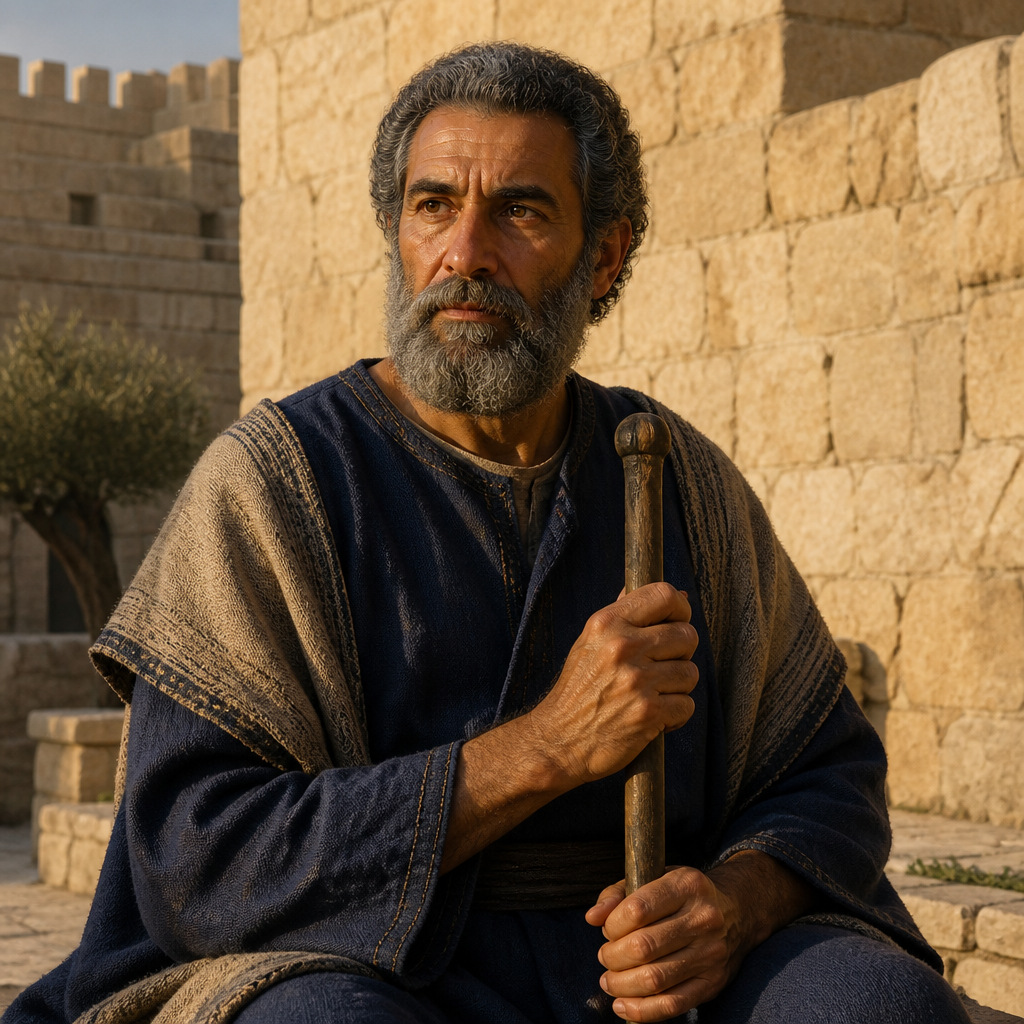 AmozThis page
Children
 IsaiahSon2 Kings 19:2Stated
Connected Figures
Family
Son · 2 Kings 19:2
Isaiah, the son of Amoz, was a major prophet in Judah whose ministry spanned the reigns of four kings and who is widely quoted in the New Testament for his messianic and redemptive visions.
Categories
Mentions by Book
- 2 Kings3
- 2 Chronicles3
- Isaiah7
Scripture References
All 13 indexed verses, in canonical order, from the Berean Standard Bible.
2 Kings · 3
- 2 Kings 19:2
And he sent Eliakim the palace administrator, Shebna the scribe, and the leading priests, all wearing sackcloth, to the prophet Isaiah son of Amoz
- 2 Kings 19:20
Then Isaiah son of Amoz sent a message to Hezekiah: “This is what the LORD, the God of Israel, says: I have heard your prayer concerning Sennacherib king of Assyria.
- 2 Kings 20:1
In those days Hezekiah became mortally ill. The prophet Isaiah son of Amoz came to him and said, “This is what the LORD says: ‘Put your house in order, for you are about to die; you will not recover.’”
2 Chronicles · 3
- 2 Chronicles 26:22
As for the rest of the acts of Uzziah, from beginning to end, they are recorded by the prophet Isaiah son of Amoz.
- 2 Chronicles 32:20
In response, King Hezekiah and the prophet Isaiah son of Amoz cried out to heaven in prayer,
- 2 Chronicles 32:32
As for the rest of the acts of Hezekiah and his deeds of loving devotion, they are indeed written in the vision of the prophet Isaiah son of Amoz in the Book of the Kings of Judah and Israel.
Isaiah · 7
- Isaiah 1:1
This is the vision concerning Judah and Jerusalem that Isaiah son of Amoz saw during the reigns of Uzziah, Jotham, Ahaz, and Hezekiah, kings of Judah.
- Isaiah 2:1
This is the message that was revealed to Isaiah son of Amoz concerning Judah and Jerusalem:
- Isaiah 13:1
This is the burden against Babylon that Isaiah son of Amoz received:
- Isaiah 20:2
the LORD had already spoken through Isaiah son of Amoz, saying, “Go, remove the sackcloth from your waist and the sandals from your feet.” And Isaiah did so, walking around naked and barefoot.
- Isaiah 37:2
And he sent Eliakim the palace administrator, Shebna the scribe, and the leading priests, all wearing sackcloth, to the prophet Isaiah son of Amoz
- Isaiah 37:21
Then Isaiah son of Amoz sent a message to Hezekiah: “This is what the LORD, the God of Israel, says: Because you have prayed to Me concerning Sennacherib king of Assyria,
- Isaiah 38:1
In those days Hezekiah became mortally ill. The prophet Isaiah son of Amoz came to him and said, “This is what the LORD says: ‘Put your house in order, for you are about to die; you will not recover.’”