Naaman, Commander of the Army of Syria
A high-ranking Aramean military commander who was healed of leprosy by the prophet Elisha and subsequently converted to the worship of the LORD.
Naaman was a distinguished military leader in the kingdom of Syria (Aram) during the era of the Divided Monarchy. The biblical record in 2 Kings 5 describes him as a man of great status, highly regarded by his king and the populace alike because the LORD had granted Syria victory through his leadership. Despite his prestige and valor, Naaman suffered from a debilitating skin disease, traditionally translated as leprosy, which threatened his social standing and physical well-being.
His narrative is one of the most prominent accounts of a Gentile seeking and receiving divine intervention from the God of Israel. His journey from Syria to Samaria highlights the international reputation of the prophet Elisha and serves as a profound example of faith, humility, and the universal scope of God's sovereignty during a period otherwise marked by Israel’s internal spiritual decline.
Background and Status
Naaman served as the commander of the army for the King of Syria during the 9th century BC. The biblical text emphasizes his importance, noting he was a "great man in his master’s sight and highly regarded" (2 Kings 5:1). Interestingly, the writer of Kings attributes the military successes of Syria—often an adversary of Israel—to the providence of the LORD (Yahweh), indicating that God’s influence extended beyond the borders of the Hebrew kingdoms. Despite his "mighty man of valor" status, Naaman’s life was clouded by leprosy. While the term likely refers to various infectious skin conditions rather than modern Hansen's disease, it remained a significant social and physical burden.
The catalyst for Naaman’s healing came from an unlikely source: a young Israelite girl who had been taken captive during Aramean raids. Serving Naaman’s wife, she suggested that the prophet in Samaria (Elisha) could cure him. This recommendation moved Naaman to seek permission from his king to travel to Israel, carrying a letter of introduction and a massive fortune in silver, gold, and clothing as a tribute for his healing.
The Encounter with Elisha
Upon arriving in Samaria, Naaman first visited the King of Israel, who reacted with despair, fearing the Syrian king was seeking a pretext for war by demanding a miraculous cure. However, Elisha sent word to the king to send Naaman to him so the commander would know "there is a prophet in Israel" (2 Kings 5:8).
When Naaman arrived at Elisha’s house with his full entourage of horses and chariots, the prophet did not greet him personally. Instead, Elisha sent a messenger with a simple instruction: "Go and wash in the Jordan seven times, and your flesh shall be restored, and you shall be clean." Naaman was initially insulted by the lack of ceremony and the choice of the muddy Jordan River over the superior waters of Damascus (the Abana and Pharpar). It was only after his servants urged him to try the simple task that Naaman relented. After dipping seven times in the Jordan, his flesh was restored to that of a young child.
Conversion and the Theft of Gehazi
Following his healing, Naaman returned to Elisha and made a profound confession of faith: "Now I know that there is no God in all the earth, but in Israel" (2 Kings 5:15). He attempted to reward Elisha with gifts, but the prophet steadfastly refused. In a singular act of devotion, Naaman requested two mule-loads of Israelite soil to take back to Syria, intending to worship the LORD on holy ground while acknowledging the difficulty of his official duties, which required him to assist his king in the temple of the god Rimmon.
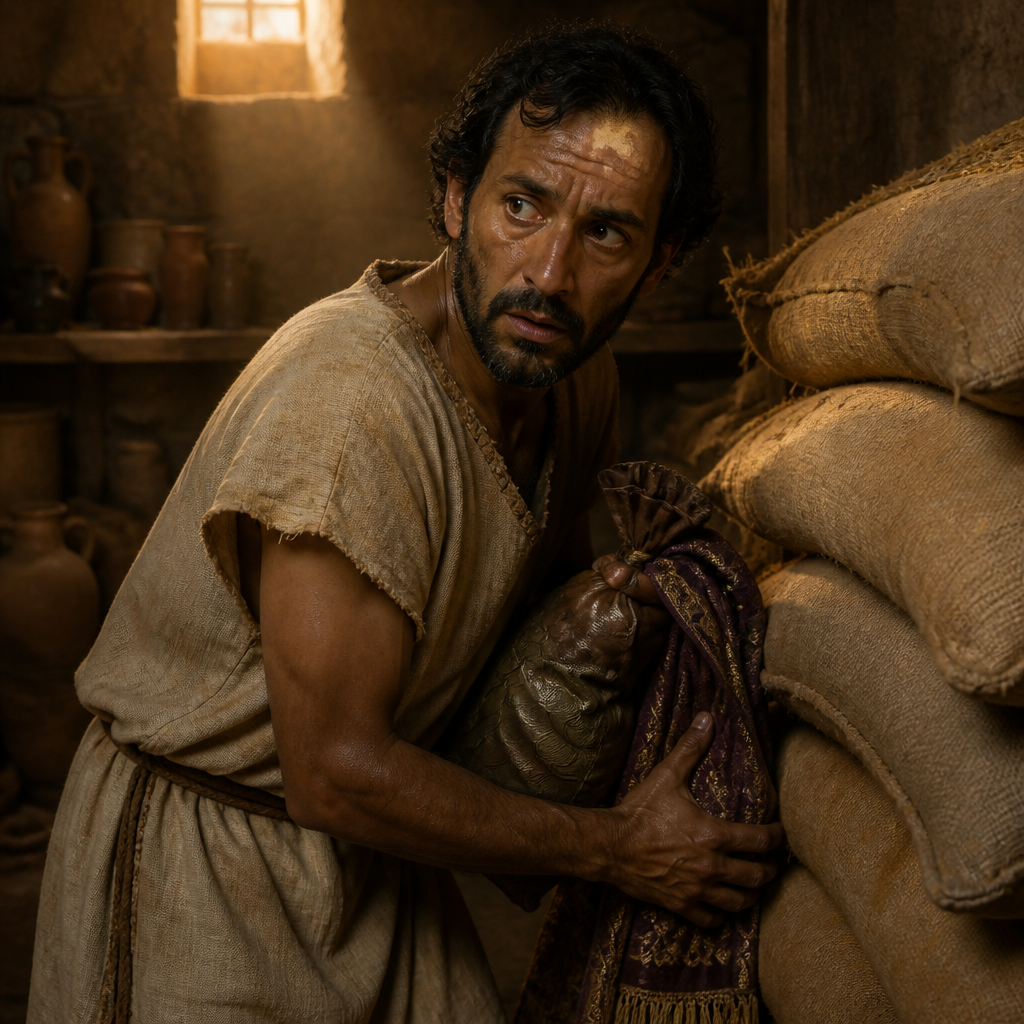
The story concludes with a stark contrast in character. Elisha’s servant, Gehazi, secretly pursued Naaman to solicit the gifts Elisha had refused. Naaman, showing generosity and respect, gave Gehazi even more than he asked for. However, upon returning to Elisha, Gehazi was confronted for his greed and was struck with the leprosy that had previously afflicted Naaman.
Spiritual Significance
Naaman’s story is a foundational text regarding God's grace toward the Gentiles. By healing a foreign commander—a man who had led armies against Israel—God demonstrated that His mercy was not restricted by ethnicity or national borders. Naaman’s transformation from a proud military leader to a humble petitioner serves as a model for the necessity of humility in the face of divine instruction.
In the New Testament, Jesus Christ referenced Naaman to illustrate that God often finds more faith among foreigners than among His own people. Speaking in the synagogue at Nazareth, Jesus noted that while there were many lepers in Israel during Elisha’s time, none were cleansed except Naaman the Syrian (Luke 4:27). This statement so angered his listeners that they attempted to kill him, underscoring the radical nature of Naaman's inclusion in the narrative of God's redemptive work.
Spiritual Significance
Naaman’s account is significant because it challenges the nationalistic expectations of the ancient Israelites. His healing demonstrates that the God of Israel is the sovereign Ruler of all nations, even using an Aramean general to accomplish His purposes and showing him mercy. Naaman’s willingness to obey a seemingly nonsensical command—washing in a specific river—highlights the biblical theme that faith and obedience are the prerequisites for experiencing God's power.
Furthermore, Naaman’s character development provides a template for conversion. He moves from reliance on his own status and wealth to a posture of gratitude and exclusive worship of the LORD. The contrast between Naaman, the righteous Gentile, and Gehazi, the corrupt Israelite, serves as a warning that proximity to the things of God (or biological lineage) does not guarantee a right standing with Him; rather, it is the response of the heart that matters.
Frequently Asked Questions
Why did Naaman want to take soil back to Syria?
In the ancient world, many believed that gods were tied to specific lands. By taking Israelite soil, Naaman sought to create a sacred space in Syria where he could offer sacrifices to the LORD, signifying his exclusive commitment to the God of Israel.
What was the significance of the Jordan River in Naaman’s healing?
While Naaman considered the rivers of Damascus superior, the Jordan was the site designated by God's prophet. The requirement to wash there served as a test of Naaman’s humility and his willingness to submit to God’s specific instructions rather than his own preferences.
How did Jesus use the story of Naaman in the New Testament?
In Luke 4:27, Jesus cited Naaman as an example of a Gentile who received God's grace while many in Israel did not. He used this to point out the lack of faith in His own hometown and to signal that His mission would extend to the Gentiles.
Did Naaman continue to worship the god Rimmon?
Naaman explicitly stated that he would no longer sacrifice to other gods, but he asked for God’s forgiveness for the times he would have to accompany the King of Syria into the temple of Rimmon as part of his official duties. Elisha responded with 'Go in peace,' suggesting a recognition of his difficult position.
What happened to Naaman's leprosy?
After Naaman dipped in the Jordan seven times, he was completely healed. The biblical text records that his skin became like that of a small child. Later, his former leprosy was divinely transferred to Elisha’s servant, Gehazi, as a punishment for greed.
Connected Figures

Elisha
Prophet who instructed him
Gehazi
Elisha's servant who deceived him
The Little Captive Girl
Servant who told him about the prophet
Categories
Mentions by Book
- 2 Kings10
- Luke1
Others Named Naaman
Naaman, Son of Ehud1 Chronicles 8:7
A Benjamite descendant of Ehud who is recorded in the genealogical records of the tribe of Benjamin as having been carried into exile.
Naaman, Son of BenjaminGenesis 46:21
A son of the patriarch Benjamin and a grandson of Jacob who migrated to Egypt during the global famine in the 19th century BC.
Naaman, Son of BelaNumbers 26:40
A grandson of Benjamin and a foundational leader of the Naamite clan within the tribe of Benjamin during the wilderness wanderings.