Joshua, Ancestor of Jesus
Who was Joshua, Ancestor of Jesus, in the Bible?
A member of the Tribe of Judah and a direct paternal ancestor of Jesus Christ in the lineage recorded by Luke.
This is one of 5 people named Joshua in the Bible. See all 5 →
Joshua, Ancestor of Jesus is named only in Luke's genealogy of Jesus (Luke 3:29). The page sits in the New Testament because that is the only book that records the name — but Joshua lived during the divided monarchy, not in the first century.
Joshua, also rendered as Jesus (Ἰησοῦς) in Greek texts, is a figure appearing in the New Testament within the genealogy of Jesus Christ. He lived during the generations following the Davidic era but preceding the Babylonian exile, serving as a biological link in the messianic line of the Tribe of Judah.
While his life and personal actions are not detailed in the biblical narrative, his inclusion in the Gospel of Luke emphasizes the continuity of God's covenant with the house of David. He is identified specifically as the son of Eliezer and the father of Er, placing him approximately midway through the list of ancestors spanning from David to Joseph.
Background and Family
Joshua belongs to the genealogy of Jesus recorded in the third chapter of Luke. According to this record, he was the son of Eliezer and the father of Er (Luke 3:28-29). As a member of the Tribe of Judah, Joshua represents the post-Davidic line that would eventually lead to the birth of the Messiah. His name, a Greek transliteration of the Hebrew name Yehoshua, was relatively common in Judean history, signifying "Yahweh is salvation."
Major Life Events
The biblical text provides no specific historical events or narrative details regarding Joshua’s life. Like many figures in the Lucan genealogy, he serves as a "silent witness" to the preservation of the messianic line. His existence is documented solely through his familial connections, marking a period of history where the physical lineage of the Davidic house was maintained in relative obscurity compared to the preceding golden age of the United Monarchy.
Relationship to Other Biblical Figures
Joshua is situated between his father, Eliezer, and his son, Er. This specific branch of the genealogy traces the line from King David through his son Nathan, rather than the more prominent royal line of Solomon recorded in the Gospel of Matthew. This highlights Joshua’s role in the biological heritage of Jesus, specifically the lineage often associated with Mary's ancestry or the legal/biological intricacies of the Davidic succession.
Spiritual Significance
The presence of Joshua in the genealogy of Christ serves a vital theological purpose. It reinforces the biblical doctrine that the Messiah was a true human being with a documented ancestry rooted in the promises made to the patriarchs. By listing figures like Joshua, Luke demonstrates that God’s redemptive plan continued through every generation, regardless of whether those individuals were famous kings or quiet participants in the unfolding of sacred history. His name—which he shares with the Savior himself—underscores the theme of salvation that defines the entire Lucan record.
Joshua’s significance is entirely genealogical and theological. As a direct ancestor of Jesus Christ, he represents the faithfulness of God in preserving the Tribe of Judah and the line of David through the centuries. His inclusion ensures the fulfillment of Old Testament prophecies regarding the physical descent of the Messiah.
Furthermore, his name serves as a linguistic bridge between the Old Testament hope of salvation and the New Testament realization of that hope in Jesus. Though he remains a minor figure in terms of narrative, his placement in the holy scripture validates the historical reality of Christ's incarnation.
Frequently Asked Questions
Where is Joshua mentioned in the Bible?
Joshua is mentioned only once in the Bible, in Luke 3:29, within the genealogy of Jesus Christ.
Who was Joshua’s father?
According to Luke 3:29, Joshua was the son of Eliezer.
Who was Joshua’s son?
Joshua was the father of Er, who is also listed in the lineage of Jesus (Luke 3:28-29).
What tribe did this Joshua belong to?
As an ancestor of Jesus in the line of Nathan and David, Joshua belonged to the Tribe of Judah.
Why is he called 'Jesus' in some Bible versions?
The Greek name used in Luke 3:29 is Ἰησοῦς (Iēsous), which is the same name translated as 'Jesus' for the Messiah. Some translations use 'Joshua' to reflect the Hebrew origin, while others use 'Jesus'.
Family & Relationships
Parents
 Eliezer, Ancestor of JesusFatherLuke 3:29Stated
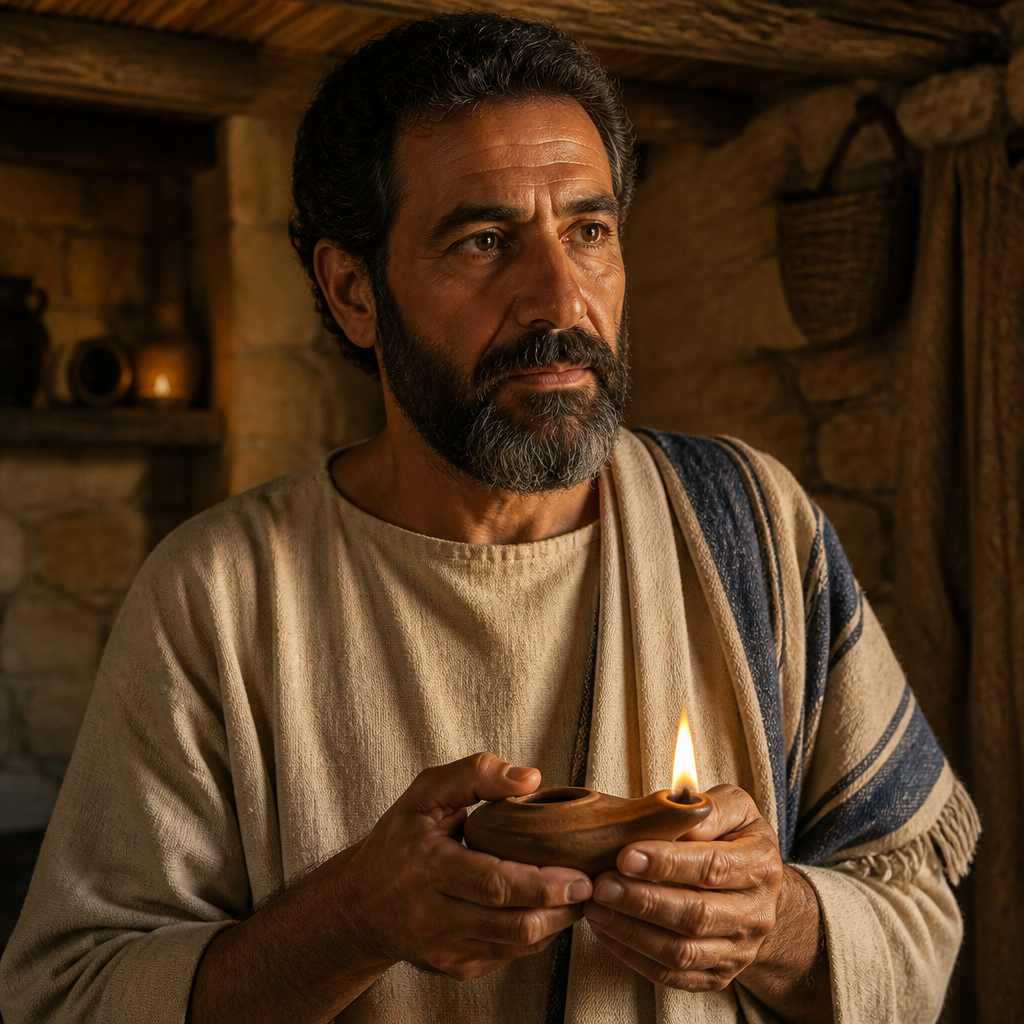 Joshua, Ancestor of JesusThis page
Children
 Er, Ancestor of JesusSonLuke 3:28–29Stated
Extended family
 DavidAncestorLuke 3:29
Inferred
No verse names David and Joshua together; the descendant link is carried from the surrounding genealogy and is not stated in Scripture.Evidence: Luke 3:29
 JesusDescendantLuke 3:29
Inferred
No verse names Joshua and Jesus together; the descendant link is carried from the surrounding genealogy and is not stated in Scripture.Evidence: Luke 3:29
Connected Figures
Family
Father · Luke 3:29
A member of the tribe of Judah and an ancestor of Jesus Christ, listed in the Lucan genealogy between Jorim and Joshua.
Son · Luke 3:28–29
Er was a descendant of the tribe of Judah who appears in the Lucan genealogy as an ancestor of Jesus Christ.
Ancestor · Luke 3:29
The second king of the United Monarchy of Israel, a shepherd-warrior and psalmist known as a man after God's own heart.
United MonarchyFirst: Ruth 4:17998 versesKing of Israel, Shepherd, Musician, WarriorJudah
Descendant · Luke 3:29
The central figure of the New Testament, Jesus was born of Mary in Bethlehem, performed numerous miracles, and was crucified under Pontius Pilate before rising from the dead.
The GospelsFirst: Matthew 1:11,174 versesCarpenter, TeacherJudah
Categories
Mentions by Book
- Isaiah1
- Luke2
- Acts1
Scripture References
All 4 indexed verses, in canonical order, from the Berean Standard Bible.
Isaiah · 1
- Isaiah 7:14Partial
Therefore the Lord Himself will give you a sign: Behold, the virgin will be with child and give birth to a son, and will call Him Immanuel.
Cited as evidence on a family card; added so References, Key Verses and Mentions by Book share one index.
Luke · 2
- Luke 3:28Partial
the son of Melchi, the son of Addi, the son of Cosam, the son of Elmadam, the son of Er,
Cited as evidence on a family card; added so References, Key Verses and Mentions by Book share one index.
- Luke 3:29
the son of Joshua, the son of Eliezer, the son of Jorim, the son of Matthat, the son of Levi,
Acts · 1
- Acts 7:45
And our fathers who received it brought it in with Joshua when they dispossessed the nations God drove out before them. It remained until the time of David,
Cited as evidence on a family card; added so References, Key Verses and Mentions by Book share one index.
Others Named Joshua
Compare all 5 bearers →Joshua of Beth-shemesh1 Samuel 6:14
A landowner in Beth-shemesh whose field served as the resting place for the Ark of the Covenant upon its return from Philistia.
Joshua, Governor of the City2 Kings 23:8
A high-ranking Judean official during the reign of King Josiah who governed the city of Jerusalem.
Joshua, High Priest of the ReturnEzra 2:2
Joshua, son of Jehozadak, was the first High Priest of the Jewish community that returned from the Babylonian exile to rebuild the Temple in Jerusalem.
Joshua, Son of NunExodus 17:9
The successor to Moses and commander of the Israelites who led the conquest of Canaan and divided the Promised Land among the twelve tribes.