Jeiel, Musician of the Divided Monarchy
A Levite musician and gatekeeper appointed to serve before the Ark of the Covenant during its historic transfer to Jerusalem under King David.
Jeiel was a Levite official who served during the pivotal transition of the Ark of the Covenant to Jerusalem during the Divided Monarchy era. He is primarily identified as a musician and gatekeeper within the sanctuary services established by King David. His role was central to the institutionalization of liturgical worship, marking a shift from the nomadic tabernacle traditions to a structured, musical, and permanent sacrificial system in the City of David.
Working alongside notable figures such as Asaph and Obed-edom, Jeiel was among the specialized class of Levites selected for their skill and spiritual standing. His presence in the biblical record highlights the meticulous organization of the Davidic cultus, where even individual musicians were recorded by name to validate the legitimacy of the worship rituals.
Background and Family
Jeiel was a member of the tribe of Levi, though his specific house or lineage within the three major Levite branches (Gershon, Kohath, and Merari) is not explicitly detailed in the surviving genealogies of 1 Chronicles 15. He appears in the biblical record during the reign of King David, a period defined by the consolidation of the Israelite tribes and the establishment of Jerusalem as the religious and political center of the nation. Jeiel belonged to the "second rank" of Levite officials, indicating a position of significant responsibility beneath the chief leaders like Asaph and Heman.
Major Life Events
Jeiel’s primary contribution to the biblical narrative occurs during the transport of the Ark of the Covenant from the house of Obed-edom to the special tent prepared for it in Jerusalem.
The Procession of the Ark
According to 1 Chronicles 15:18, Jeiel was initially designated as a gatekeeper (shoer). This role was not merely custodial but carried high spiritual weight, as the gatekeepers were responsible for maintaining the sanctity of the area surrounding the Ark. However, his duties expanded as the musical liturgy was organized. 1 Chronicles 15:21 notes that Jeiel was specifically chosen to play the lyre (kinnor). He was instructed to play "according to Sheminith," a musical term likely referring to a lower octave or a specific eight-stringed style intended to lead the congregational singing.
Permanent Service in Jerusalem
Following the successful installation of the Ark in Jerusalem, Jeiel was appointed to a permanent position of service. 1 Chronicles 16:5 records that he served directly under Asaph the chief musician. In this capacity, Jeiel played the harp and lyre during the daily offerings. This period represents the formalization of the "Service of Song," which would eventually become the hallmark of the First Temple’s liturgy.
Relationship to Other Biblical Figures
Jeiel is consistently grouped with a specific cadre of Levite musicians. He served alongside Obed-edom, who is mentioned in the same lists as both a gatekeeper and a musician. He also worked under the direction of Asaph, the famous psalmist and leader of the Davidic choir. While the text does not record his specific father or sons, his inclusion in these lists links him to the elite circle of individuals responsible for the most sacred elements of Israel’s national worship.
Spiritual Significance
Jeiel represents the biblical principle of "excellence in service." His role as both a gatekeeper and a musician demonstrates the versatility required of the Levites. Theologically, his life illustrates the transition of worship from a silent ritual to a musical celebration. By participating in the Sheminith-style music, Jeiel helped facilitate a communal atmosphere of praise that the Chronicler presents as essential to the spiritual health of the monarchy. His inclusion by name in the registers of 1 Chronicles serves as a testament to the fact that in the service of God, individual contributions to the harmony of the whole are noted and preserved.
Spiritual Significance
Jeiel’s significance lies in his role as a foundational architect of Israelite liturgical music. He was part of the first generation of musicians to serve before the Ark in its permanent home in Jerusalem, helping to bridge the gap between the Mosaic Law and the Davidic worship style. His specific use of the lyre and the 'Sheminith' setting points to a sophisticated understanding of music as a vehicle for divine praise.
Furthermore, Jeiel exemplifies the dual nature of Levite service—protection and praise. By serving as both a gatekeeper and a musician, he helped ensure that the presence of God was both honored through sacred boundaries and celebrated through sacred song. His presence in the 1 Chronicles record underscores the importance of the 'minor' figures who sustain the religious life of a nation.
Frequently Asked Questions
What instrument did Jeiel play?
Jeiel played the lyre (kinnor) and the harp, specifically helping to lead the music 'according to Sheminith,' which likely refers to a specific musical scale or lower register.
Was Jeiel a priest or a Levite?
Jeiel was a Levite. While priests (descendants of Aaron) were responsible for the sacrifices and blowing trumpets, Levites like Jeiel were responsible for the vocal and instrumental music, as well as guarding the sanctuary.
What was Jeiel's role during the moving of the Ark?
He served as both a gatekeeper and a musician, playing the lyre in the procession that brought the Ark of the Covenant into the City of David.
Under whose leadership did Jeiel serve?
Jeiel served under the leadership of King David, and more specifically, he was under the direct supervision of Asaph, the chief musician.
Where is Jeiel mentioned in the Bible?
This specific Jeiel is mentioned in the book of 1 Chronicles, specifically in chapters 15 and 16, which detail the organization of the Levites in Jerusalem.
Connected Figures
Asaph
Chief Musician and supervisor

Obed-edom
Fellow gatekeeper and musician
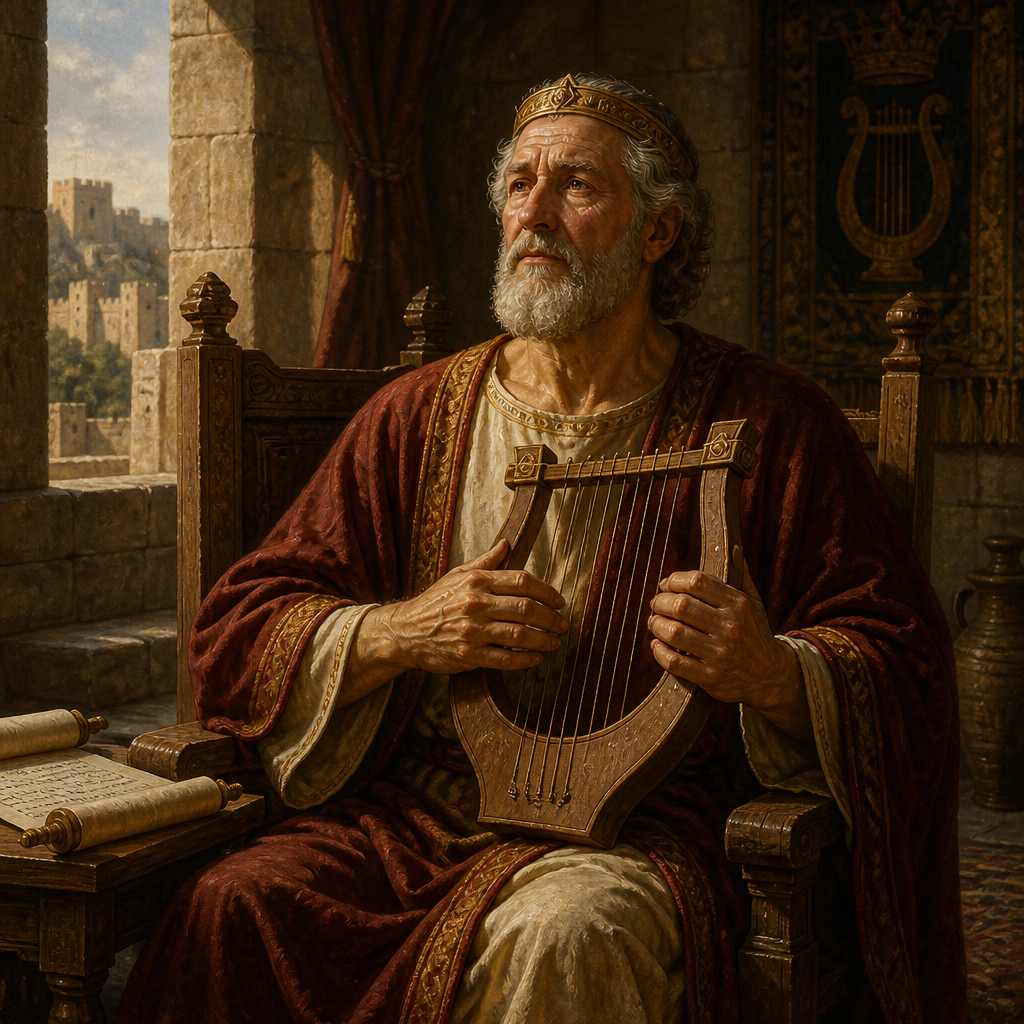
David
King who appointed him
Mattithiah
Fellow musician in the second rank
Categories
Mentions by Book
- 1 Chronicles4
Others Named Jeiel
Jeiel, Ancestor of Jahaziel2 Chronicles 20:14
A Levite of the descendants of Asaph and an ancestor of the prophet Jahaziel during the reign of King Jehoshaphat.
Jeiel, Reubenite Chief of the Divided Monarchy1 Chronicles 5:7
A prominent chief of the tribe of Reuben during the period of the Divided Monarchy, recorded in the genealogical registers of 1 Chronicles.
Jeiel, son of Hotham the Aroerite1 Chronicles 11:44
Jeiel was a warrior and the son of Hotham the Aroerite, recognized as one of King David’s mighty men during the period of the Divided Monarchy.
Jeiel, Officer of the Levites2 Chronicles 35:9
Jeiel was a high-ranking Levite official who provided thousands of animals for King Josiah’s historic Passover celebration.
Jeiel the Scribe2 Chronicles 26:11
A high-ranking royal scribe during the reign of King Uzziah who organized the military divisions of Judah.
Jeiel, son of NeboEzra 10:43
A descendant of Nebo during the Post-Exilic Period who was listed among those required to dissolve foreign marriages under the reforms of Ezra.