Hodesh
Who was Hodesh in the Bible?
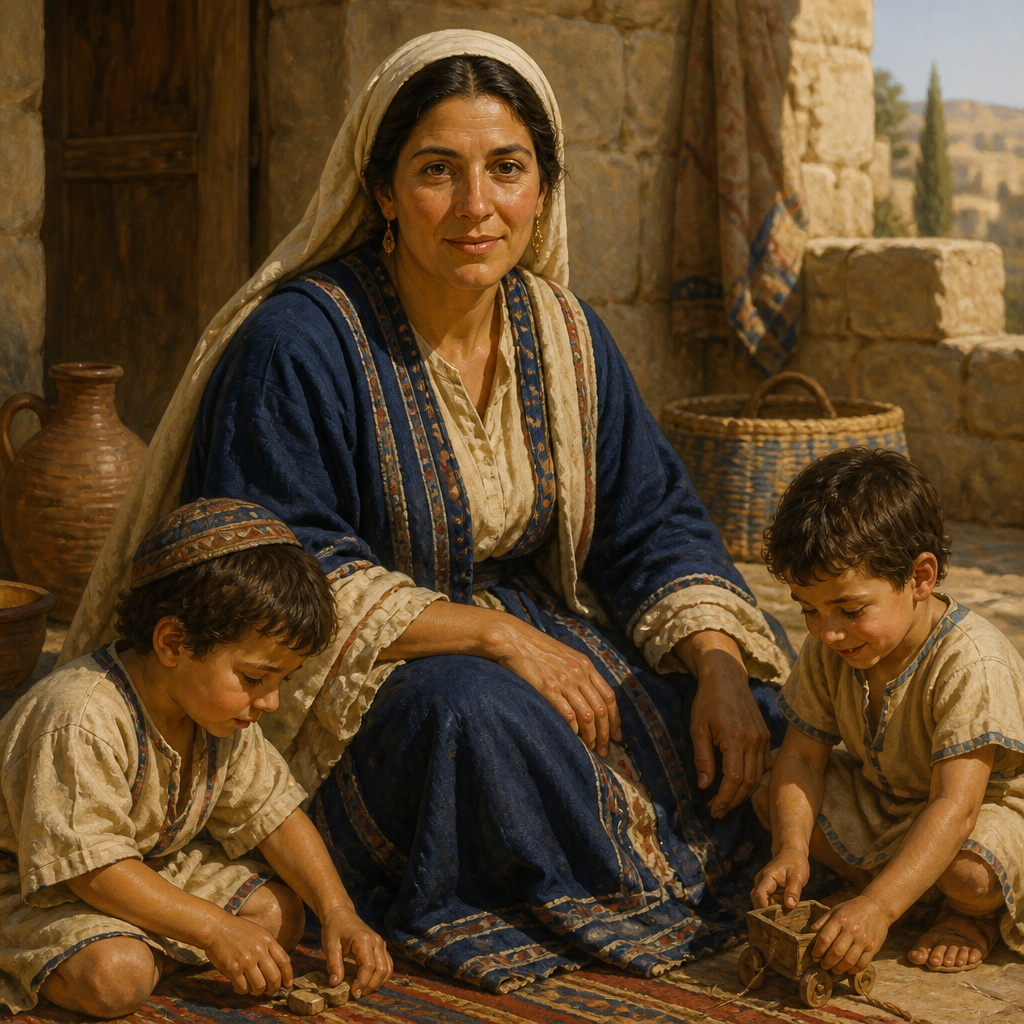
Hodesh was a woman of the tribe of Benjamin during the Divided Monarchy and a wife of Shaharaim, notable for being the mother of seven sons listed in the Benjamite genealogy.
Hodesh is a figure mentioned within the genealogical records of the tribe of Benjamin, specifically during the era of the Divided Monarchy. Her presence in the biblical text is brief but significant for establishing the lineage of specific Benjamite clans who settled in the regions of Moab and later returned to territories such as Ono and Lod. She is identified as one of the wives of Shaharaim, a man who migrated to the country of Moab.
The inclusion of Hodesh in 1 Chronicles 8 serves to document the expansion and preservation of the tribe of Benjamin. While the biblical narrative does not provide personal details regarding her character or upbringing, she is distinguished by the naming of her seven sons, all of whom became heads of their respective ancestral houses. Her name, derived from the Hebrew word for 'new moon' or 'month,' suggests a connection to temporal markers or perhaps a birth coinciding with a festival.
Background and Family
Hodesh appears in the genealogical records of the tribe of Benjamin recorded in 1 Chronicles 8. This chapter focuses on the descendants of Benjamin, the youngest son of Jacob, with a particular emphasis on the lineages that would eventually produce King Saul and other prominent leaders. Hodesh is identified as a wife of Shaharaim. The text notes a complex family dynamic; Shaharaim had sent away two other wives, Hushim and Baara, before fathering children by Hodesh in the land of Moab.
Because the genealogy of Benjamin is vital to the post-exilic community's identity, Hodesh represents a link in the chain of continuity for the tribe. Her sons—Jobab, Zibia, Mesha, Malcam, Jeuz, Sachia, and Mirmah—are listed specifically to denote the growth of the clan during their time in the plains of Moab.
Major Life Events
There are no narrative events recorded for Hodesh outside of her role as a mother and wife. The primary 'event' associated with her is the birth of her seven sons. The biblical record emphasizes that these sons were 'heads of their fathers' houses' (1 Chronicles 8:10). This indicates that Hodesh’s offspring were not merely individuals but founders of significant family units within the Benjamite social structure. Her life was likely defined by the migration of her husband, Shaharaim, from the traditional Benjamite territory to Moab, and the subsequent establishment of a new domestic life there.
Relationship to Other Biblical Figures
Hodesh’s primary relationship is with her husband, Shaharaim. The text suggests she may have been his third wife or a subsequent partner after his separation from Hushim and Baara. Through her sons, she is linked to the broader tribal leadership of Benjamin. Her sons, particularly figures like Mesha and Malcam, share names with prominent regional deities or kings (such as the King of Moab), which has led some scholars to discuss the cultural interactions between the Benjamites and the Moabites during this period. However, the Bible maintains their identity as members of the covenant people of Israel.
Spiritual Significance
While the Bible does not record Hodesh performing specific spiritual acts or receiving divine revelations, her inclusion in the Holy Scriptures carries theological weight. In the context of 1 Chronicles, genealogies are a testimony to God’s faithfulness in preserving the lines of Israel despite migration, marital complications, and foreign residency. Hodesh represents the fruitfulness of the tribe of Benjamin in a foreign land. Her presence ensures that the history of the tribe is complete, acknowledging the women who built the houses of Israel. The naming of her sons as 'heads of houses' underscores the biblical theme that every individual in the genealogy contributes to the greater story of God’s people.
Hodesh's significance lies in her role within the Benjamite genealogy, ensuring the preservation of the lineage during a period of migration to Moab. As the mother of seven clan leaders, she represents the vital role of women in maintaining the tribal identity and legal inheritance of Israel. Her mention in 1 Chronicles highlights the importance of historical continuity for the Jewish people returning from exile, proving their ancestral roots in the tribe of Benjamin.
Frequently Asked Questions
Who was Hodesh's husband?
Hodesh was the wife of Shaharaim, a member of the tribe of Benjamin.
How many children did Hodesh have?
Hodesh is recorded as having seven sons: Jobab, Zibia, Mesha, Malcam, Jeuz, Sachia, and Mirmah.
What tribe did Hodesh belong to?
She belonged to the tribe of Benjamin through her marriage and inclusion in their genealogical records.
Where did Hodesh live?
She lived in the country of Moab, where her husband Shaharaim had relocated after leaving his previous wives.
What does the name Hodesh mean?
The name Hodesh (חֹדֶשׁ) is Hebrew for 'new moon' or 'month'.
Family & Relationships
 ShaharaimHusband1 Chronicles 8:9Stated
 HodeshThis page
Children
 JeuzSon1 Chronicles 8:9
Inferred
No verse names Jeuz and Hodesh together; the mother link is carried from the surrounding genealogy and is not stated in Scripture.Evidence: 1 Chronicles 8:9
 Jobab, Son of ShaharaimSon1 Chronicles 8:9
Inferred
1 Chronicles 8:9 names Hodesh and Jobab in the same verse but does not state a son tie between them; the link rests on the surrounding narrative.Evidence: 1 Chronicles 8:9
 MalcamSon1 Chronicles 8:9
Inferred
1 Chronicles 8:9 names Hodesh and Malcam in the same verse but does not state a son tie between them; the link rests on the surrounding narrative.Evidence: 1 Chronicles 8:9
 Mesha, Son of ShaharaimSon1 Chronicles 8:9
Inferred
1 Chronicles 8:9 names Mesha and Hodesh in the same verse but does not state a mother tie between them; the link rests on the surrounding narrative.Evidence: 1 Chronicles 8:9
 MirmahSon1 Chronicles 8:9
Inferred
No verse names Mirmah and Hodesh together; the mother link is carried from the surrounding genealogy and is not stated in Scripture.Evidence: 1 Chronicles 8:9
 SachiaSon1 Chronicles 8:9
Inferred
No verse names Sachia and Hodesh together; the mother link is carried from the surrounding genealogy and is not stated in Scripture.Evidence: 1 Chronicles 8:9
 ZibiaSon1 Chronicles 8:9
Inferred
1 Chronicles 8:9 names Zibia and Hodesh in the same verse but does not state a mother tie between them; the link rests on the surrounding narrative.Evidence: 1 Chronicles 8:9
Connected Figures
Family
Husband · 1 Chronicles 8:9
A Benjaminite who settled in the land of Moab and became the progenitor of several prominent family lines after divorcing two of his wives.
Son · 1 Chronicles 8:9
A son of Shaharaim and Hodesh within the tribe of Benjamin, recognized as a head of a family during the period of the Divided Monarchy.
Son · 1 Chronicles 8:9
A son of the Benjamite Shaharaim and his wife Hodesh, listed in the post-exilic genealogies of the Tribe of Benjamin during the Divided Monarchy.
Son · 1 Chronicles 8:9
Malcam was a Benjamite, the son of Shaharaim and Hodesh, recorded in the genealogical records of the tribe of Benjamin.
Son · 1 Chronicles 8:9
Mesha was a descendant of Benjamin born in the land of Moab to Shaharaim and his wife Hodesh during the Divided Monarchy era.
Son · 1 Chronicles 8:9
A Benjamite leader and son of Shaharaim, recognized in the post-exilic genealogies as a head of a family during the Divided Monarchy era.
Son · 1 Chronicles 8:9
Sachia was a Benjamite family head born in Moab during the Divided Monarchy period to Shaharaim and his wife Hodesh.
Son · 1 Chronicles 8:9
A son of Shaharaim and Hodesh, identified as a head of a household within the tribe of Benjamin during the era of the Divided Monarchy.
Categories
Mentions by Book
- 1 Chronicles3
Scripture References
All 3 indexed verses, in canonical order, from the Berean Standard Bible.
1 Chronicles · 3
- 1 Chronicles 8:8Partial
Shaharaim had sons in the country of Moab after he had divorced his wives Hushim and Baara.
Cited as evidence on a family card; added so References, Key Verses and Mentions by Book share one index.
- 1 Chronicles 8:9
His sons by his wife Hodesh: Jobab, Zibia, Mesha, Malcam,
- 1 Chronicles 8:10Partial
Jeuz, Sachia, and Mirmah. These were his sons, heads of families.
Cited as evidence on a family card; added so References, Key Verses and Mentions by Book share one index.