Harim, Priest of the Divided Monarchy
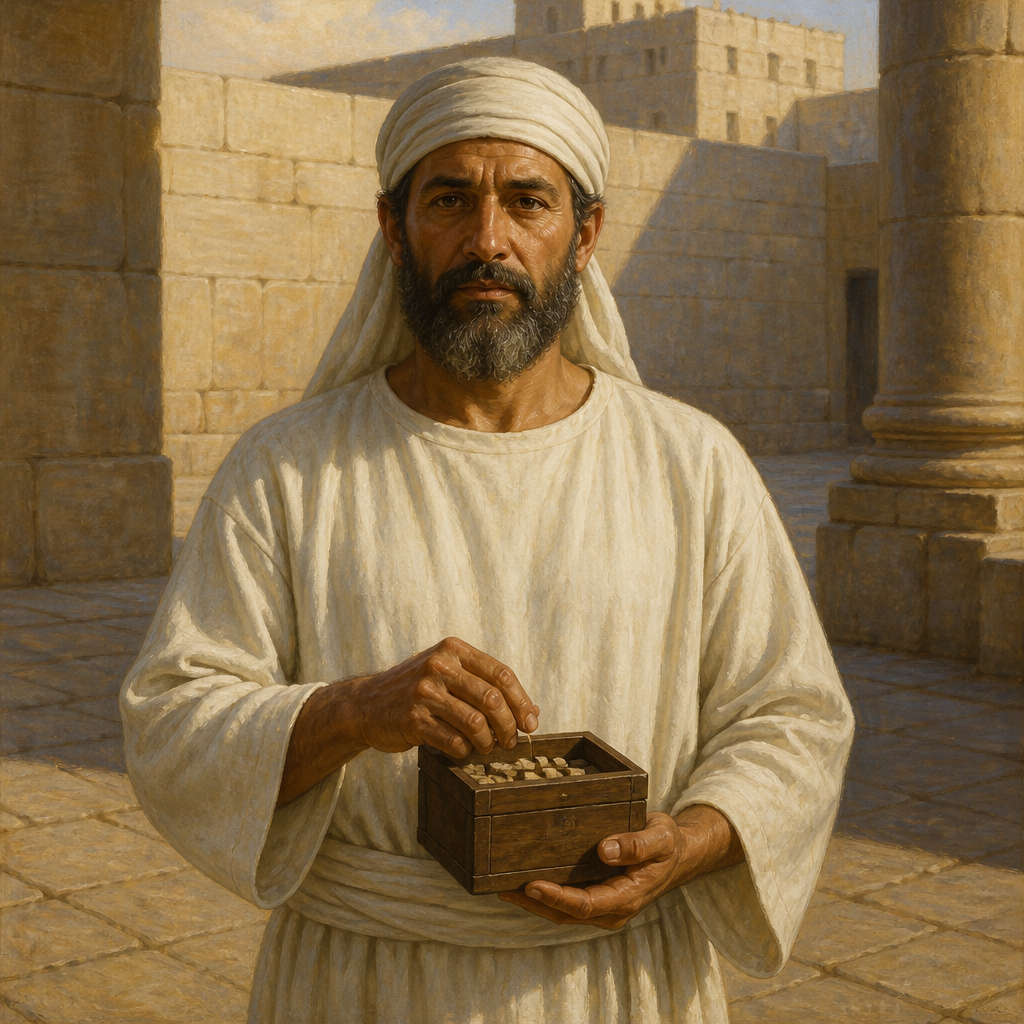
A priest during the Divided Monarchy who headed the third of twenty-four divisions established for the service of the house of the Lord.
Harim was a high-ranking priest during the era of the Divided Monarchy, specifically during the organizational efforts attributed to the late reign of King David and continuing into the Temple period. His name, derived from a Hebrew root meaning 'dedicated' or 'consecrated,' reflects his hereditary role within the liturgical life of Israel.
He is primarily identified as the head of the third priestly course among the twenty-four divisions organized to ensure orderly worship in the Jerusalem Temple. While Harim himself is a figure of the Monarchy era, his genealogical line remained prominent and identifiable for centuries, persisting through the Babylonian captivity and into the restoration of Jerusalem.
Background and Family
Harim appears in the biblical record as a central figure in the priestly hierarchy established during the transition from the United Monarchy to the early Temple period. As a descendant of Aaron, he held the status of a priest. In 1 Chronicles 24, the priesthood was divided into twenty-four "lots" or courses to handle the vast responsibilities of the sanctuary. Harim was selected by lot to lead the third division. This ranking suggests a position of significant seniority and prestige within the Levitical structure, as the order of these lots determined the sequence of service throughout the liturgical year.
Major Life Events
The primary recorded event of Harim’s life is his appointment to the third priestly course. This organization was designed to maintain order in the Temple, preventing chaos among the numerous priestly families. Each course would serve in the Temple for a specific duration, likely one week at a time, twice a year, in addition to major festivals.
Although the chronological setting of 1 Chronicles 24 is the reign of David, the impact of Harim’s leadership is felt most clearly in the records of the return from Exile. The "descendants of Harim" (Bene-Harim) are specifically enumerated in the census of those returning with Zerubbabel. According to Ezra 2:39 and Nehemiah 7:42, this family group numbered 1,017 individuals. This large number indicates that Harim was the progenitor of a robust and enduring priestly line that maintained its identity even during the seventy years of displacement in Babylon.
Relationship to Other Biblical Figures
Harim’s contemporaries included Seorim, who headed the fourth priestly lot, and other prominent priests like Jehoiarib and Jedaiah. In the post-exilic era, his descendants are listed among those who faced the spiritual crisis of intermarriage with foreign women. Ezra 10:21 identifies specific descendants—Maaseiah, Elijah, Shemaiah, Jehiel, and Uzziah—who were required to put away their foreign wives and offer a trespass offering. A second group of Harim's descendants, including Eliezer and Malchijah, is mentioned in Ezra 10:31 as participating in the same restorative measures.
Spiritual Significance
The legacy of Harim represents the continuity of the covenant and the preservation of the sacred office. Despite the political upheaval of the Divided Monarchy and the eventual destruction of the Temple, the "house of Harim" preserved their genealogical records and their commitment to the priesthood. Their presence in the restoration books of Ezra and Nehemiah serves as a testament to the endurance of the religious structures established centuries earlier. The mention of his descendants in the context of Ezra’s reforms also highlights the ongoing struggle for ritual and communal purity within the priestly classes.
Spiritual Significance
Harim's significance lies in the institutionalization of the priesthood. By heading the third division, he became a foundational part of the Temple's operational framework. His name serves as a marker of liturgical order and genealogical fidelity. The survival of his house through the Exile demonstrates the resilience of the Aaronic priesthood and its role in maintaining Jewish identity under foreign rule.
Frequently Asked Questions
What does the name Harim mean?
The name Harim comes from the Hebrew root 'ḥrm,' which means 'consecrated' or 'dedicated to God.'
Which priestly division did Harim lead?
Harim was appointed to the third of the twenty-four priestly divisions.
How many descendants of Harim returned from Babylon?
According to Ezra 2:39 and Nehemiah 7:42, 1,017 descendants of Harim returned to Jerusalem.
What role did Harim's descendants play in the reforms of Ezra?
Several of his descendants were among those who had married foreign women and were led by Ezra to repent and separate from them to maintain the purity of the priestly line.
Connected Figures
Seorim
Contemporary priest heading the fourth lot
Ezra
Leader who oversaw Harim's descendants in the restoration
Maaseiah
Post-exilic descendant
Categories
Mentions by Book
- Ezra3
- 1 Chronicles1
- Nehemiah1
Others Named Harim
Harim, Father of MalchijahNehemiah 3:11
The father of Malchijah, an exile returnee who participated in the reconstruction of the Jerusalem wall and the Tower of the Ovens.
Harim, Covenanter of NehemiahNehemiah 10:27
A Jewish leader during the Post-Exilic Period who signed the firm covenant to obey God's Law under the leadership of Nehemiah.
Harim, Progenitor of Returning ExilesEzra 2:32
An ancestral figure whose 320 descendants returned from the Babylonian captivity to Jerusalem and Judah following the decree of Cyrus the Great.