Delaiah, Official of King Jehoiakim
A high-ranking official in the court of King Jehoiakim who pleaded with the king not to burn the prophetic scroll of Jeremiah.
Delaiah, the son of Shemaiah, was a prominent official in the royal court of Judah during the reign of King Jehoiakim in the late 7th century BC. He is specifically mentioned during the dramatic events surrounding the delivery of God’s messages through the prophet Jeremiah and his scribe, Baruch. As one of the king's advisors, Delaiah occupied a position of significant political and social influence during a period of intense national crisis as the Babylonian threat loomed over Jerusalem.
Delaiah is distinguished in the biblical narrative for his response to the word of God. Unlike the king he served, Delaiah demonstrated a degree of reverence for the prophetic warnings. He was part of a small group of officials who recognized the gravity of Jeremiah’s message and actively attempted to intervene when the king moved to destroy the physical record of those prophecies.
Background and Family
Delaiah lived during the Divided Monarchy, specifically during the sunset years of the Kingdom of Judah. He is identified as the son of Shemaiah (Jeremiah 36:12). While his specific tribe is not explicitly mentioned in the text, his presence in the "scribe’s chamber" in the king’s palace suggests he was part of the Judean aristocracy or the professional bureaucratic class that managed the affairs of the state under the Davidic kings.
Major Life Events
The biblical record of Delaiah is focused entirely on the events of the fifth year of King Jehoiakim (c. 604 BC). Following a fast proclaimed in Jerusalem, Baruch, the scribe of Jeremiah, stood in the temple and read a scroll containing all the prophecies Jeremiah had received concerning Israel, Judah, and the surrounding nations.
When Micaiah the son of Gemariah heard these words, he went to the king's palace to report to the officials. Delaiah was among those gathered in the scribe’s chamber, alongside other notable figures such as Elishama the scribe and Gemariah son of Shaphan. Upon hearing Baruch read the scroll themselves, the officials, including Delaiah, were gripped by fear. They recognized the divine authority of the message and informed Baruch that they must report these words to the king, while also advising Baruch and Jeremiah to go into hiding for their safety.
"Even though Elnathan, Delaiah, and Gemariah urged the king not to burn the scroll, he would not listen to them." (Jeremiah 36:25)
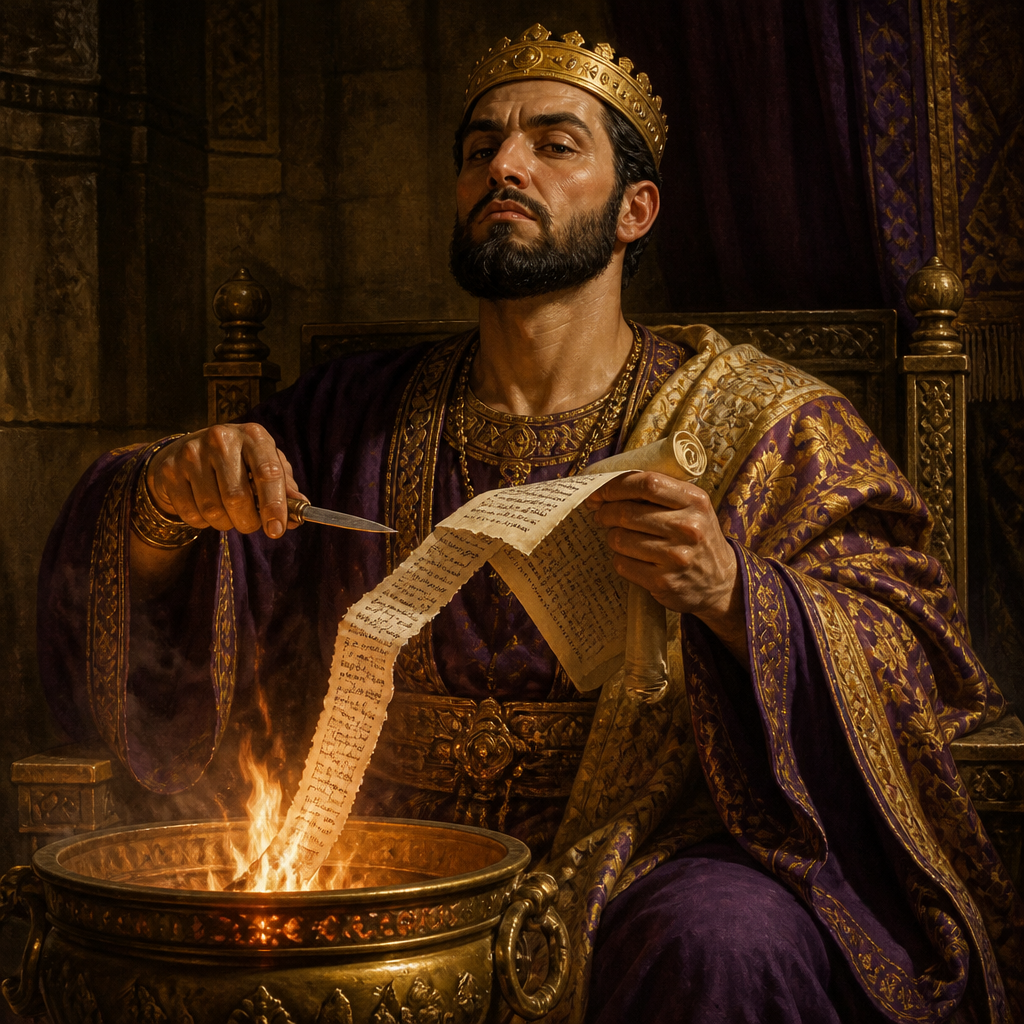
When the scroll was eventually read to King Jehoiakim, the king showed utter contempt for the word of the Lord. As the scroll was read, he would cut off sections with a scribe’s knife and throw them into a fire pot. Delaiah, along with Elnathan and Gemariah, showed significant moral courage by pleading with the king not to destroy the scroll. Their petition was unsuccessful, as the king’s heart was hardened, yet the record preserves Delaiah's attempt to prevent the sacrilege.
Relationship to Other Biblical Figures
Delaiah operated within a circle of high-level officials. He is mentioned in close association with Gemariah son of Shaphan and Elnathan son of Achbor. His relationship with King Jehoiakim appears to have been one of subordinate counsel; while he had the right to speak to the king, he lacked the power to overrule the monarch's rash decisions. His actions indirectly protected Jeremiah and Baruch by ensuring they were warned to hide before the king’s inevitable angry reaction.
Spiritual Significance
Delaiah serves as a witness to the internal conflict within the Judean leadership. While the king represented the height of rebellion against God, officials like Delaiah represented a remnant within the government that still feared the word of the Lord. Although he did not successfully stop the king's rebellion, his protest stands as a testimony against the house of Jehoiakim. He exemplifies the individual responsibility of those in power to speak truth to authority, even when that authority refuses to listen.
Spiritual Significance
Delaiah represents the group of Judean officials who, despite being part of a corrupt administration, retained a fear of God and respected the prophetic office. His efforts to save Jeremiah’s scroll highlight the tension between the political establishment and the prophetic word during the Babylonian crisis. His presence in the narrative serves to underscore the king's isolation in his wickedness; even his own advisors recognized the danger of rejecting God's warnings.
Frequently Asked Questions
What was Delaiah's role in the court of King Jehoiakim?
Delaiah was a royal official or 'prince' (sar) who met with other high-ranking leaders in the scribe’s chamber at the king's palace.
Did Delaiah support the prophet Jeremiah?
While he was a government official, he showed respect for Jeremiah's message, reacted with fear to the prophecies of judgment, and urged the king not to burn Jeremiah's scroll.
Who was Delaiah's father?
He is identified in Jeremiah 36:12 as the son of Shemaiah.
Was Delaiah successful in stopping the king from burning the scroll?
No, despite the pleas of Delaiah, Elnathan, and Gemariah, King Jehoiakim burned the scroll in its entirety.
Connected Figures
Jehoiakim
King he served
Baruch
Scribe he listened to and warned
Gemariah
Colleague and fellow petitioner
Shemaiah
Father
Categories
Mentions by Book
- Jeremiah2
Family & Relationships
Parent
Jeremiah 36:12
Others Named Delaiah
Delaiah, Ancestor of ReturneesEzra 2:60
A family head whose descendants returned from the Babylonian exile but were unable to prove their Israelite ancestry through genealogical records.
Delaiah, Priest of the Twenty-Third Course1 Chronicles 24:18
A Levite and priest during the Divided Monarchy who was selected by lot to lead the twenty-third division of priestly service in the temple.
Delaiah, Son of Elioenai1 Chronicles 3:24
A descendant of the Davidic royal line through the tribe of Judah, Delaiah was one of the seven sons of Elioenai listed in the post-exilic genealogies of 1 Chronicles.
Delaiah, Father of ShemaiahNehemiah 6:10
A man of the post-exilic period whose son, Shemaiah, attempted to intimidate Nehemiah through a false prophecy during the rebuilding of Jerusalem's walls.