Obal
Who was Obal in the Bible?
Obal was a son of Joktan and a great-great-great-great-grandson of Noah, listed in the Table of Nations as a progenitor of an early post-Flood clan.
Obal is a figure appearing in the early genealogical records of the Old Testament, specifically within the Primeval History following the Great Flood. He is identified as one of the thirteen sons of Joktan, who was the son of Eber. This lineage places Obal within the Semitic branch of the human family tree, descending from Shem, the son of Noah.
Historically and textually, Obal is situated within the 'Table of Nations,' a critical document in Genesis that explains the repopulation of the earth and the distribution of various ethnic groups and tribes. While his individual life and actions are not detailed in the biblical narrative, his name serves as a marker for the migration and settlement patterns of the early post-diluvian world.
Background and Family
Obal is introduced in the genealogy of Shem, appearing in both Genesis 10 and 1 Chronicles 1. His father, Joktan, was a significant figure in the line of Eber, from whom the term 'Hebrew' is traditionally derived. Obal was part of a large household, listed alongside twelve brothers: Almodad, Sheleph, Hazarmaveth, Jerah, Hadoram, Uzal, Diklah, Abimael, Sheba, Ophir, Havilah, and Jobab.
According to the biblical record, the territory inhabited by the sons of Joktan extended from Mesha toward Sephar, in the eastern hill country. Scholars generally associate this region with the Arabian Peninsula, suggesting that Obal and his siblings were the progenitors of various South Arabian tribes. The name 'Obal' itself is often linked by linguistic scholars to ancient sites or tribal names in the Yemen or Hejaz regions, though the precise location remains a subject of academic debate.
Major Life Events
The Bible does not record any specific events, dialogue, or personal achievements for Obal. His inclusion in the scriptures is strictly genealogical. In the context of Primeval History, his 'life event' is the fulfillment of the divine mandate to 'be fruitful and multiply and fill the earth' (Genesis 9:1) following the Flood. As a descendant of Shem, Obal represents one of the emerging branches of humanity that defined the ethnic landscape of the ancient Near East during the transition from the prehistoric to the early historical period.
Relationship to Other Biblical Figures
Obal’s primary relationship is to his father Joktan and his grandfather Eber. Through Eber, Obal is connected to Peleg. The Bible notes that in Peleg’s days 'the earth was divided' (Genesis 10:25), a reference often interpreted as the linguistic scattering at the Tower of Babel. While Peleg’s line eventually leads to Abraham and the nation of Israel, Obal’s branch (the Joktanites) represents a parallel Semitic line that settled in the Arabian wilderness.
Spiritual Significance
Though Obal is a minor figure, his presence in the Table of Nations carries theological weight. It affirms the biblical worldview that all nations and tribes share a common ancestry and are part of God’s sovereign plan for history. The meticulous listing of names like Obal demonstrates the biblical writers' interest in historical continuity and the preservation of identity within the Semitic lineage. In the Chronicler's work (1 Chronicles 1), the inclusion of Obal serves to root the post-exilic community of Israel in the broader context of human history, reminding them of their place among the ancient families of the earth.
Obal's significance lies in his role as a representative of the Joktanite tribes in the Table of Nations. His listing helps preserve the genealogical bridge between the time of Noah and the emergence of specific regional ethnic groups in the ancient Near East. In a broader theological sense, he exemplifies the expansion of humanity and the fulfillment of God’s post-Flood covenant to repopulate the world.
Furthermore, Obal’s lineage underscores the distinction between the line of Peleg (which led to the Israelites) and the line of Joktan (the Arabian Semites). This distinction is vital for understanding the geographic and ethnic divisions that the biblical authors recognized as established by divine providence in the early ages of the world.
Frequently Asked Questions
Who was Obal's father?
Obal's father was Joktan, who was a descendant of Shem through Eber.
In which books of the Bible is Obal mentioned?
Obal is mentioned in the Book of Genesis (10:28) and the First Book of Chronicles (1:22).
What tribe or nation did Obal belong to?
Obal was a descendant of Shem and is traditionally associated with the early Semitic tribes of the Arabian Peninsula.
How many brothers did Obal have?
Obal had twelve brothers, all of whom were sons of Joktan.
What does the name Obal mean?
The meaning of the name Obal is somewhat uncertain, but it is often associated with linguistic roots suggesting 'stripped' or 'bare,' potentially referring to a geographic region.
Family & Relationships
Parents
 JoktanFatherGenesis 10:26–28Stated
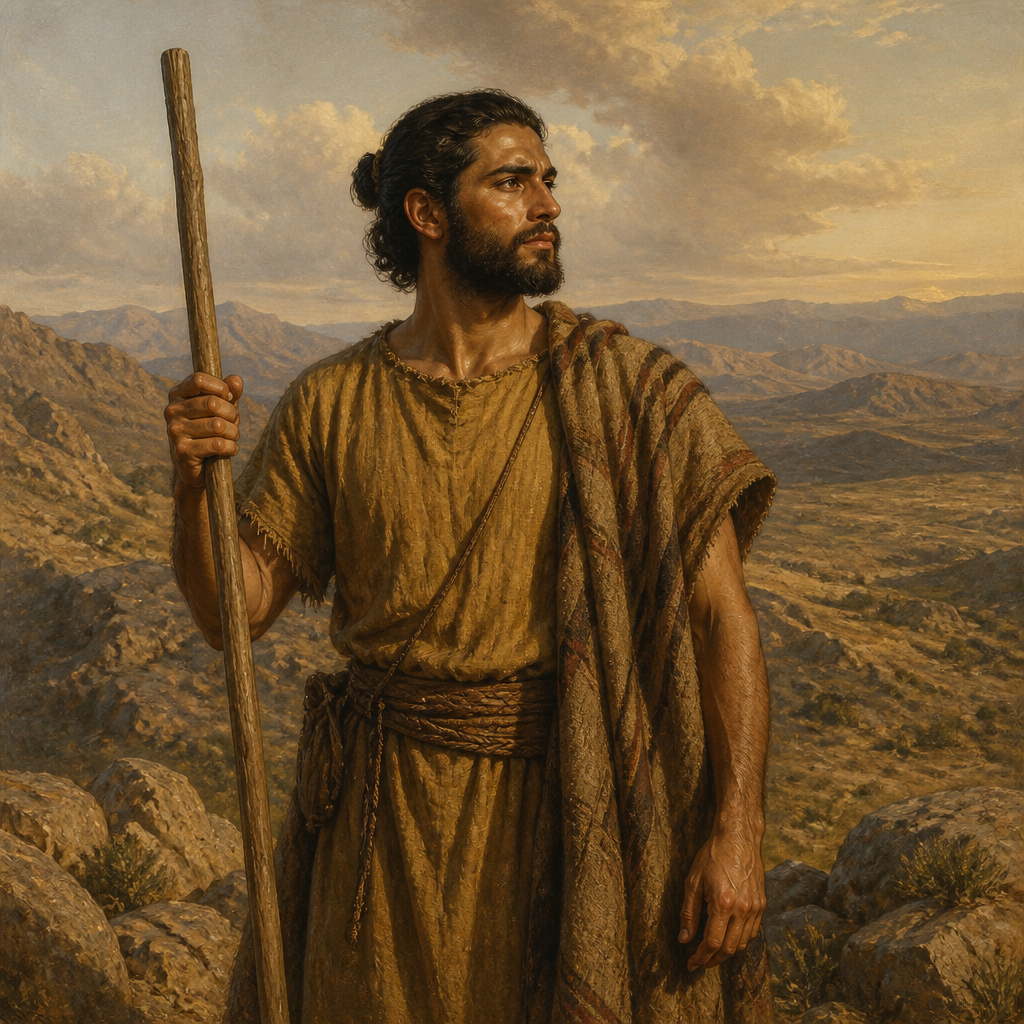 ObalThis page
 AbimaelBrotherGenesis 10:28Stated
 AlmodadBrotherGenesis 10:26–28Stated
 DiklahBrotherGenesis 10:27–28Stated
 HadoramBrotherGenesis 10:27–28Stated
 Havilah, Son of JoktanBrotherGenesis 10:28–29Stated
 HazarmavethBrotherGenesis 10:26–28Stated
 JerahBrotherGenesis 10:26–28Stated
 Jobab, Son of JoktanBrotherGenesis 10:28–29Stated
 OphirBrotherGenesis 10:28–29Stated
 Sheba, Son of JoktanBrotherGenesis 10:28Stated
 ShelephBrotherGenesis 10:26–28Stated
 UzalBrotherGenesis 10:27–28Stated
Connected Figures
Family
Father · Genesis 10:26–28
A foundational patriarch and son of Eber, Joktan is the progenitor of thirteen Arabian tribes in the post-Flood era.
Brother · Genesis 10:28
A son of Joktan and a descendant of Shem, listed in the Table of Nations as a progenitor of an early Arabian tribe.
Brother · Genesis 10:26–28
Almodad was the firstborn son of Joktan and a descendant of Shem, listed in the Table of Nations as a founder of early post-flood tribal groups.
Primeval HistoryFirst: Genesis 10:265 versesTribal Founder
Brother · Genesis 10:27–28
Diklah was a son of Joktan and a descendant of Shem, listed in the Table of Nations as a progenitor of early Semitic peoples.
Brother · Genesis 10:27–28
A son of Joktan and descendant of Shem, Hadoram was an early patriarch mentioned in the Table of Nations as a founder of a post-Flood tribal group.
Brother · Genesis 10:28–29
A descendant of Shem through Joktan, Havilah was a progenitor of a tribe in the Arabian Peninsula during the Primeval History era.
Brother · Genesis 10:26–28
A son of Joktan and a descendant of Shem, listed in the Table of Nations as a patriarch of the early post-flood world.
Brother · Genesis 10:26–28
Jerah was a son of Joktan and a descendant of Shem, listed in the Table of Nations as a progenitor of early Arabian tribes.
Brother · Genesis 10:28–29
A descendant of Shem and the final son listed among the thirteen sons of Joktan within the Table of Nations.
Brother · Genesis 10:28–29
Ophir was a descendant of Shem through the line of Joktan, listed in the Table of Nations during the Primeval History following the Great Flood.
Brother · Genesis 10:28
A descendant of Shem through Joktan, listed in the Table of Nations as a foundational patriarch of the post-Flood Semitic lineages.
Brother · Genesis 10:26–28
Sheleph was a son of Joktan and a descendant of Shem, listed in the Table of Nations as a founder of early Arabian tribal groups.
Categories
Mentions by Book
- Genesis4
- 1 Chronicles1
Scripture References
All 5 indexed verses, in canonical order, from the Berean Standard Bible.
Genesis · 4
- Genesis 10:26Partial
And Joktan was the father of Almodad, Sheleph, Hazarmaveth, Jerah,
Cited as evidence on a family card; added so References, Key Verses and Mentions by Book share one index.
- Genesis 10:27Partial
Hadoram, Uzal, Diklah,
Cited as evidence on a family card; added so References, Key Verses and Mentions by Book share one index.
- Genesis 10:28
Obal, Abimael, Sheba,
- Genesis 10:29Partial
Ophir, Havilah, and Jobab. All these were sons of Joktan.
Cited as evidence on a family card; added so References, Key Verses and Mentions by Book share one index.
1 Chronicles · 1
- 1 Chronicles 1:22
Obal, Abimael, Sheba,