Patrobas
A 1st-century Christian in Rome mentioned by the Apostle Paul in his greetings to the Roman church.
Patrobas was a member of the early Christian community in Rome during the mid-1st century AD. His name appears exclusively in the concluding greetings of the Epistle to the Romans, where the Apostle Paul singles him out for salutation. While the biblical text provides no biographical details regarding his ancestry, occupation, or specific ministry, his inclusion in Paul’s letter signifies his status as a recognized and valued member of the Roman house churches.
His name is Greek in origin, potentially a shortened form of 'Patrobius.' In the context of the New Testament, Patrobas is listed alongside several other believers, suggesting he belonged to a specific circle or household group within the larger Christian assembly in the capital of the Roman Empire. His presence in the biblical record serves as a testament to the diverse, multi-ethnic composition of the early Church.
Background and Family
The biblical record for Patrobas is confined to a single mention in Romans 16:14. Consequently, there is no definitive scriptural information regarding his family lineage, tribe, or nation of origin. His name, Patrobas (Greek: Πατροβᾶς), was a relatively common name in the Graeco-Roman world. Some scholars note that the name was associated with the household of the Roman elite; for instance, a freedman of Nero named Patrobius is mentioned by the historians Suetonius and Tacitus. However, the Bible does not explicitly link the Patrobas of Romans to any specific social class or historical figure outside the church.
Major Life Events
The only recorded event involving Patrobas is his receipt of a greeting from the Apostle Paul around 57 AD. At this time, Paul was writing from Corinth to the believers in Rome, a city he had not yet visited. The fact that Paul knew Patrobas by name suggests either a prior meeting in another part of the Empire or that Patrobas’s reputation for faithfulness had reached Paul through mutual acquaintances like Aquila and Priscilla.
Patrobas is grouped with Asyncritus, Phlegon, Hermes, Hermas, and "the brothers with them." This grouping often leads commentators to conclude that these individuals formed a specific house church or a shared community within the city. Because Patrobas is mentioned before the collective "brothers," he likely held a position of some influence or seniority within that specific small group.
Relationship to Other Biblical Figures
Patrobas’s primary biblical relationship is his shared fellowship with the Apostle Paul and the other believers named in Romans 16:14. He is specifically associated with Asyncritus, Phlegon, Hermes, and Hermas. While the text does not define the nature of their relationship, the phrasing "and the brothers with them" implies a tight-knit communal bond, likely centered on a local assembly that met in one of their homes. There are no recorded interactions between Patrobas and other major New Testament figures such as Peter or James.
Spiritual Significance
The spiritual significance of Patrobas lies in his role as a representative of the "ordinary" believer in the apostolic age. Though he performed no recorded miracles and wrote no epistles, his name is preserved in the canon of Scripture as a "fellow worker" in the gospel. His inclusion in Romans 16 illustrates the communal nature of the early Church, where individual identity was recognized and valued by the apostolic leadership. For modern readers, Patrobas stands as a reminder that the growth of the early Christian movement depended not only on prominent apostles but also on the steadfastness of unnamed and quiet disciples who formed the backbone of the local church in the heart of the Roman Empire.
Spiritual Significance
Patrobas represents the foundational layer of the early Christian Church in Rome. His mention in the New Testament underscores the Apostle Paul's personal concern for individual members of the congregations, even those in cities he had yet to visit. The presence of Greek names like Patrobas in the Roman church also highlights the cosmopolitan and inclusive nature of early Christianity, which bridged cultural and linguistic divides.
Furthermore, Patrobas is part of the evidence used by historians to reconstruct the structure of the early Roman church. Rather than one monolithic congregation, the greetings in Romans 16 suggest a network of house churches. Patrobas, as part of a named list, likely served as a pillar or host for one such small community, contributing to the survival and expansion of the faith under the shadow of the Roman imperial government.
Frequently Asked Questions
Where is Patrobas mentioned in the Bible?
Patrobas is mentioned only once in the Bible, in Romans 16:14.
What does the name Patrobas mean?
The name is Greek (Πατροβᾶς) and is likely a shortened form of 'Patrobius,' meaning 'life of the father' or 'paternal.'
Was Patrobas an apostle?
No, there is no biblical evidence that Patrobas was an apostle. He is described as a member of the Christian community in Rome.
What was Patrobas's role in the early church?
While his specific role is not stated, he was a recognized leader or prominent member of a house church in Rome, as he was greeted by name by the Apostle Paul.
Did Patrobas know the Apostle Paul personally?
The Bible does not explicitly say. Paul may have met him elsewhere in his travels, or he may have known of him by reputation through other believers.
Connected Figures
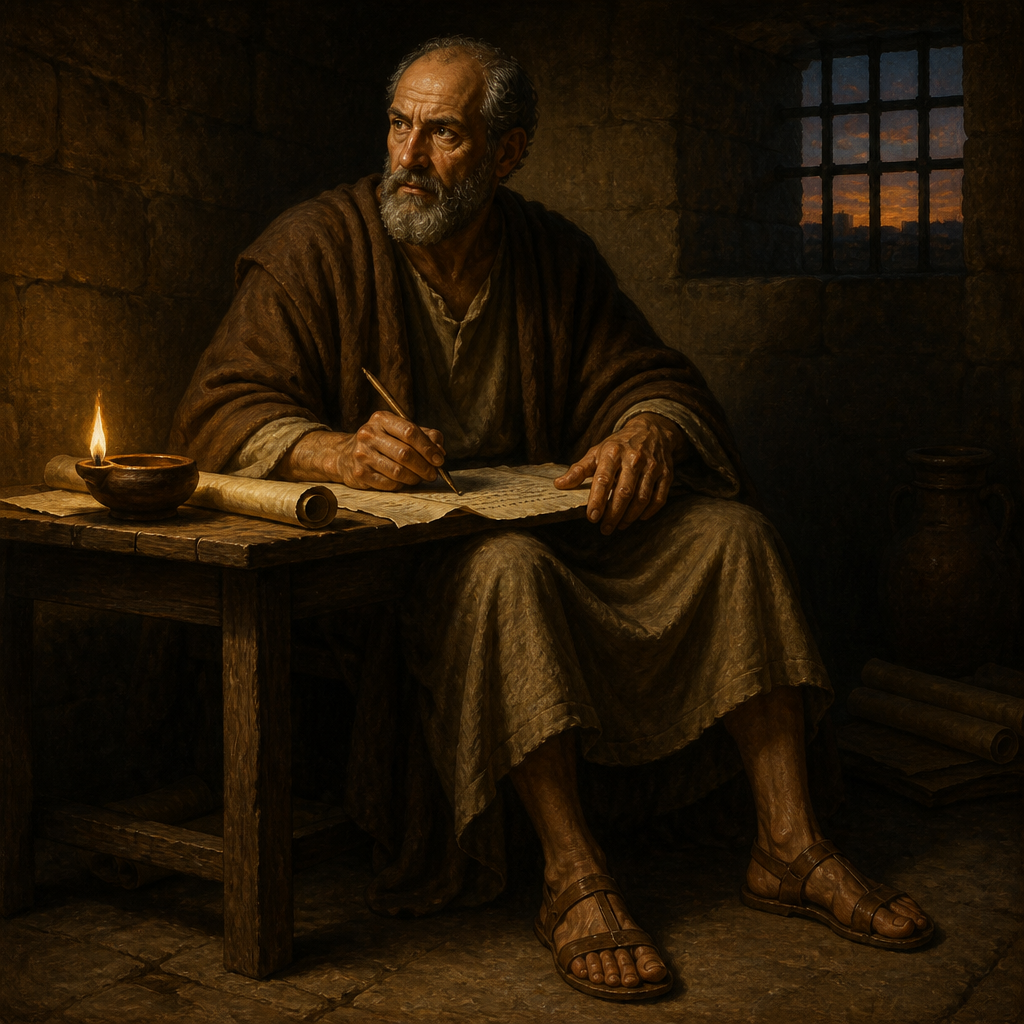
Paul the Apostle
Fellow believer and author of the greeting
Asyncritus
Fellow believer mentioned in the same greeting
Hermas
Fellow believer mentioned in the same greeting
Phlegon
Fellow believer mentioned in the same greeting
Categories
Mentions by Book
- Romans1