The Widow with Two Mites
An anonymous destitute woman praised by Jesus for donating her entire livelihood to the Temple treasury.
The Widow with Two Mites is a figure appearing in the Synoptic Gospels of Mark and Luke during the final week of Jesus' earthly ministry in Jerusalem. Though she remains anonymous and her actions are described in only a few verses, she serves as a profound illustrative example of total devotion and sacrificial giving. The narrative unfolds within the Temple precincts, specifically in the Court of the Women, where the treasury receptacles were located.
While the wealthy contributed large sums from their surplus, this widow offered two small copper coins, the smallest currency in circulation at the time. Jesus utilized her action as a pedagogical moment for His disciples, contrasting the external appearance of religious piety with the internal reality of absolute faith. Her story serves as a transition in the Gospel accounts between Jesus' criticisms of the religious establishment and His prophecies regarding the destruction of the Temple.
Background and Setting
The account of the Widow with Two Mites occurs in Mark 12:41–44 and Luke 21:1–4. The setting is the Second Temple in Jerusalem, specifically near the treasury (gazophylakion). Historical and archaeological context suggests this refers to the Court of the Women, where thirteen trumpet-shaped bronze chests were placed to receive various offerings and taxes. According to the biblical record, Jesus was "sitting opposite the treasury" (Mark 12:41), observing the crowd as they deposited their gifts.
The text notes that "many rich people put in large amounts" (Mark 12:41). In the social hierarchy of 1st-century Judea, these public displays of giving were often associated with social status and religious prestige. It is against this backdrop of conspicuous wealth that the "poor widow" appears. The biblical record does not provide her name, her tribe, or her specific history, focusing entirely on her economic status and her act of worship.
The Offering of the Two Mites
As Jesus watched the wealthy contributors, He observed this specific widow approach the treasury. The Greek text describes her offering as two lepta (translated as "two small copper coins" or "mites"). The lepton was the smallest denomination of currency in Judea during the 1st century AD. Mark 12:42 clarifies for his Roman audience that these two coins "amounted to a small fraction of a denarius"—specifically, a kodrantes (the Roman quadrans), which was worth 1/64th of a daily wage for a common laborer.
Despite the negligible market value of the coins, the act caught the immediate attention of Jesus. He did not merely notice her; He "called His disciples to Him" (Mark 12:43) to ensure they witnessed the event and understood its implications. The focus of the biblical data is not on the amount she gave, but on the proportion of her gift relative to her total resources.
Spiritual Significance and Discourse
Jesus’ commentary on the widow's actions provides a radical revaluation of religious contribution. He stated, "Truly I tell you, this poor widow has put in more than all the others" (Luke 21:3). This paradox—that a tiny sum could outweigh massive fortunes—forms the core of the teaching.
"For they all contributed out of their surplus, but she out of her poverty has put in all she had to live on." (Mark 12:44)
The biblical text emphasizes the totality of her sacrifice. While the wealthy gave from their abundance (perisseuontos), leaving their lifestyles unaffected, the widow gave from her deficiency (hystereseos). The phrase "all she had to live on" (Greek: holon ton bion) literally translates to "her whole life."
Scholars often note the immediate context of this event. Just prior to this account in Mark 12:38–40, Jesus warns against the scribes who "devour widows' houses." The widow's presence at the treasury may serve as a silent, poignant indictment of a religious system that accepted the final pennies of the most vulnerable while the leadership exploited their social class. However, the primary emphasis remains on the widow's voluntary and absolute trust in God, positioning her as a model of the total commitment Jesus required of His followers.
Relationship to Other Biblical Figures
The widow is not recorded as having any specific relationship with the characters in the text other than as a subject of Jesus' observation. She does not speak to Jesus, nor does He speak to her directly in the narrative. Her interaction is entirely with the Temple institution, yet she is seen and validated by the Messiah. She stands in sharp contrast to the "rich people" mentioned in Mark 12:41 and the "scribes" mentioned in the preceding verses. Unlike the disciples, who were often preoccupied with status and the grandeur of the Temple buildings (Luke 21:5), the widow demonstrates the quiet, unassuming faith that Jesus consistently championed throughout His ministry.
Spiritual Significance
Theologically, the Widow with Two Mites represents the principle of sacrificial giving and the rejection of legalistic or performance-based religion. Her inclusion in the Gospels underscores that God's valuation of a gift is based on the heart and the degree of sacrifice rather than the numerical value of the offering. She serves as a literary and spiritual foil to the religious elite of the day, demonstrating that true piety is often found among the marginalized rather than the prominent.
Furthermore, the widow’s act serves as a prelude to Jesus' own sacrifice. Just as she gave "her whole life" to the Temple, Jesus was about to give His life as the ultimate sacrifice. The widow is the final individual Jesus commends before He turns His focus toward the destruction of the Temple and His impending crucifixion, marking her as a pivotal figure in the transition from the old sacrificial system to the new covenant of grace.
Frequently Asked Questions
What is a 'mite' in the biblical context?
A 'mite' refers to the Greek 'lepton,' which was the smallest and least valuable copper coin in circulation in Judea during the 1st century AD. Two lepta were equal to one Roman quadrans.
Did Jesus speak directly to the widow?
No, the biblical record in Mark and Luke indicates that Jesus observed her from a distance and then spoke to His disciples about her, rather than engaging in a direct conversation with her.
How much was the widow's gift worth today?
It is difficult to translate exactly, but the two coins represented about 1/64th of a day's wage for a laborer, essentially a few cents in modern currency.
Where did this event take place?
The event took place in the Temple in Jerusalem, specifically in the Court of the Women where the treasury chests for offerings were located.
Why did Jesus say she gave 'more' than the rich?
Jesus measured the gift not by its monetary value, but by the sacrifice involved. The rich gave a portion of their excess, while she gave everything she had to live on.
Connected Figures
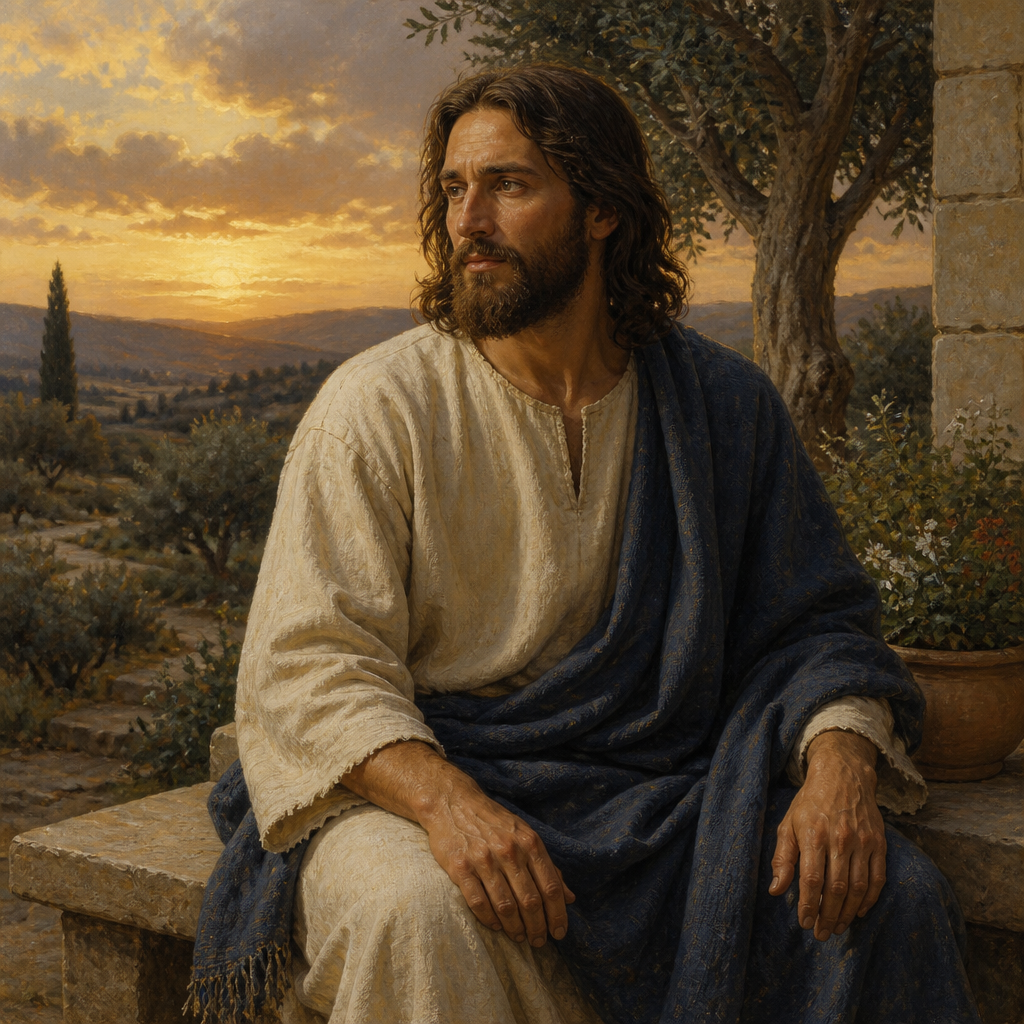
Jesus
Observer and Teacher
The Apostles
Audience of Jesus' teaching regarding her