The Syrophoenician Woman
A Gentile woman from the region of Tyre who demonstrated extraordinary faith by petitioning Jesus to heal her demon-possessed daughter.
The Syrophoenician woman, also identified in the Gospel of Matthew as a Canaanite woman, is a figure appearing in the New Testament who engages in a notable dialogue with Jesus regarding the scope of his mission. Living in the region of Tyre and Sidon, she was a Greek-speaking Gentile of Syrophoenician origin. Her encounter with Jesus is unique in the Gospels as she is one of the few non-Israelites to secure a miracle through persistent intercession.
Her story occurs during a period when Jesus withdrew from the Jewish territories of Galilee to the pagan coastal regions. Despite Jesus’ initial silence and his subsequent assertion that his primary mission was to the 'lost sheep of Israel,' the woman refused to be deterred. Her clever and humble response to a challenging metaphor used by Jesus led to his public commendation of her faith and the immediate exorcism of the demon troubling her daughter.
Background and Family
The Syrophoenician woman is described in the Gospel of Mark as being of Greek culture and Syrophoenician by nationality (Mark 7:26). The Gospel of Matthew uses the term 'Canaanite' (Matthew 15:22), an archaic designation for the indigenous inhabitants of the Levant, emphasizing her status as an outsider to the covenant of Israel. She resided in the district of Tyre and Sidon, an area historically associated with Phoenician trade and pagan worship.
Regarding her family, the biblical text mentions only her 'little daughter' (Mark 7:25). The daughter is described as being 'miserably possessed by a demon' or having an 'unclean spirit.' No mention is made of a husband or other children, leaving the woman as the sole advocate for her child’s restoration. The text indicates she was a woman of sufficient local knowledge to recognize Jesus' reputation, even though He entered the region attempting to maintain a low profile (Mark 7:24).
Major Life Events
The woman’s appearance in the biblical record is limited to this single, profound encounter. Upon hearing that Jesus was in a house in her region, she sought Him out and fell at His feet, a gesture of extreme supplication. She addressed Him using the Messianic title 'Lord, Son of David' (Matthew 15:22), suggesting that despite her Gentile background, she possessed an understanding of Jewish expectations regarding the Messiah.
Initially, Jesus did not answer her. When the disciples urged Him to send her away because her persistent crying out was disruptive, Jesus stated, "I was sent only to the lost sheep of the house of Israel" (Matthew 15:24). Undeterred, the woman knelt before Him and pleaded, "Lord, help me!"
The climax of the encounter occurred when Jesus tested her with a difficult metaphor: "It is not right to take the children’s bread and toss it to the dogs" (Matthew 15:26). In the context of the time, the 'children' represented Israel, and the 'dogs' represented the Gentiles. Rather than taking offense, the woman brilliantly turned the metaphor back to her favor: "Yes, Lord... even the dogs eat the crumbs that fall from their master’s table" (Matthew 15:27).
Relationship to Other Biblical Figures
The primary relationship depicted is between the woman and Jesus. The interaction is characterized by a move from apparent exclusion to radical inclusion. She also interacts indirectly with the disciples, who view her as a nuisance to be dismissed (Matthew 15:23). Her relationship with her daughter is the catalyst for the entire narrative; her maternal devotion drives her to cross cultural and religious boundaries to seek help from a Jewish teacher.
Spiritual Significance
The Syrophoenician woman is held up as a model of persistent, humble faith. She is one of only two people in the Gospels—both of whom are Gentiles—whose faith Jesus describes as 'great' (the other being the Roman Centurion). Her story marks a pivotal moment in the Gospel narrative where the blessings of the kingdom of God begin to overflow from the Jewish people to the Gentile world.
Her exchange with Jesus is often interpreted as a 'divine test' where her persistence revealed a depth of faith that exceeded that of many within Israel. The miracle she received was performed at a distance; Mark 7:30 records that she returned home to find her child lying peacefully on the bed, the demon having departed. This demonstrates the authority of Jesus’ word over spiritual forces, regardless of geographic proximity or the ethnic identity of the supplicant.
Spiritual Significance
The encounter with the Syrophoenician woman serves as a theological bridge in the Gospels, illustrating that while Jesus' earthly ministry focused on fulfilling the promises to Israel, the ultimate scope of his work included the Gentiles. Her successful petition emphasizes that access to God's mercy is predicated on faith and humility rather than ethnic lineage.
Furthermore, the narrative highlights the theme of 'outsider faith.' In both Matthew and Mark, this event follows disputes between Jesus and the Pharisees regarding ritual purity. The contrast is sharp: the religious leaders (the 'insiders') are rebuked for their lack of understanding, while a pagan woman (the 'outsider') is lauded for her spiritual insight and tenacity.
Frequently Asked Questions
Why did Jesus refer to the Syrophoenician woman as a 'dog'?
In the cultural context of the 1st century AD, 'dogs' was a common Jewish derogatory term for Gentiles. Jesus appears to use the term (specifically 'little dogs' or household pets in the Greek) as a test of the woman's faith and to reflect the prevailing priority of his mission to Israel. Her humble acceptance of the term demonstrated her recognition of God's redemptive order.
What is the difference between a Syrophoenician and a Canaanite?
They refer to the same group. 'Syrophoenician' is a political/geographic term used by Mark (referring to Phoenicia within the Roman province of Syria). 'Canaanite' is an ethnic term used by Matthew to connect the woman to Israel's ancient neighbors and traditional enemies.
Did Jesus actually heal the woman's daughter?
Yes. According to Matthew 15:28, the daughter was healed from that very hour. Mark 7:30 notes that when the mother arrived home, she found her daughter resting on the bed and the demon gone.
Where did this encounter take place?
The encounter took place in the region of Tyre and Sidon, which is located in modern-day Lebanon, north of Israel.
Connected Figures
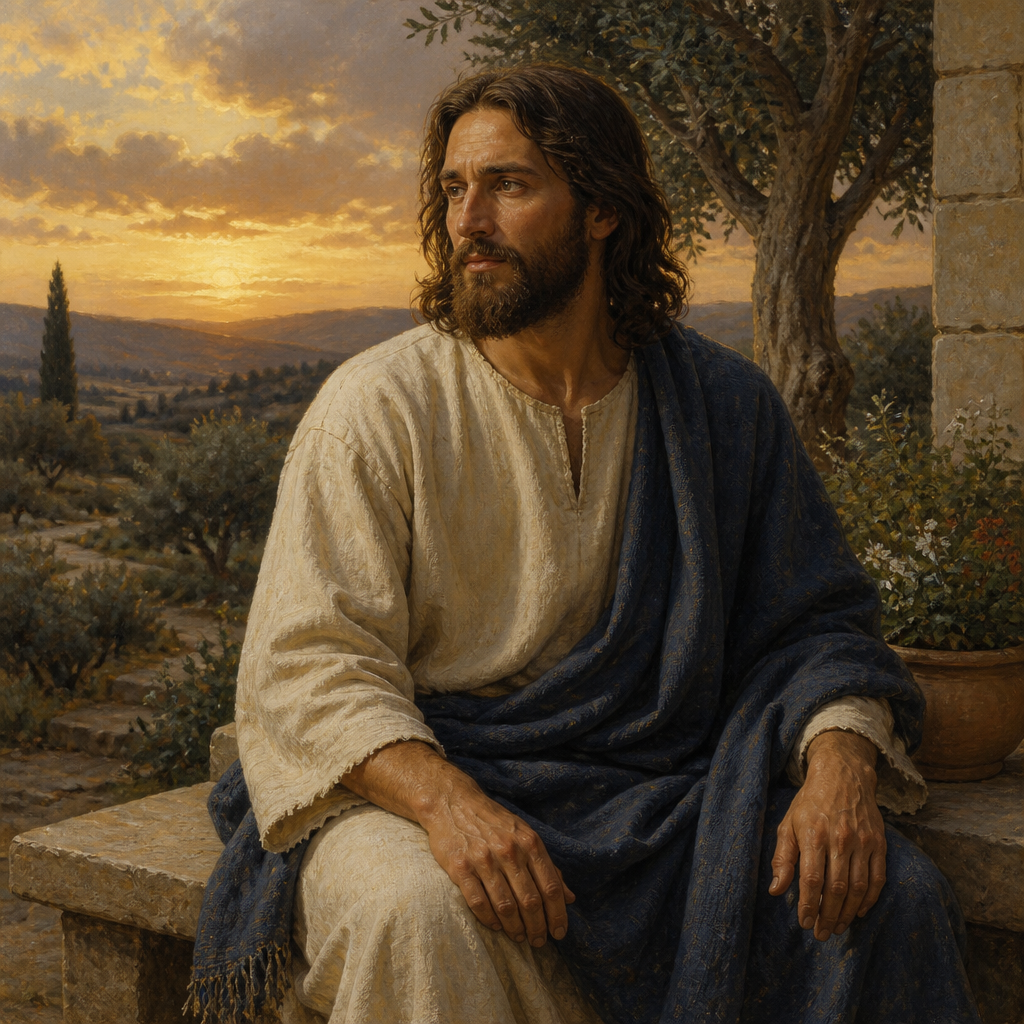
Jesus
Object of her faith and healer of her daughter
The Disciples
Followers of Jesus who asked him to send her away