The Scribe Not Far from the Kingdom
An unnamed Jewish scribe during the Life of Jesus who recognized the supremacy of love for God and neighbor over sacrificial rituals.
The Scribe Not Far from the Kingdom is a unique figure appearing in the Gospel of Mark during the final week of Jesus' ministry in Jerusalem. Unlike many of his peers who engaged in hostile debates to entrap Jesus, this scribe is portrayed as an earnest seeker of truth. His interaction with Jesus occurs within the temple courts, a setting characterized by intense theological conflict between Jesus and various Jewish religious factions.
While the scribe's name and lineage remain unknown, his brief appearance is significant for its cordial and mutually respectful nature. He is distinguished by his willingness to agree with Jesus’ interpretation of the Law, particularly the elevation of the 'Great Commandment' above the ceremonial requirements of the Temple. This encounter concludes with one of the most poignant assessments in the New Testament, as Jesus declares the man to be standing on the very threshold of the kingdom of God.
Background and Family
The biblical record provides no specific details regarding the family, tribe, or personal history of this scribe. In the context of the first century AD, a scribe (Greek: grammateus) was a professional class of individuals educated in the study of the Torah and the oral traditions of the law. They served as lawyers, copyists, and teachers of the Jewish faith. Most scribes were affiliated with the Pharisaic party, though they were a distinct professional group.
This individual appears in the narrative during the 'Passion Week' in Jerusalem (c. 33 AD), a time when Jesus was facing a series of calculated questions from the Pharisees, Herodians, and Sadducees designed to discredit him. The scribe is introduced as an observer of these debates who, upon hearing Jesus' wise responses to the Sadducees regarding the resurrection, decided to pose a fundamental question of his own.
Major Life Events
The entire biblical footprint of this scribe is contained within the interaction recorded in Mark 12:28–34. The event begins with the scribe approaching Jesus and asking, "Which commandment is the most important of all?" (Mark 12:28). This was a common subject of debate among the rabbis of the period, who sought to identify a central principle or 'heavy' commandment that could summarize the 613 laws of the Torah.
Jesus responds by reciting the Shema from Deuteronomy 6:4–5, identifying the first commandment as the call to love the Lord God with all one's heart, soul, mind, and strength. He immediately joins this to a second commandment from Leviticus 19:18: "Love your neighbor as yourself." Jesus concludes by stating that there is no commandment greater than these.
The scribe’s response is what sets him apart from other religious leaders in the Gospel narratives. Rather than offering further challenges, he affirms Jesus' teaching, stating, "Right, Teacher... You have stated correctly that God is One and there is no other but Him" (Mark 12:32). Most notably, the scribe adds his own insight, concluding that loving God and neighbor "is more important than all burnt offerings and sacrifices" (Mark 12:33). This was a radical admission for someone operating within the heart of the Jerusalem Temple, as it suggested that moral and relational obedience held a higher vertical value than the entire sacrificial system.
Relationship to Other Biblical Figures
The text does not record any formal relationship between the scribe and Jesus' disciples or other historical figures. However, his interaction with Jesus is one of the few instances in the Gospels where a member of the religious establishment is depicted in a positive, collaborative dialogue with Jesus. While the Pharisees and scribes are often grouped together as Jesus' primary antagonists, this scribe serves as a narrative exception—a man whose individual discernment overrode his sectarian allegiances.
Spiritual Significance
The spiritual significance of this figure lies in Jesus' final evaluation of his character. Mark 12:34 records that when Jesus saw the man had "answered wisely," He said to him, "You are not far from the kingdom of God." This phrase suggests that the scribe possessed the correct intellectual and moral framework to receive the gospel, yet he remained at the threshold. He had moved past the legalism that hindered many of his colleagues but had not yet made the definitive step of following Jesus as the Messiah.
The scribe serves as a literary and theological bridge between the Old Covenant Law and the New Covenant focus on the heart. His recognition that love exceeds the value of burnt offerings echoes the prophetic tradition of Hosea and Micah, positioning him as a representative of the 'remnant' of Israel that was spiritually prepared for the transition Jesus was inaugurating. Following this encounter, the text notes that "no one dared to question Him any further," signifying that the scribe's sincere inquiry had brought the period of public testing to a definitive close.
Spiritual Significance
The Scribe Not Far from the Kingdom represents the ideal respondent to Jesus’ teaching within the Jewish religious establishment. His significance lies in his ability to perceive the hierarchy of the Law—prioritizing the internal weight of love over the external practice of sacrifice. His story functions as a bridge between the legalism Jesus often criticized and the spiritual vitality Jesus sought to inspire.
Furthermore, Jesus’ comment that he was 'not far' serves as both a commendation and a subtle warning. It highlights the possibility of having a perfect theological understanding of the Law while still needing to cross the final threshold into the actualized Kingdom through faith in Christ. The figure remains an enduring example of intellectual honesty and spiritual receptivity in the midst of religious hostility.
Frequently Asked Questions
What did the scribe say was more important than sacrifices?
The scribe stated that loving God with all one's heart, understanding, and strength, and loving one's neighbor as oneself, is more important than all burnt offerings and sacrifices.
How did Jesus react to the scribe's answer?
Jesus saw that the scribe answered wisely and told him, 'You are not far from the kingdom of God.'
Which commandments did the scribe and Jesus discuss?
They discussed the 'Greatest Commandment,' which includes the Shema (loving God) and the command to love one's neighbor as oneself.
Was this scribe an enemy of Jesus?
Unlike many other scribes mentioned in the Gospels, this individual is portrayed respectfully; he approached Jesus with a sincere question and agreed with Jesus' teaching.
In which Gospel does this encounter appear?
This specific interaction, including the statement that the scribe was 'not far from the kingdom,' is unique to the Gospel of Mark.
Connected Figures
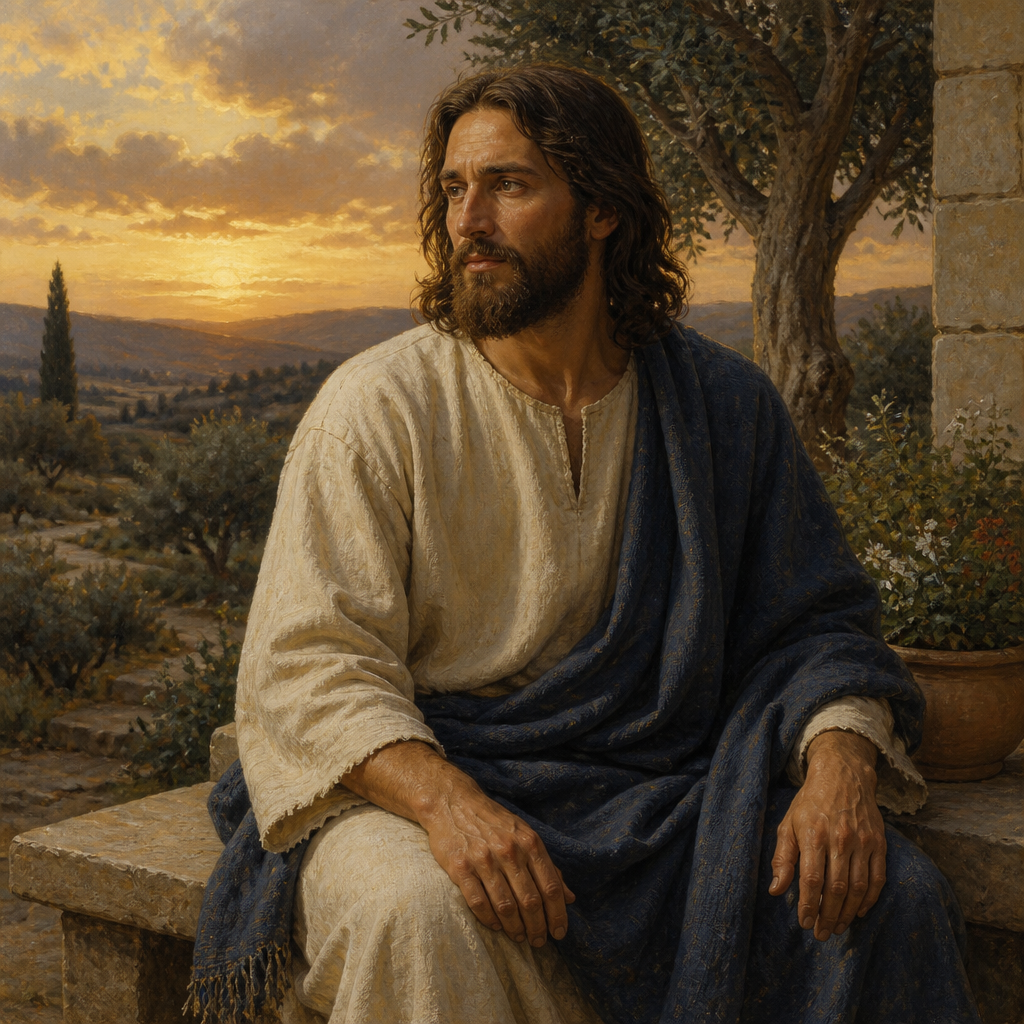
Jesus
The Teacher whom the scribe questioned and praised
The Sadducees
Group whose debate with Jesus the scribe had been observing
Categories
Mentions by Book
- Mark7