The Rich Young Ruler
An anonymous Jewish official who sought the path to eternal life but chose to retain his great wealth rather than follow Jesus Christ.
The Rich Young Ruler is a significant figure in the Synoptic Gospels (Matthew, Mark, and Luke), known for his earnest inquiry regarding eternal life and his subsequent failure to follow Jesus due to his vast material possessions. He is characterized by three distinct descriptors across the three accounts: his youth (Matthew 19:20), his high social standing as a 'ruler' (Luke 18:18), and his immense wealth (Mark 10:22).
His interaction with Jesus occurs during the Lord's final journey toward Jerusalem. Unlike many who approached Jesus for physical healing or to test Him with trick questions, this man approached with a spiritual concern, kneeling before Jesus to ask, 'Good Teacher, what must I do to inherit eternal life?' The dialogue that follows serves as one of the most poignant illustrations in the New Testament regarding the cost of discipleship and the spiritual dangers of wealth.
Background and Family
The biblical record provides no specific information regarding the name, lineage, or tribe of the Rich Young Ruler. He is simply identified as a 'man' (anthropos) in Matthew and Mark, and specifically as a 'certain ruler' (archon) in Luke 18:18. This Greek term archon suggests he held an official position, likely as a member of a local synagogue leadership or perhaps a member of the Sanhedrin, though the latter is less certain given his youth.
His family background is only alluded to through his claim to have kept the commandments, including the honoring of his father and mother, since his youth. His economic status is the most clearly defined aspect of his background; the text notes he was 'extremely wealthy' and possessed 'great wealth.' In the cultural context of 1st-century AD Judea, such wealth was often viewed by the religious establishment as a sign of divine favor, which adds weight to the disciples' subsequent shock at Jesus' teaching on the difficulty of the rich entering the kingdom of God.
Major Life Events
The life of this man is captured in a single, transformative encounter with Jesus. As Jesus was starting on His way, the man ran up and knelt before Him—a gesture of profound respect and urgency. He addressed Jesus as 'Good Teacher,' a title Jesus immediately interrogated by asking, 'Why do you call Me good? No one is good except God alone.' This was not a denial of Jesus' divinity, but a challenge to the man's understanding of goodness and the identity of the one he was addressing.
When the man asked what 'good thing' he must do to obtain eternal life, Jesus pointed him to the Mosaic Law, specifically the second table of the Ten Commandments (concerning human relationships). The man claimed to have kept all these from his youth, yet he felt a lingering void, asking, 'What do I still lack?'
In a moment of unique intimacy, Mark 10:21 records that Jesus 'looked at him and loved him.' However, this love did not result in a lowering of the standard. Jesus identified the one thing the man lacked: total surrender. He commanded the man to sell everything he owned, give the proceeds to the poor, and follow Him. Faced with the choice between his earthly security and 'treasure in heaven,' the man was overcome with sorrow. The account concludes with the man walking away in grief, unable to part with his possessions.
Relationship to Other Biblical Figures
The Rich Young Ruler is not linked to any specific family members or named peers in the text. His primary relationship in the narrative is with Jesus. The interaction also involves the disciples, who witnessed the exchange and were 'amazed' at Jesus' subsequent commentary. Peter, in particular, responded to the man's departure by contrasting the ruler's choice with the disciples' own decision to leave everything to follow Jesus (Matthew 19:27).
Spiritual Significance
The Rich Young Ruler serves as a cautionary archetype in Christian theology. He represents the 'almost' disciple—someone who possesses morality, social standing, and a sincere interest in spiritual matters, yet is ultimately hindered by an idol. In his case, the idol was wealth.
His story highlights the distinction between external law-keeping and internal devotion. While he could claim to have never murdered or stolen, he struggled with the first and greatest commandment: to have no other gods before the Lord. His inability to surrender his wealth revealed that his possessions actually possessed him. Furthermore, the encounter prompted Jesus' famous teaching that 'it is easier for a camel to go through the eye of a needle than for a rich man to enter the kingdom of God,' emphasizing that salvation is a miracle of God's grace rather than a reward for human effort or 'good things' performed.
Spiritual Significance
The Rich Young Ruler is the only person in the Gospels who is recorded as coming to Jesus and leaving in a worse spiritual state than when he arrived, not because he was rejected by Jesus, but because he rejected the terms of discipleship. His story underscores the totality of the commitment required to follow Christ, illustrating that even a 'good' and 'moral' life is insufficient if the heart remains tethered to worldly security.
Theologically, the encounter serves to strip away the notion of self-justification through works. By asking 'what must I do,' the ruler revealed a transactional view of salvation. Jesus' response was designed to expose the man's sin and his need for a Savior, demonstrating that the 'one thing' he lacked was actually the most important: a heart that loves God above all else.
Frequently Asked Questions
Was the Rich Young Ruler a member of the Sanhedrin?
The Bible calls him a 'ruler' (*archon*), which could refer to a member of the Sanhedrin, but it is not explicitly stated. He was certainly a person of high social and likely religious authority.
What did Jesus mean by 'No one is good except God alone'?
Jesus was challenging the man's superficial use of the word 'good' and directing him to realize that if Jesus was truly good, He must be God.
Did Jesus tell everyone to sell all their possessions?
No. In the Gospels, this specific command was given uniquely to this man because Jesus knew his wealth was his primary idol and the barrier to his faith.
Why was the man sad when he left?
He was sad because he truly wanted eternal life, but he was unwilling to pay the cost of relinquishing the great wealth that provided his identity and security.
Which commandments did Jesus list for the man?
Jesus listed the commandments related to neighborly conduct: do not murder, do not commit adultery, do not steal, do not bear false witness, and honor your father and mother.
Connected Figures
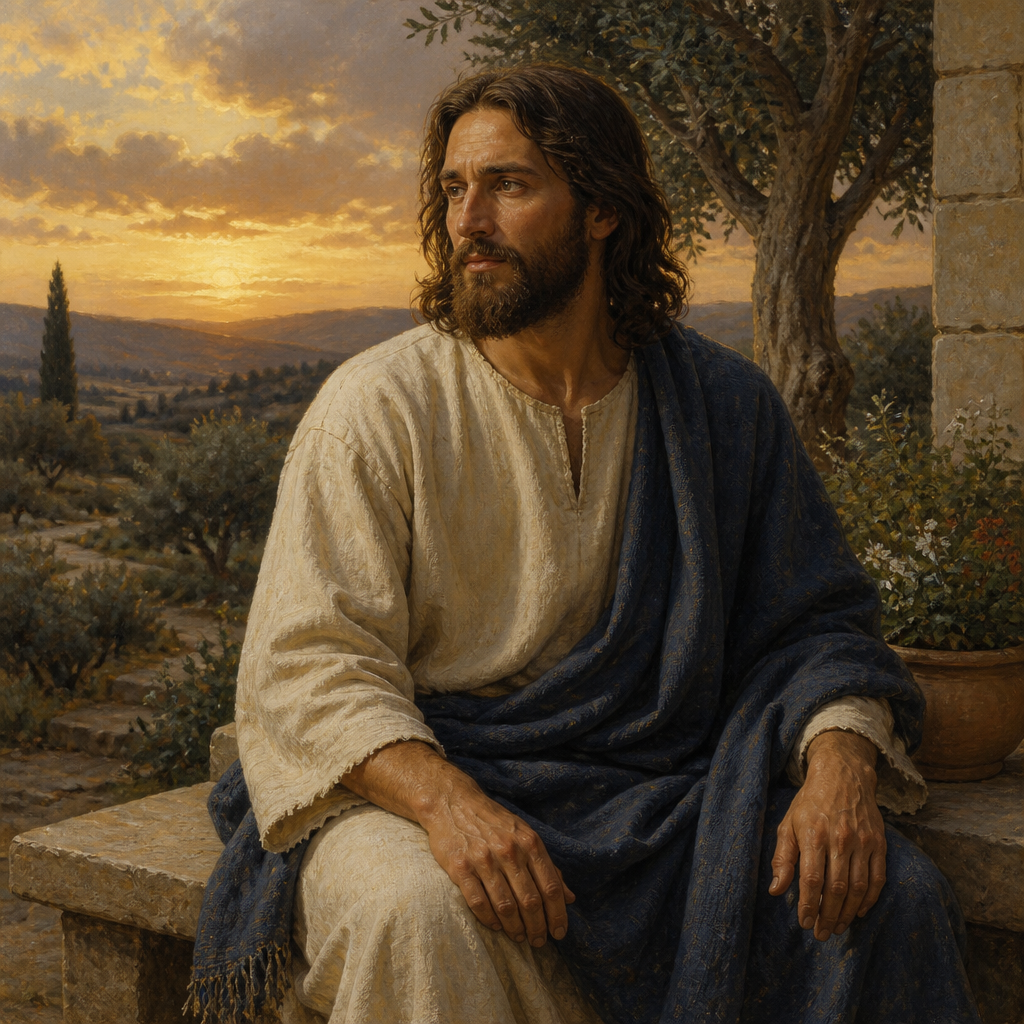
Jesus
The Teacher he questioned
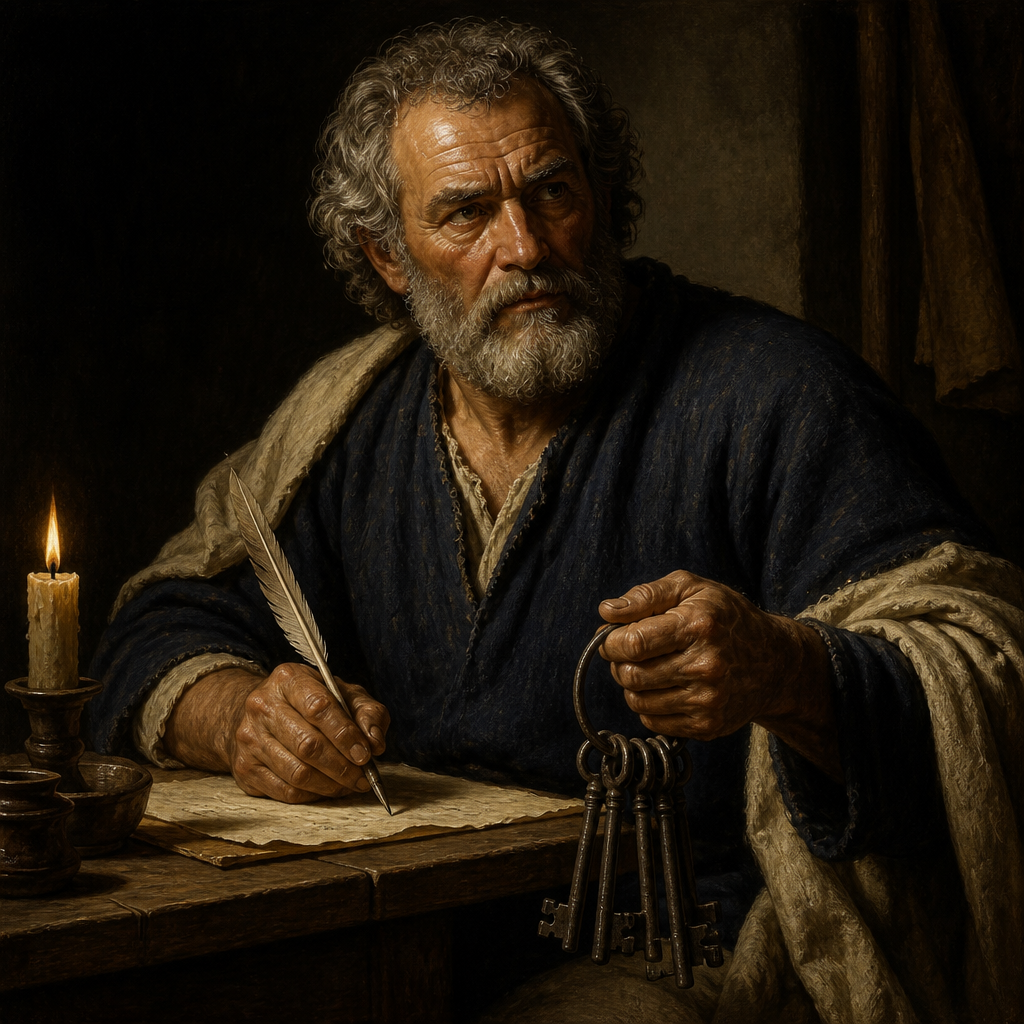
Peter
Disciple who observed the encounter
The Apostles
Group who questioned Jesus about the man's departure