The Guards at Jesus' Tomb
A group of soldiers stationed by Pontius Pilate to secure the burial site of Jesus to prevent the removal of his body.
The guards at Jesus' tomb appear exclusively in the Gospel of Matthew, serving as significant witnesses to the immediate aftermath of the crucifixion and the events of the resurrection. Following the burial of Jesus in the tomb of Joseph of Arimathea, the Jewish religious leaders approached the Roman governor, Pontius Pilate, expressing concern that Jesus’ disciples might steal his body and claim he had risen from the dead. In response, Pilate authorized a detachment of soldiers to secure the site, marking the stone with a seal and maintaining a vigilant watch.
These guards were present at the moment of the resurrection, witnessing the descent of an angel and the rolling back of the tomb’s entrance stone. According to the biblical record, the soldiers were overcome with terror, rendered immobile, and eventually fled the scene to report the events to the chief priests. Their subsequent involvement in a bribery-fueled cover-up highlights the political and religious tensions surrounding the claims of Jesus' resurrection in the 1st century AD.
Background and Authorization
The account of the guards at Jesus' tomb begins in the immediate aftermath of the crucifixion. Matthew 27:62-64 records that on the day following the Preparation Day, the chief priests and Pharisees met with Pontius Pilate. They recalled Jesus' prediction that he would rise again after three days and warned that a stolen body would create a deception worse than his initial teachings. Pilate's response in Matthew 27:65 was brief and authoritative: "You have a guard. Go, make the tomb as secure as you know how."
Historically, scholars debate whether the "guard" (Greek: koustodia) consisted of Roman legionaries or the Jewish temple police. However, the mention of reporting to the "governor" (Matthew 28:14) strongly suggests they were Roman soldiers under Pilate’s jurisdiction, as Jewish temple police would typically answer only to the Sanhedrin. The soldiers proceeded to secure the tomb by sealing the stone—likely using a cord and wax across the entrance to indicate tampering—and establishing a rotating watch.
The Resurrection Event
The guards were present during the early morning hours of the first day of the week. Matthew 28:2-4 describes a violent earthquake and the appearance of an angel of the Lord, whose countenance was like lightning and clothing white as snow. The biblical text records that the guards "trembled in fear of him and became like dead men." This suggests a state of catatonic shock or fainting brought on by the supernatural display.
Unlike the women who arrived at the tomb and were greeted by the angel, the guards appear to have been incapacitated during the actual exit of Jesus from the tomb or the initial discovery of the empty sepulcher. Once they recovered, they did not remain at their post, as the seal had been broken and the body was missing—an offense that, under Roman military law, was often punishable by death.
Reporting and the Bribery
Rather than reporting to their military superiors, Matthew 28:11 states that "some of the guards went into the city and reported to the chief priests all that had happened." This choice suggests a pre-existing arrangement or a realization that the religious leaders were the ones primarily interested in the tomb's security. Upon hearing the report of the supernatural events and the empty tomb, the chief priests and elders met to devise a strategy.
Instead of investigating the soldiers' claims of an angelic visitation, the council provided the soldiers with a "large sum of money" (Matthew 28:12). They were instructed to spread a specific narrative: "You are to say, ‘His disciples came by night and stole Him away while we were asleep’" (Matthew 28:13). To protect the soldiers from the legal consequences of sleeping on duty—a capital crime—the religious leaders promised to "satisfy" the governor should the report reach his ears. The soldiers accepted the bribe, and Matthew notes that this fabricated account remained a common explanation among the Jewish community at the time of his writing.
Relationship to Other Biblical Figures
The guards functioned as instruments of the Chief Priests and Pharisees, acting as the final barrier intended to disprove Jesus' messianic claims. Their interaction with Pontius Pilate defines their legal standing, while their reaction to the Angel of the Lord serves as a literary contrast to the faithful women (such as Mary Magdalene). While the women were told "do not be afraid," the guards were paralyzed by that very fear. There is no recorded personal relationship between the guards and Jesus or his Disciples, other than the guards being the primary witnesses used to legally (albeit falsely) implicate the disciples in a theft.
Spiritual Significance
The presence of the guards is theologically significant as it provides an unintended confirmation of the empty tomb. By requesting a guard, the enemies of Jesus inadvertently ensured that the disappearance of the body could not be easily attributed to simple grave robbing. The guards serve as "involuntary witnesses"; their fear and subsequent bribery highlight the lengths to which the authorities went to suppress the news of the resurrection. Furthermore, the irony of the "stolen body" narrative—that soldiers were supposedly asleep yet able to identify the thieves—is often cited by Christian apologists as evidence of the weakness of the contemporary opposition to the resurrection account.
Spiritual Significance
The guards at the tomb serve as a crucial apologetic element in the Gospel of Matthew. Their presence ensures that the tomb was officially monitored, making a secret theft of the body by the disciples highly improbable. The transition of the guards from terrified witnesses of the supernatural to paid conspirators in a cover-up emphasizes the theme of spiritual blindness and the corruption of the religious leadership of the time.
Furthermore, the guards' reaction to the angelic appearance—becoming 'like dead men'—contrasts with the life offered by the resurrection. They represent the secular and religious power of the world attempting to contain or suppress the divine, a theme that resonates throughout the Passion narrative. Their story concludes with the circulation of the 'stolen body' rumor, which Matthew uses to explain the ongoing skepticism within his immediate cultural context.
Frequently Asked Questions
Were the guards Roman or Jewish?
While the text is not explicitly clear, the mention of the 'governor' (Pilate) in Matthew 28:14 and the use of the Greek word 'koustodia' suggests they were Roman soldiers assigned to the task at the request of the Jewish leaders.
What was the punishment for a Roman soldier who fell asleep on duty?
Under Roman military law, falling asleep while on guard duty was a serious offense often punishable by death. This explains why the chief priests had to promise to 'satisfy' Pilate to protect the guards.
Did the guards see Jesus rise from the dead?
The Bible states they saw an angel and the stone being rolled away, which caused them to faint or become 'like dead men.' It does not explicitly state that they saw Jesus himself exit the tomb.
Why did the guards report to the priests instead of Pilate?
Since the chief priests were the ones who requested the guard and had a vested interest in the body remaining in the tomb, the soldiers likely sought their protection and advice after the supernatural event occurred.
How many guards were at the tomb?
The Bible does not specify the exact number, referring only to 'the guard' or 'some of the guards.' A standard Roman guard unit (a 'custodia') typically consisted of four to sixteen soldiers.
Connected Figures
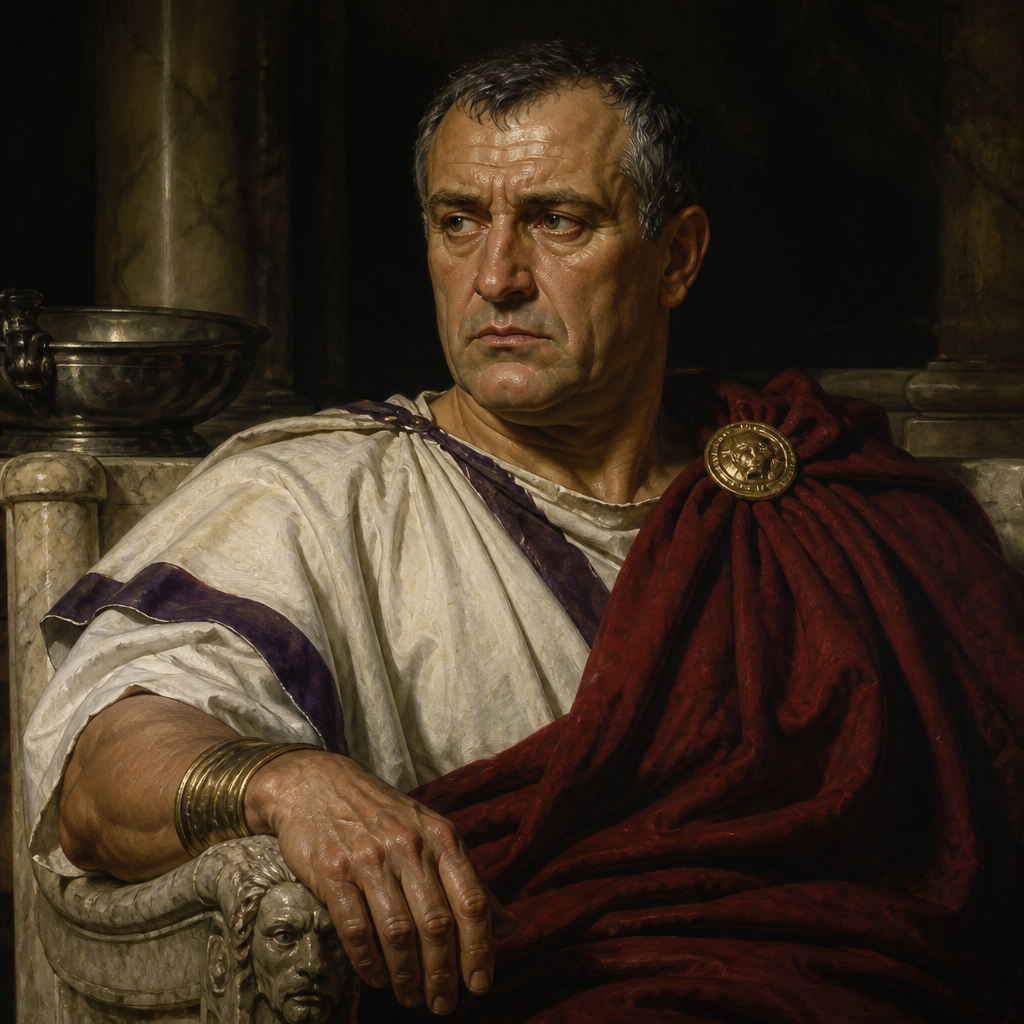
Pontius Pilate
Superior who authorized the guard
The Chief Priests
Bribed the guards to lie
The Angel of the Lord
Source of the guards' terror
The Disciples
Falsely accused by the guards of theft
Categories
Mentions by Book
- Matthew8