The Boy with the Loaves and Fish
An unnamed youth whose small offering of five barley loaves and two fish was miraculously multiplied by Jesus to feed five thousand men.
The individual known as the Boy with the Loaves and Fish is a figure described exclusively in the Gospel of John during the account of the feeding of the five thousand. Occurring during the Life of Jesus in the first century AD, this event is one of the most prominent miracles in the New Testament. While all four Gospels record the feeding of the multitude, only the Johannine account specifies that the initial food source belonged to a young boy (Greek: paidarion).
This youth appears in the narrative at a moment of logistical crisis. A massive crowd had followed Jesus to a remote area near the Sea of Galilee, and the disciples were concerned about the lack of provisions. The boy’s presence is highlighted by Andrew, who identifies the meager resources the child had brought along. Despite the insignificance of five barley loaves and two small fish in the face of thousands, this boy's contribution became the catalyst for a demonstration of divine providence.
His role is characterized by simplicity and immediate impact. Although the biblical text does not provide his name, lineage, or specific hometown, his willingness to provide what he had allowed for a miracle that resulted in twelve baskets of leftovers, symbolizing the abundance of the Messianic kingdom. He remains a central figure in Christian tradition representing the value of small, faithful offerings.
Background and Family
The biblical record provides no specific details regarding the family, name, or exact origin of the Boy with the Loaves and Fish. The account in John 6:8–9 places him in the vicinity of the Sea of Galilee during the third year of Jesus' public ministry, approximately c. 30–33 AD. He is identified by the Greek word paidarion, a diminutive form of pais, which typically refers to a young boy or a servant. Given the context of the large crowd following Jesus to hear his teachings, it is likely the boy was part of a local family from one of the nearby fishing villages, such as Bethsaida or Capernaum.
The description of his provisions offers a glimpse into his social standing. He carried "five barley loaves and two small fish" (John 6:9). In the first century AD, barley was considered the food of the poor, as wheat was more expensive and preferred by the upper classes. The fish are described as opsaria, a term often referring to small, dried, or pickled fish used as a relish for bread. This suggests the boy came from a modest, perhaps peasant, background. He was likely prepared for a day of travel, carrying a simple lunch that would have been sufficient for one person but was laughably inadequate for the multitude.
Major Life Events
The boy's entire biblical footprint is contained within the narrative of the Feeding of the Five Thousand. As Jesus looked out over the crowd of approximately five thousand men (not counting women and children), he questioned Philip about where they might buy bread. While Philip focused on the financial impossibility of the task, Andrew, Simon Peter’s brother, brought the boy forward.
"Here is a boy with five barley loaves and two small fish. But what difference will these make among so many?" (John 6:9)
Following this introduction, the boy relinquishes his food to the disciples, who bring it to Jesus. The text does not record any dialogue from the boy, nor his reaction to the request. Jesus took the loaves and fish, gave thanks to God, and distributed the food to the seated crowd. The miracle unfolded as the small amount of food was multiplied to satisfy the entire assembly.
After everyone was full, Jesus commanded the disciples to gather the fragments so that nothing would be wasted. The boy’s original five loaves and two fish resulted in twelve baskets of leftovers (John 6:13). The narrative concludes without further mention of the boy, leaving his subsequent life and his reaction to the miracle unrecorded in the canon.
Relationship to Other Biblical Figures
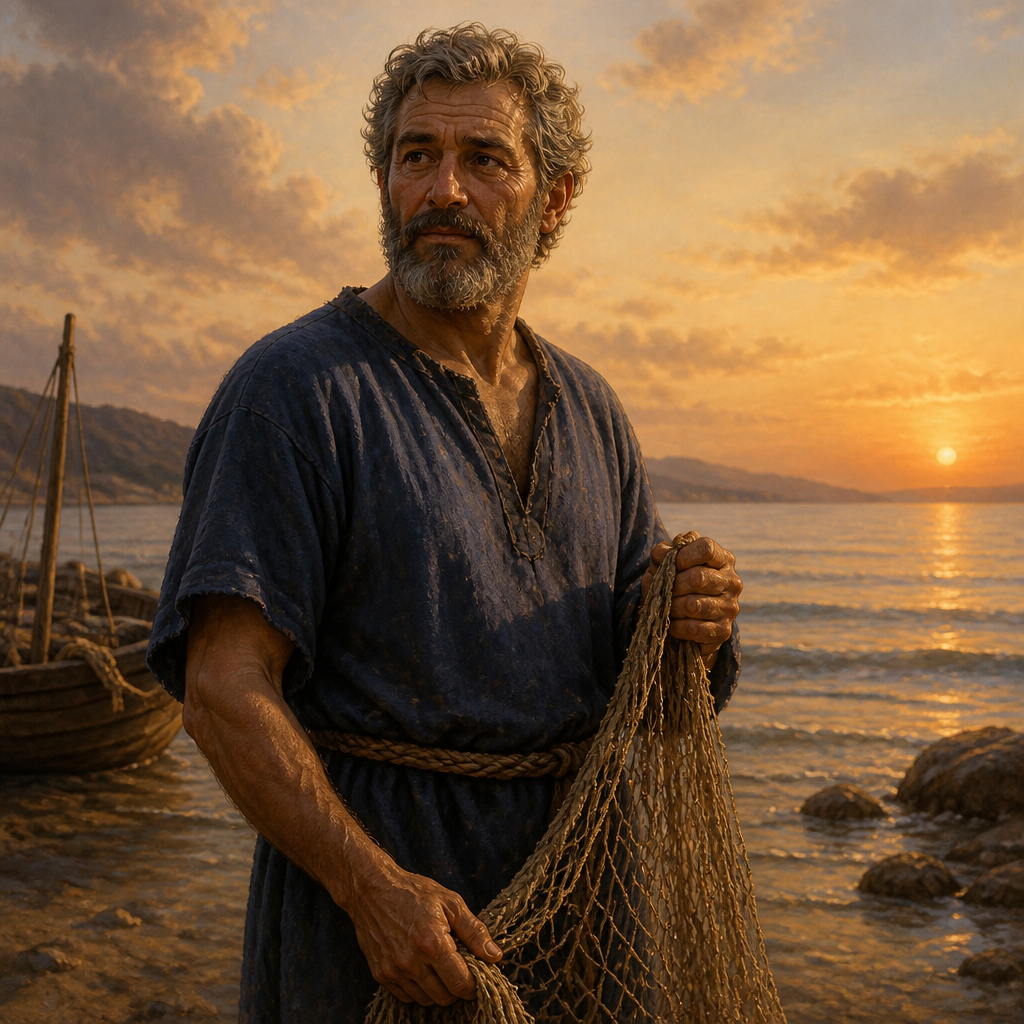
The boy’s primary interaction in the text is with the apostle Andrew. It is Andrew who discovers the boy among the thousands and presents his resources to Jesus. This interaction highlights Andrew’s role as one who brings others to Christ, a recurring theme in the Gospel of John.
While the boy does not speak directly to Jesus in the text, his relationship to the Lord is one of provider and recipient. He provides the material elements—the "seed" of the miracle—and in return, he and the thousands around him are fed by the hands of Jesus. The disciples act as the intermediaries between the boy and Jesus, facilitating the transfer of the loaves and fish.
Spiritual Significance
The spiritual significance of the Boy with the Loaves and Fish lies in the principle of divine multiplication. In Christian theology, he serves as a prototype of the faithful steward who offers what little they have to God. The stark contrast between the boy's small lunch and the massive hunger of the crowd serves to magnify the power of Jesus.
The use of barley loaves also carries symbolic weight. In the Old Testament, the prophet Elisha performed a similar, though smaller-scale, miracle involving twenty barley loaves (2 Kings 4:42–44). By using the boy’s barley bread, the narrative frames Jesus as the "Greater Prophet" and the provider of the "Bread of Life," a discourse that follows immediately after this event in John 6. The boy's anonymity allows him to represent any believer, suggesting that age or social status does not limit one's ability to be used in a significant work of God.
Spiritual Significance
The Boy with the Loaves and Fish is significant as the human source of the elements used in one of Jesus' most public and undeniable miracles. His presence in the Gospel of John emphasizes that God often uses the humble and the young to accomplish great purposes. The specificity of his offering—barley loaves—points toward the humility of the incarnation and Jesus' identification with the poor.
Furthermore, the boy’s story serves as a narrative bridge to the 'Bread of Life' discourse. His contribution demonstrates that physical sustenance, while necessary, is provided by the same hand that offers spiritual salvation. The twelve baskets recovered after the meal, stemming from the boy's original gift, underscore the biblical theme of 'grace upon grace,' where the return on a faithful offering far exceeds the initial sacrifice.
Frequently Asked Questions
What kind of fish did the boy have?
The Greek word used is 'opsaria,' which refers to small fish, often dried or pickled, commonly eaten as a condiment or side dish with bread in the Galilee region.
Why is the boy only mentioned in the Gospel of John?
While Matthew, Mark, and Luke all record the feeding of the 5,000, John often includes specific details about individuals (like Andrew and Philip) to emphasize the personal interactions of Jesus' ministry.
How old was the boy?
The Bible uses the term 'paidarion,' which generally refers to a young child or a young lad, likely between the ages of 8 and 14, old enough to carry his own food but still considered a child.
Did the boy get his lunch back?
The Bible does not say, but it notes that everyone ate until they were full, implying the boy was also fed, and there were twelve baskets of leftovers remaining.
What was the significance of the barley bread?
Barley was the cheapest grain available, signifying that the boy likely came from a lower-income or peasant family, making his willingness to share even more poignant.
Connected Figures
Jesus
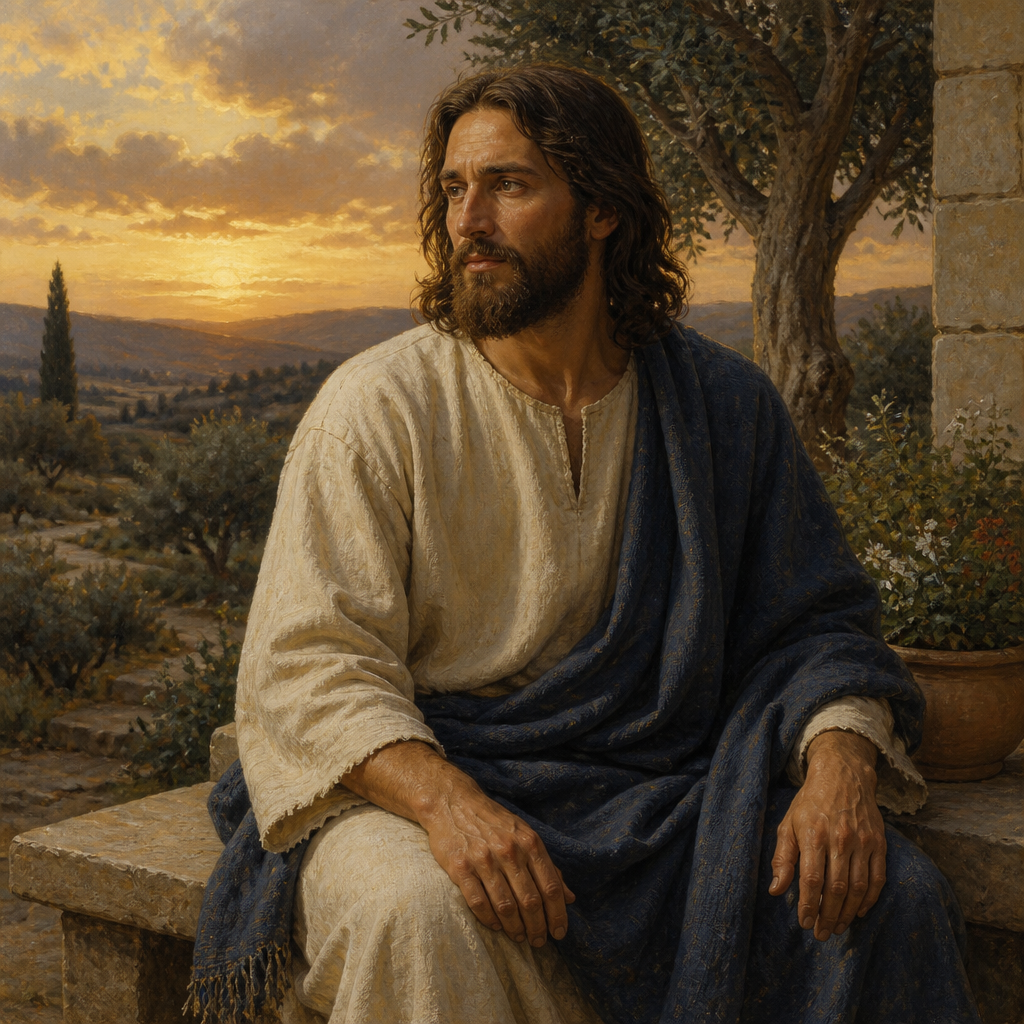
The one who multiplied the boy's offering
Andrew
The disciple who found the boy and his food
Philip
The disciple questioned by Jesus before the boy was found
Categories
Mentions by Book
- John6