Rhesa
Rhesa was a descendant of King David and a member of the post-exilic royal line of Judah, listed as a direct ancestor of Jesus Christ in the Lucan genealogy.
Rhesa is named only in Luke's genealogy of Jesus (Luke 3:27). The page sits in the New Testament because that is the only book that records the name — but Rhesa lived during the years after the return from exile, not in the first century.
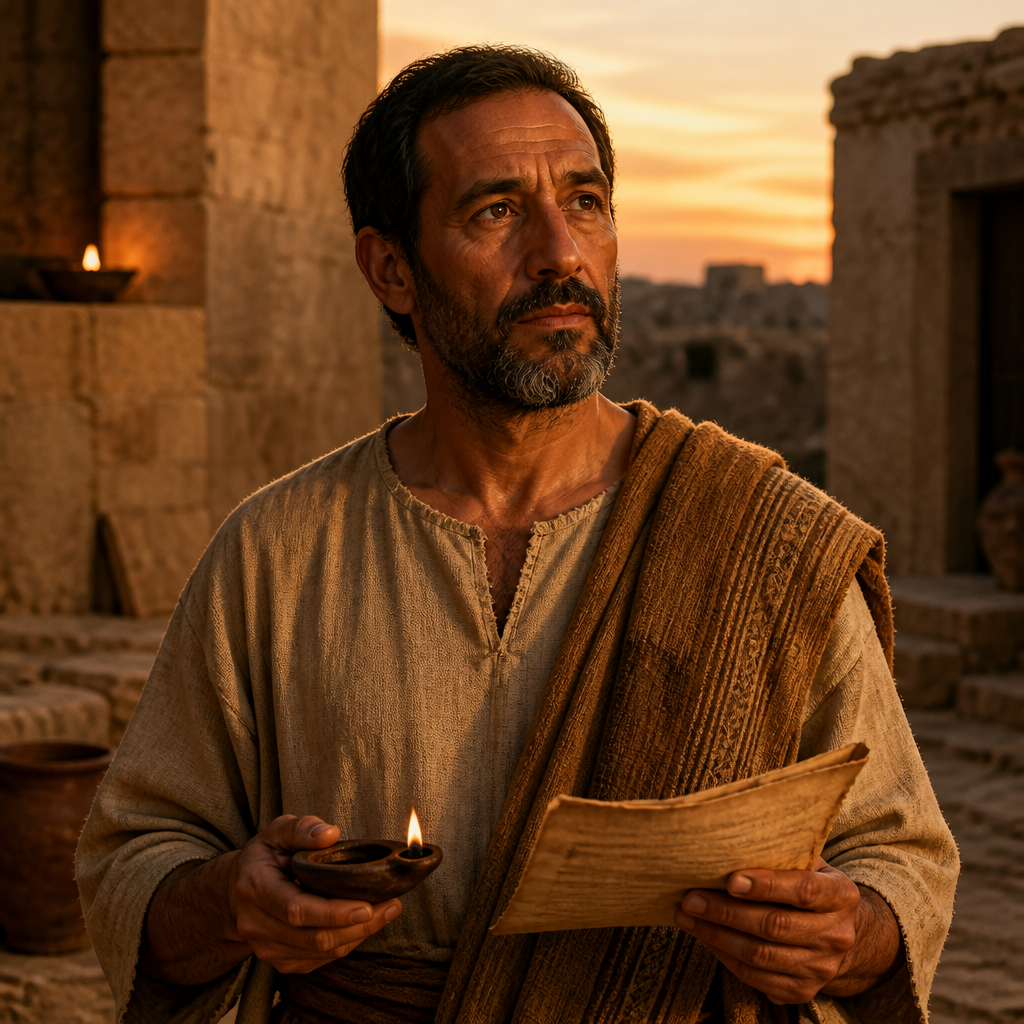
Rhesa is a figure appearing exclusively in the New Testament within the genealogy of Jesus recorded by the physician Luke. He belongs to the Tribe of Judah and represents the post-exilic generational link between the Davidic monarchy and the birth of the Messiah. As a descendant of the prominent leader Zerubbabel, Rhesa stands as a vital bridge in the lineage that preserved the legal and biological claim of the house of David through the centuries following the Babylonian captivity.
While historical details regarding his life and actions are not recorded in the biblical text, his inclusion in the Gospel of Luke serves a specific purpose. It emphasizes the continuity of God's promise to David throughout the Intertestamental Period. Rhesa is identified as the father of Joanan and the son of Zerubbabel, placing him in the era following the return of the Jewish exiles to Jerusalem.
Background and Family
Rhesa is situated within the Tribe of Judah, appearing in the generational sequence that follows the Babylonian Exile. According to the Gospel of Luke, he was the son of Zerubbabel (Luke 3:27). Zerubbabel was the governor of Judea who led the first group of Jews back from Babylon and oversaw the foundation of the Second Temple. Rhesa, therefore, was born into a family of significant political and spiritual leadership during a time of national reconstruction.
His immediate family recorded in the Lucan genealogy includes his son, Joanan. The placement of Rhesa in this list identifies him as part of the lineage of Nathan, a son of David, which Luke traces back to Adam to demonstrate the universal significance of the Messiah. This distinguishes him from the Matthean genealogy, which follows the line of Solomon.
Major Life Events
The Bible does not record specific events, speeches, or achievements attributed to Rhesa. His entire biblical footprint is contained within the genealogical record of Luke 3. The absence of narrative details suggests that Rhesa lived a life of relative obscurity compared to his father, Zerubbabel, or his ancestor, King David. However, within the context of ancient Near Eastern culture and biblical historiography, the recording of his name serves as a record of his existence and his role in maintaining the genealogical integrity of the messianic line.
Relationship to Other Biblical Figures
Rhesa’s most significant relationship is his descent from Zerubbabel. Because Zerubbabel is a central figure in the books of Ezra, Nehemiah, Haggai, and Zechariah, Rhesa is tethered to the high point of the post-exilic restoration. He is also the father of Joanan, who continued the line toward Jesus. Some scholars have historically debated whether 'Rhesa' was a proper name or a title (derived from the Aramaic re'sha, meaning 'head' or 'prince'), potentially applied to a son of Zerubbabel like Meshullam or Hananiah; however, the text of Luke presents Rhesa as a distinct personal name in the Greek transliteration.
Spiritual Significance
The spiritual significance of Rhesa lies in his role as a silent link in the chain of redemption. His presence in the New Testament confirms that God’s providential care extended over every generation, even during the 'silent years' when no prophetic word was recorded. Rhesa represents the faithfulness of the Davidic line, surviving through the shifting empires of the Persians and Greeks to eventually culminate in the birth of Jesus Christ in the 1st century AD.
Spiritual Significance
Rhesa’s primary biblical significance is his role as a genealogical link in the ancestry of Jesus Christ. By documenting Rhesa, the Gospel of Luke establishes the historical and legal legitimacy of Jesus as the 'Son of David,' fulfilling the Old Testament covenants regarding a perpetual throne for David’s offspring.
Theologically, Rhesa illustrates that every individual in the biblical record, regardless of how little is known of their personal history, serves a purpose in the unfolding narrative of salvation. He stands as a witness to the preservation of the Tribe of Judah and the house of David through the centuries of transition between the Old and New Testaments.
Frequently Asked Questions
Where is Rhesa mentioned in the Bible?
Rhesa is mentioned only once in the Bible, in Luke 3:27, as part of the genealogy of Jesus.
Who was Rhesa's father?
According to the Gospel of Luke, Rhesa was the son of Zerubbabel.
Which tribe did Rhesa belong to?
Rhesa belonged to the Tribe of Judah, the royal tribe of the Davidic kings.
Did Rhesa have any children?
Yes, the Bible identifies Rhesa as the father of Joanan (Luke 3:27).
Is Rhesa mentioned in the Old Testament?
No, Rhesa does not appear in the Old Testament genealogies; he is only recorded in the New Testament record of Jesus' ancestry.
Connected Figures

Categories
Mentions by Book
- Luke1
Family & Relationships
Child
Luke 3:27
Parent
Zerubbabel, Descendant of Neri
Luke 3:27