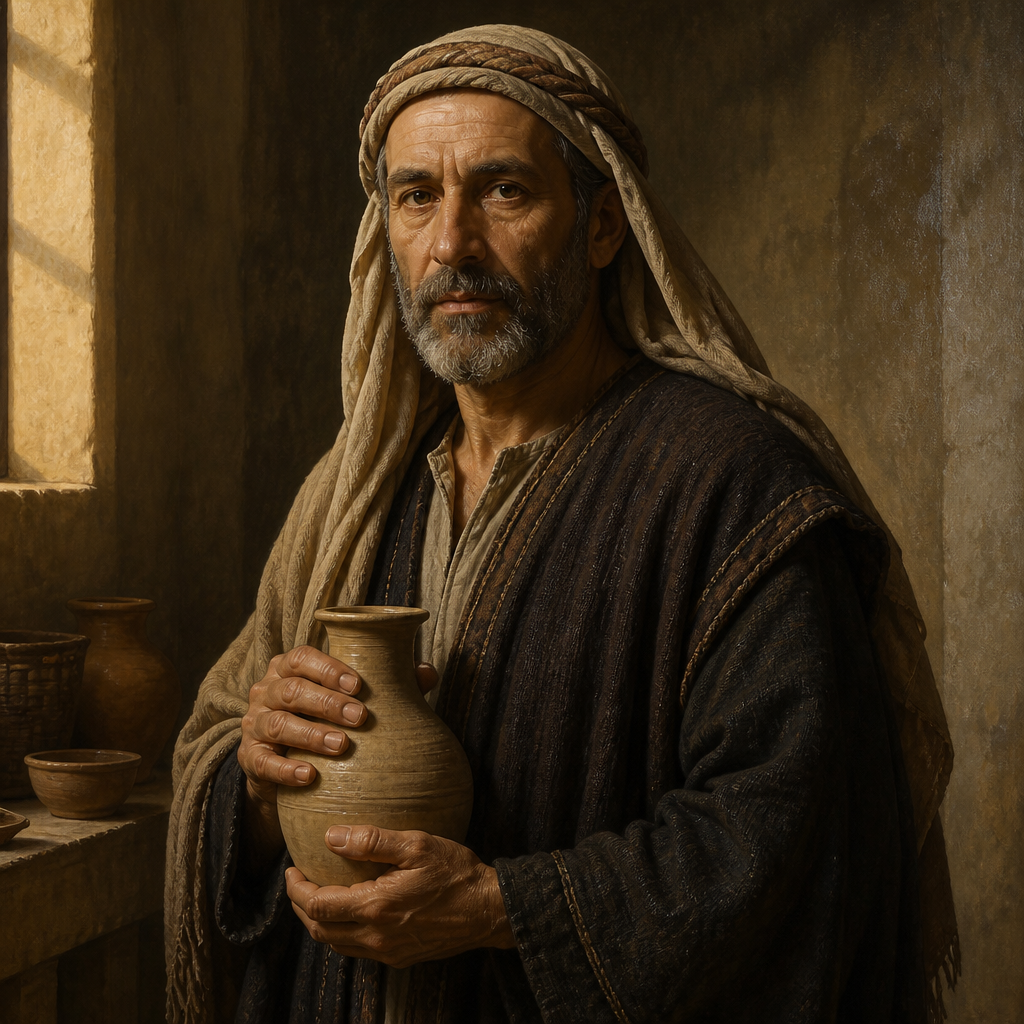
Menna
Menna was a descendant of King David and a direct ancestor of Jesus Christ through the line of Nathan.
Menna is named only in Luke's genealogy of Jesus (Luke 3:31). The page sits in the New Testament because that is the only book that records the name — but Menna lived during the divided monarchy, not in the first century.
Menna is a figure appearing exclusively in the New Testament within the genealogical records of Jesus Christ. He is situated in the ancestral line that traces the lineage of Christ back through King David to Adam. As a member of the Tribe of Judah, Menna represents the fulfillment of the biological and legal requirements for the Messianic line.
According to the Gospel of Luke, Menna was the son of Mattatha and the father of Melea. His presence in this specific list identifies him as part of the branch of David's family that descended through Nathan, rather than the royal line of Solomon recorded in the Gospel of Matthew.
Background and Family
Menna (also transliterated as Mainan) appears in the third chapter of the Gospel of Luke. He was born into the Tribe of Judah during the period following the United Monarchy. His lineage is established through his father, Mattatha, who was the son of Nathan and the grandson of King David. This placement confirms that Menna was a member of the house and lineage of David, maintaining the Davidic connection required for the identity of the Messiah.
The biblical record identifies Menna as the father of Melea. Beyond these immediate genealogical ties, the scriptures provide no biographical details regarding his life, occupation, or specific location within the land of Israel. He remains one of many individuals whose existence is preserved solely to bridge the historical gap between the great kings of Israel and the birth of Jesus.
Major Life Events
There are no specific life events recorded for Menna in the biblical text. His mention in Luke 3:31 constitutes his entire scriptural footprint. As with many figures in the post-Davidic genealogy, he lived during a time when the descendants of Nathan were not the ruling monarchs of Judah. While the Solomonic line held the throne, Menna and his immediate kin represented the private branch of the Davidic family.
Relationship to Other Biblical Figures
Menna’s significance is entirely relational. He is the grandson of King David, the son of Mattatha, and the father of Melea. His position in the genealogy places him approximately halfway between King David and the Babylonian exile. By being listed in Luke’s genealogy, he is linked directly to Jesus Christ (his descendant) and Adam (his ancestor).
Spiritual Significance
The inclusion of Menna in the Holy Scriptures serves a specific theological purpose: the documentation of the humanity of Jesus Christ. By listing Menna, the Gospel of Luke emphasizes that Jesus was not a mythological figure but a man with a documented human ancestry. Menna serves as a link in the chain of God's providence, showing that even during centuries of silence or obscurity, the line leading to the Savior was preserved according to the promises made to David. His presence testifies that every generation, regardless of how little is known of them, plays a role in the unfolding of redemptive history.
Spiritual Significance
Menna serves as a crucial link in the Davidic genealogy found in Luke 3. His inclusion validates the biological descent of Jesus from David through the line of Nathan, fulfilling Old Testament prophecies regarding the Messiah's ancestry. His name stands as a testament to God's faithfulness in maintaining the Messianic line through the centuries of Israel's history.
Frequently Asked Questions
Where is Menna mentioned in the Bible?
Menna is mentioned only once in the Bible, in Luke 3:31, as part of the genealogy of Jesus.
Who was Menna's father?
According to the Gospel of Luke, Menna was the son of Mattatha.
Which son of David is Menna descended from?
Menna is a descendant of David through his son Nathan, rather than through Solomon.
What does the name Menna mean?
The meaning of the Greek name Mainan (Menna) is uncertain, as it appears primarily in the context of this specific genealogy.
Was Menna a king of Israel?
No, Menna was not a king. While he was of royal descent from King David, he belonged to the branch of the family that did not hold the throne.