Judas son of James
One of the twelve original apostles of Jesus Christ, also known as Thaddaeus, who questioned the Lord during the Last Supper.
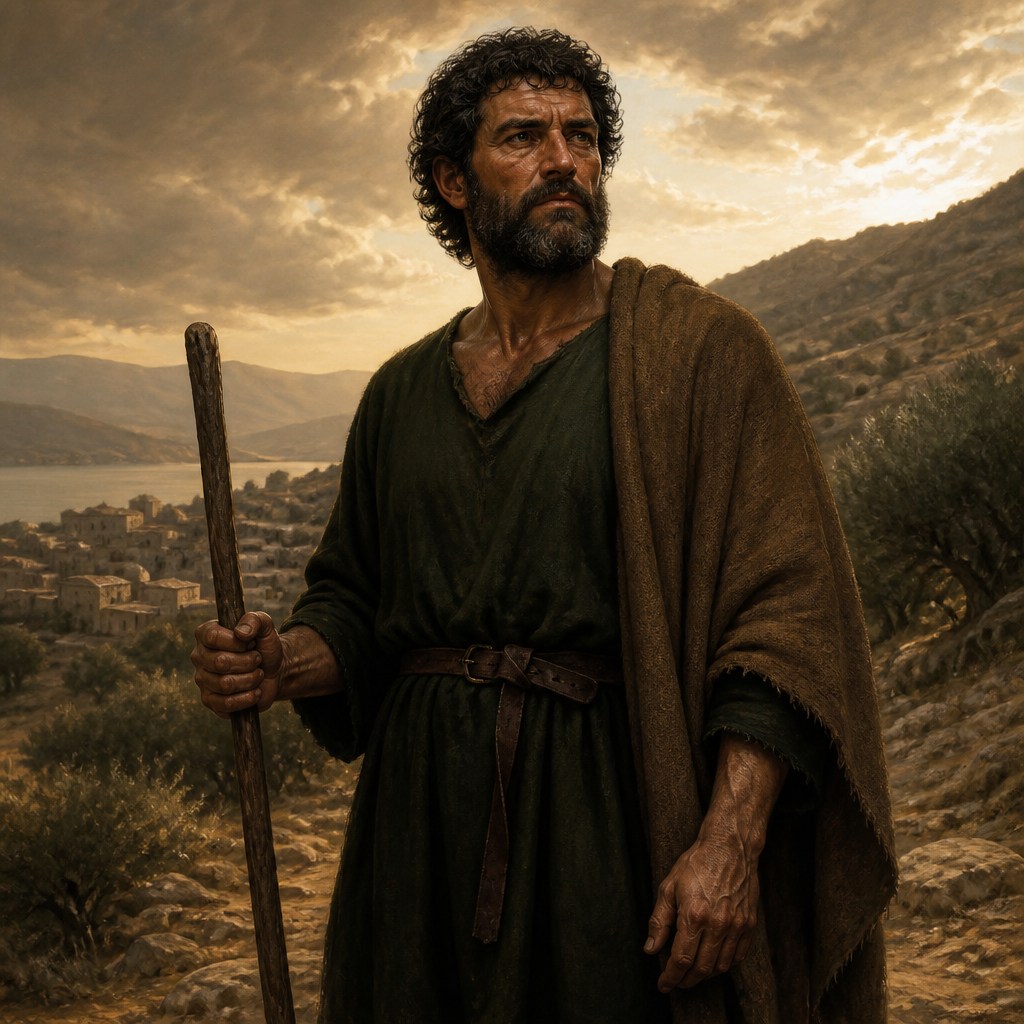
Judas son of James was one of the twelve apostles chosen by Jesus Christ during His earthly ministry. While his presence in the New Testament is quiet compared to figures like Peter or John, he was a foundational member of the apostolic circle, appearing in every list of the Twelve found in the Synoptic Gospels and the book of Acts. To avoid confusion with other figures, the Gospel writers and the apostle himself provided distinguishing markers, such as his parentage or an alternative name, Thaddaeus.
His most prominent moment in the biblical narrative occurs during the Upper Room discourse on the night of the Last Supper. Here, he asks a poignant question regarding the nature of Christ's revelation to His followers versus the world. This interaction highlights his active participation in the theological training Jesus provided to His inner circle during the final hours before the crucifixion.
Background and Family
The biblical record identifies this apostle primarily by his relationship to his father, being called "Judas son of James" in the Lucan accounts (Luke 6:16, Acts 1:13). In the lists provided by Matthew and Mark, he is referred to as "Thaddaeus" (Matthew 10:3, Mark 3:18). Scholars generally agree that these names refer to the same individual, a common practice of dual-naming in the first-century Jewish context. Beyond his father's name, James, no further genealogical information is provided. His specific tribe and hometown remain unrecorded, though he likely hailed from the Galilee region like the majority of the other apostles.
Major Life Events
Judas son of James was called to apostleship early in Jesus' ministry. He was present when Jesus went up on a mountainside and called those He wanted, appointing twelve to be with Him and to be sent out to preach (Mark 3:13-19). He functioned as one of the primary witnesses to Christ's miracles, teachings, and eventual resurrection.
His most significant recorded dialogue appears in John 14:22. During the Last Supper, Jesus spoke of manifesting Himself to those who love Him. Judas (explicitly noted by John as "not Iscariot") asked: "Lord, why are You going to reveal Yourself to us and not to the world?" This question suggests that Judas, like many of his contemporaries, may have still been wrestling with the expectation of a physical, political Messianic kingdom that would be visible to all nations. Jesus responded by emphasizing the spiritual nature of His dwelling through the Holy Spirit within the hearts of believers.
Following the ascension of Jesus, Judas is listed as being present in the upper room in Jerusalem (Acts 1:13). He joined the other apostles and the early believers in constant prayer as they awaited the promised Holy Spirit, participating in the foundational days of the early Church.
Relationship to Other Biblical Figures
As one of the Twelve, Judas son of James shared a close, communal relationship with the other apostles, including Peter, James, and John. His primary relationship was that of a disciple to Jesus Christ. The biblical text identifies him as the "son of James," though the specific identity of this James is not clarified in the text. He is consistently grouped with Simon the Zealot and James son of Alphaeus in the apostolic lists, suggesting a possible sub-grouping or shared background among these specific men within the larger circle of the Twelve.
Spiritual Significance
The spiritual significance of Judas son of James lies in his role as a witness to the Resurrection. Though he is a "minor" figure in terms of recorded dialogue, his inclusion in the Twelve signifies his role as a foundational pillar of the Church. His question in John 14 serves a vital pedagogical purpose in the New Testament, eliciting one of Jesus' most profound teachings on the indwelling of the Trinity. His life demonstrates that faithfulness to Christ does not always require a prominent public voice, but rather a consistent presence and a heart seeking to understand the mysteries of God's revelation.
Spiritual Significance
Judas son of James serves as a vital link in the apostolic chain, representing the faithful core of disciples who followed Jesus from the Galilean ministry to the upper room in Jerusalem. His presence in the lists of the Twelve confirms his authority as an eyewitness to the life, death, and resurrection of Jesus, which was the primary qualification for apostleship in the early Church.
Theologically, his interaction with Jesus in John 14 highlights the transition from a nationalistic expectation of the Messiah to a spiritual one. By asking how Jesus would manifest Himself, he provided the occasion for Jesus to explain that the New Covenant relationship is defined by love, obedience, and the internal presence of the Holy Spirit rather than an external, worldly display of power.
Frequently Asked Questions
Is Judas son of James the same person as Thaddaeus?
Yes. Biblical scholars identify Judas son of James (from Luke and Acts) with Thaddaeus (from Matthew and Mark) because they occupy the same position in the lists of the twelve apostles.
What did Judas son of James ask Jesus?
During the Last Supper, he asked Jesus why He intended to reveal Himself only to the disciples and not to the world at large (John 14:22).
Was Judas son of James present at Pentecost?
Yes. He is listed among those gathered in the upper room in Acts 1:13, who were present for the descent of the Holy Spirit in Acts 2.
Who was the father of this Judas?
The Bible identifies his father as a man named James, as seen in Luke 6:16 and Acts 1:13.
Connected Figures
Jesus Christ
Teacher and Lord
James
Father
Simon the Zealot
Fellow Apostle

James son of Alphaeus
Fellow Apostle
Categories
Mentions by Book
- Acts1
- John1
- Luke1
- Mark1
- Matthew1
Family & Relationships
Parent
James, Father of Judas (not Iscariot)
Luke 6:16
Others Named Judas son of James
Judas, Resident of Straight StreetActs 9:11
A resident of Damascus whose home on Straight Street served as the first refuge for the apostle Paul following his conversion on the road to Damascus.
Judas the GalileanActs 5:37
A Jewish revolutionary leader who led a rebellion against Rome during the census and perished alongside his followers.
Judas called BarsabbasActs 15:22
A prominent leader and prophet in the early Jerusalem church selected to deliver the apostolic decree to the Gentile believers in Antioch.