Tyrannus
Tyrannus was the owner or teacher of a lecture hall in Ephesus where the apostle Paul conducted daily discussions for two years.
Tyrannus is a figure briefly mentioned in the New Testament book of Acts, specifically during the account of the apostle Paul’s second and third missionary journeys. He is defined primarily by the location associated with his name: the 'lecture hall of Tyrannus' (schole Tyrannou) in the city of Ephesus. The biblical record does not clarify whether Tyrannus was a convert to Christianity, a sympathetic pagan, or simply a professional rhetorician who rented his space to Paul.
His role in the biblical narrative marks a significant transition in early Christian mission strategy. When Paul faced opposition within the Ephesian synagogue, he withdrew to the hall of Tyrannus, signaling a move from Jewish communal spaces to a more public, Hellenistic educational setting. This transition allowed for a widespread dissemination of the gospel throughout the Roman province of Asia.
Background and Family
The biblical record provides no genealogical data, tribal affiliation, or familial history for Tyrannus. His name, which in Greek (Τύραννος) literally translates to "tyrant," "sovereign," or "absolute ruler," was a common Greek name during the 1st century AD. It is unknown if he was a native Ephesian or a traveling philosopher. Scholars debate whether Tyrannus was a teacher who actively used the hall or a landlord who owned the property. The lack of biographical detail in Acts 19:9 suggests that the author, Luke, considered the man’s identity secondary to the functional importance of his lecture hall for Paul’s ministry.
Major Life Events
The single event involving Tyrannus is the use of his schole (lecture hall) by the apostle Paul around 52–54 AD. According to Acts 19:9, Paul had spent three months teaching in the Ephesian synagogue, but when a group of listeners became obstinate and publicly maligned "the Way," Paul separated from them. He took the disciples with him and began holding daily discussions in the hall of Tyrannus.
Western text traditions (such as the Codex Bezae) include an additional detail suggesting that Paul taught there "from the fifth hour to the tenth" (roughly 11:00 AM to 4:00 PM). This was the period when most residents of Roman cities rested during the heat of the day. If Tyrannus was a professional teacher, he likely held his own classes in the early morning, allowing Paul to utilize the space during the siesta hours when it would otherwise be vacant.
Relationship to Other Biblical Figures
Tyrannus is directly linked only to the apostle Paul. While the text does not explicitly state that Tyrannus was one of Paul's "disciples," he is positioned as a facilitator of Paul's work. By providing or renting this space, Tyrannus enabled Paul to maintain a consistent presence in Ephesus for two years. This period was remarkably fruitful, as the text notes that "all the Jews and Greeks who lived in the province of Asia heard the word of the Lord" (Acts 19:10).
Spiritual Significance
The spiritual significance of Tyrannus lies in his hall serving as the bridge between the Jewish synagogue and the Greek world. His hall became the first recorded "theological school" or public center for Christian education. The presence of Tyrannus in the text highlights the providential provision of secular spaces for the expansion of the early Church. While Tyrannus himself remains a peripheral figure, his name is forever associated with the systematic instruction that led to the establishment of the seven churches of Asia mentioned in the Book of Revelation.
Spiritual Significance
Tyrannus is significant as the provider of a neutral, public space that facilitated one of Paul's most successful missionary periods. The move to his lecture hall represents the gospel’s transition into the intellectual and social centers of the Greco-Roman world. It demonstrates how early Christianity utilized existing social structures—such as the rhetorical 'schole'—to foster deep theological reflection and widespread evangelism over a sustained two-year period.
Frequently Asked Questions
Was Tyrannus a Christian?
The Bible does not state whether Tyrannus became a believer. He is mentioned only as the owner or namesake of the lecture hall Paul used.
What does the name Tyrannus mean?
In Greek, the name Tyrannus means 'tyrant' or 'absolute ruler,' though it was a common name at the time and did not necessarily reflect his character.
Where was the hall of Tyrannus located?
The hall was located in Ephesus, a major Roman city in the province of Asia (modern-day Turkey).
How long did Paul teach in the hall of Tyrannus?
Paul conducted daily discussions in the hall for two years, according to Acts 19:10.
Connected Figures
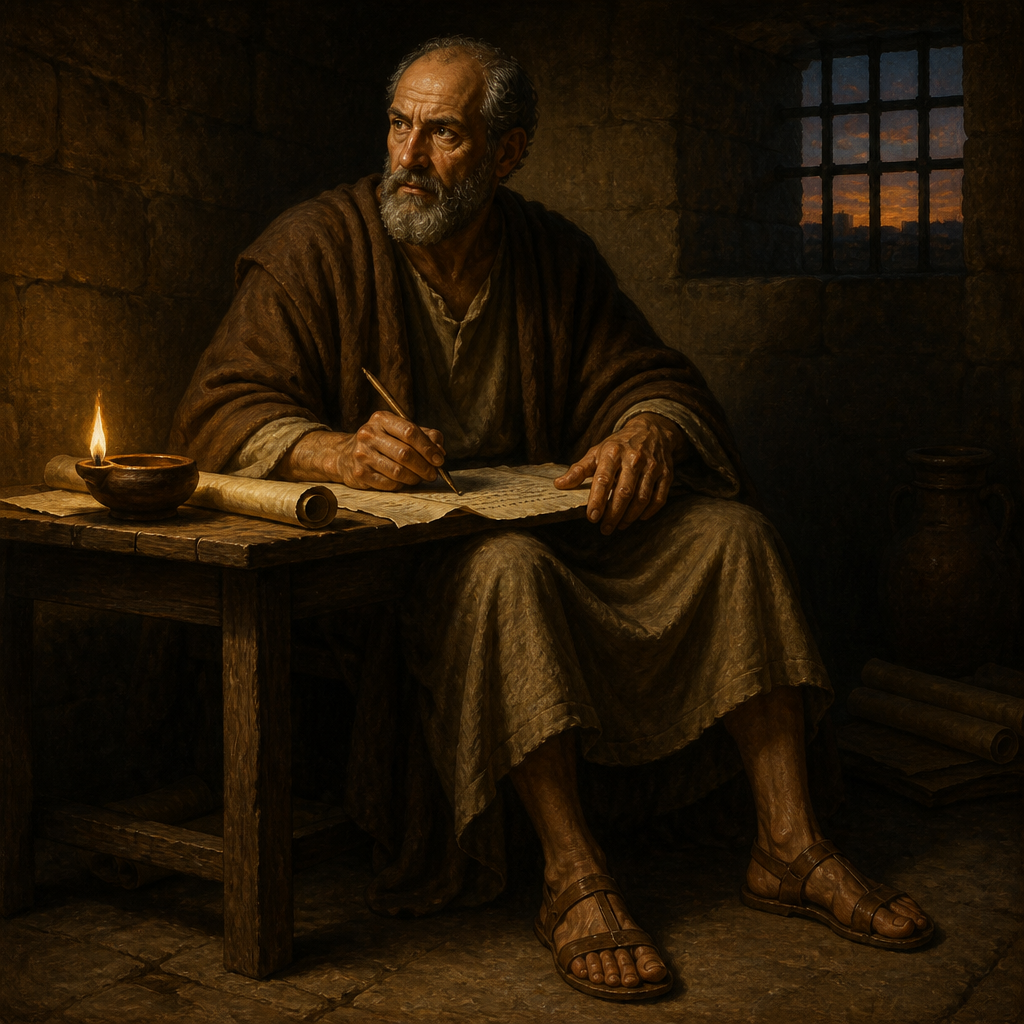
Paul the Apostle
Used Tyrannus's hall for daily teaching
Luke the Evangelist
Chronicler who recorded the mention of Tyrannus
Categories
Mentions by Book
- Acts1