Mnason
A Cypriot believer and 'early disciple' in the New Testament who provided hospitality to the Apostle Paul and his companions in Jerusalem during the mid-1st century AD.
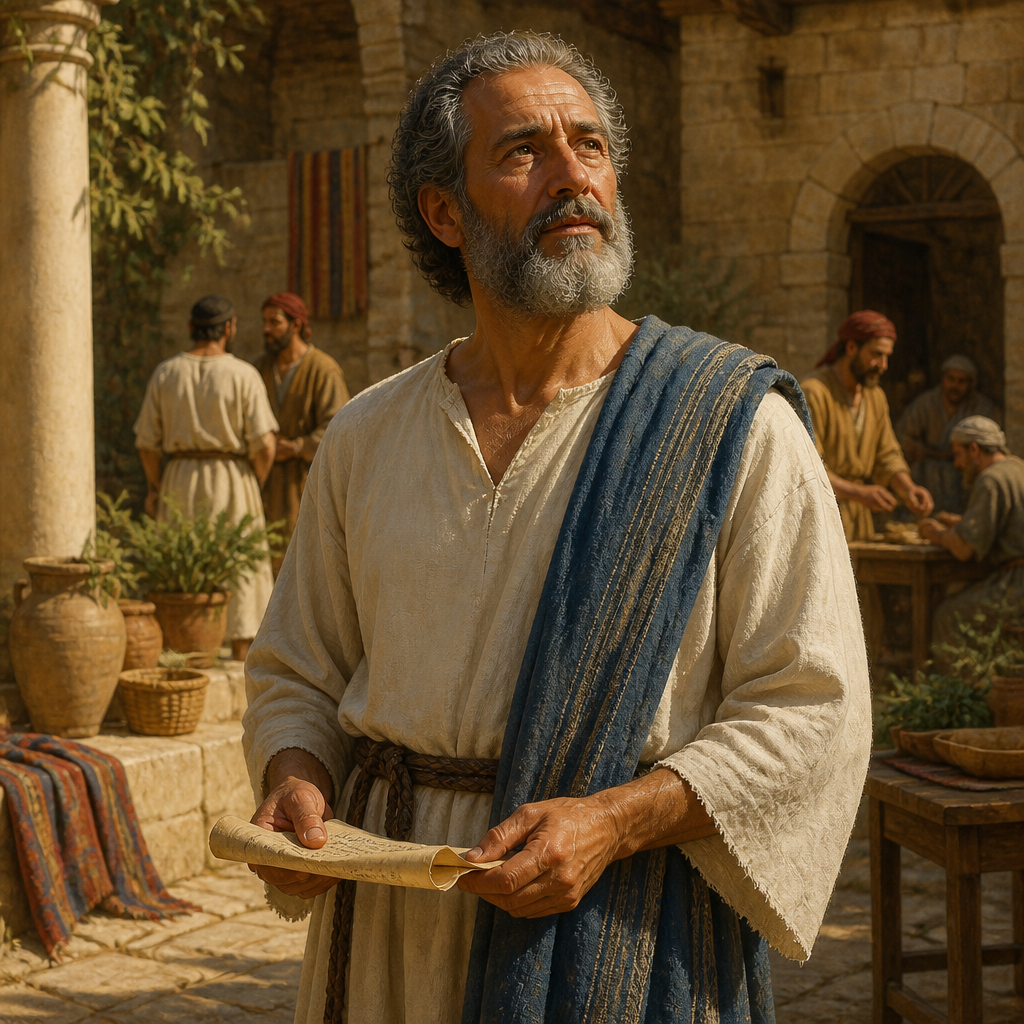
Mnason is a minor but noteworthy figure mentioned in the book of Acts during the closing stages of the Apostle Paul’s third missionary journey. Identified as a native of Cyprus, he is described by the author Luke as an "early disciple," a term suggesting he had been a follower of Jesus Christ since the earliest days of the Church, possibly dating back to Pentecost or the initial ministry of the apostles in Jerusalem.
His primary contribution to the biblical narrative is his role as a host. As Paul and his traveling companions arrived in Jerusalem—a city where Paul faced significant theological opposition and personal danger—Mnason provided a safe residence for the missionary team. His presence in the text highlights the vital network of hospitality that sustained the growth of the early Christian movement.
Background and Family
Mnason is identified in Acts 21:16 as a "Cypriot," indicating his origins on the island of Cyprus. While the biblical text does not provide details regarding his family lineage or his specific tribe, his residence in Jerusalem at the time of Paul’s arrival suggests he was part of the Hellenistic Jewish community. The name Mnason itself is Greek, meaning "reminding" or "one who remembers," which was a common name in the Greek-speaking world of the 1st century AD.
The "Early Disciple"
The most distinctive descriptor applied to Mnason is the phrase archaios mathetes (early disciple). This designation carries significant weight in the context of the Lucan narrative. It implies that Mnason was not a recent convert during Paul's later missions but had likely been a follower of the Way for many years. Scholars suggest he may have been among the group of believers established during the very beginning of the Church in Jerusalem (Acts 2) or perhaps one of the seventy disciples commissioned by Jesus during his earthly ministry (Luke 10). Because he was from Cyprus, he may have also been connected to the men of Cyprus and Cyrene who were instrumental in the early expansion of the Gospel to the Gentiles (Acts 11:20).
Major Life Events
The only recorded event in Mnason's life occurs during the Apostle Paul’s final trip to Jerusalem around 57 AD. Paul was traveling with a delegation representing various Gentile churches, carrying a collection for the impoverished saints in Jerusalem. The atmosphere in the city was tense, as rumors had circulated that Paul was teaching Jews to forsake the Law of Moses.
Some of the disciples from Caesarea accompanied us, and they took us to stay at the home of Mnason the Cypriot, an early disciple. (Acts 21:16)
Mnason’s involvement was practical and courageous. The disciples from Caesarea escorted Paul’s group specifically to Mnason’s home. This suggests that Mnason had a house large enough to accommodate a significant group of travelers and that he was a trusted member of the community who could provide a secure environment for Paul amidst the brewing controversy.
Relationship to Other Biblical Figures
While no specific family relationships are recorded for Mnason, he is linked to the Apostle Paul and the author Luke (who includes himself in the "us" of Acts 21:16). He is also associated with the "disciples from Caesarea" who facilitated the introduction. His status as a Cypriot may suggest a prior acquaintance with Barnabas, who was also a Levite from Cyprus (Acts 4:36), though the text does not explicitly confirm this connection.
Spiritual Significance
Mnason serves as a biblical model of hospitality (philoxenia). In the 1st-century Church, providing lodging for traveling ministers was not merely a social courtesy but a theological necessity and a form of participation in the ministry. By opening his home, Mnason became a partner in Paul's work. Furthermore, his description as an "early disciple" serves as a bridge between the foundational days of the Jerusalem church and the expanding Gentile mission led by Paul. He represents the continuity and stability of the faith across several decades of the Early Church era.
Spiritual Significance
Mnason is significant as a representative of the 'early disciples' who remained faithful to the Gospel from its inception through the expansion of the Pauline missions. His inclusion in the narrative of Acts 21 emphasizes the importance of hospitality within the early Christian community, showing how settled believers supported the dangerous work of traveling apostles.
His role illustrates that not all significant figures in the New Testament were preachers or martyrs; some provided the essential infrastructure of housing and safety that allowed the movement to survive and flourish in hostile urban environments like Jerusalem.
Frequently Asked Questions
Where was Mnason from?
Mnason was a native of Cyprus, though he was living in or near Jerusalem at the time he hosted the Apostle Paul.
What does the term 'early disciple' mean in reference to Mnason?
It suggests he had been a follower of Christ from the early days of the Church, possibly since Pentecost or the time of Jesus' earthly ministry.
How many times is Mnason mentioned in the Bible?
Mnason is mentioned only once in the Bible, in Acts 21:16.
Why did Paul stay with Mnason instead of at an inn?
During the 1st century, inns were often dangerous or disreputable. Christian hospitality, like that offered by Mnason, provided a safe and supportive environment for believers traveling through hostile areas.
What is the meaning of the name Mnason?
The name Mnason is Greek and is derived from a word meaning 'reminding' or 'one who remembers.'
Connected Figures

Paul the Apostle
Guest whom Mnason hosted in Jerusalem
Luke the Evangelist
Guest and chronicler of Mnason's hospitality
Barnabas
Fellow Cypriot believer (possible associate)
Categories
Mentions by Book
- Acts1