Micah, Grandson of Jonathan
Who was Micah, Grandson of Jonathan, in the Bible?
The son of Mephibosheth and grandson of Jonathan, Micah was a member of the royal house of Saul during the reign of King David.
This is one of 5 people named Micah in the Bible. See all 5 →
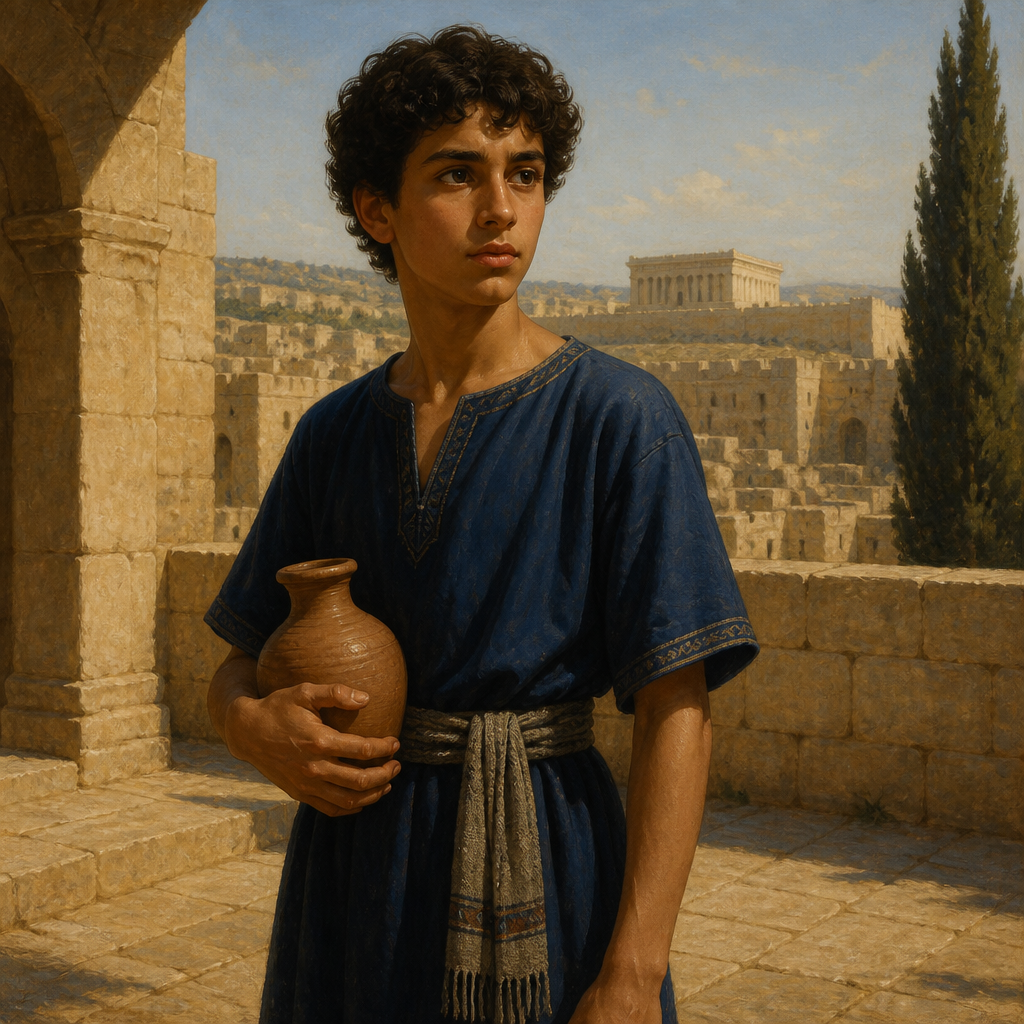
Micah (also spelled Mica) was a member of the tribe of Benjamin and a descendant of Israel’s first king, Saul. He was the son of Mephibosheth (also known as Merib-baal), making him the grandson of Jonathan and the great-grandson of King Saul. Micah lived during the era of the United Monarchy, specifically during the reign of King David, and represents the continuation of the Saulide lineage under Davidic grace.
Historically, Micah appears in the biblical narrative as a 'young son' when his father Mephibosheth was summoned to the court of King David. While he did not occupy the throne, his presence in the genealogical records of 1 Chronicles highlights the survival and proliferation of Jonathan’s line, ensuring that the covenant of friendship between David and Jonathan bore fruit in future generations.
Background and Family
Micah was born into a family of significant political and social upheaval. His grandfather, Jonathan, was the eldest son of King Saul and the intended heir to the throne of Israel. However, following the deaths of Saul and Jonathan at the Battle of Mount Gilboa, the house of Saul fell into decline. Micah’s father, Mephibosheth, was crippled in both feet at the age of five during the flight from the Philistines.
Micah is first introduced in the biblical text in 2 Samuel 9:12. At this time, King David, seeking to show 'the kindness of God' to the house of Saul for Jonathan’s sake, had restored Saul's family lands to Mephibosheth and invited him to eat at the royal table. Micah is described at this juncture as a 'young son' (BSB), suggesting he was a child or adolescent when his father was brought into David’s protection.
Major Life Events
The biblical record for Micah is primarily genealogical rather than narrative. His primary 'event' is his inclusion in the restoration of his father’s household. When Mephibosheth moved to Jerusalem to live under David’s patronage, Micah and the rest of the household were supported by the labor of Ziba, a former servant of Saul, and Ziba’s fifteen sons and twenty servants.
Beyond his childhood in Jerusalem, Micah’s life is defined by his role as a progenitor. The books of 1 Chronicles provide a detailed list of his descendants, noting that he fathered four sons: Pithon, Melech, Tarea (or Tahrea), and Ahaz. This lineage is meticulously preserved in the tribal records of Benjamin, demonstrating that despite the loss of the monarchy, Micah’s branch of the family remained prominent within their tribe for several generations.
Relationship to Other Biblical Figures
Micah’s most significant relationship was with his father, Mephibosheth. As Mephibosheth’s only named son in the text, Micah was the sole carrier of Jonathan’s direct male line. His relationship to King David was one of a protected subject; he lived in the shadow of the covenant made between his grandfather and the king. Furthermore, his connection to the tribe of Benjamin remained strong, as his descendants are listed twice in the extensive genealogies of 1 Chronicles 8 and 9, which document the leaders and residents of the restored community after the Babylonian exile.
Spiritual Significance
The presence of Micah in the Bible serves as a testament to God’s faithfulness to His promises. The covenant between David and Jonathan in 1 Samuel 20 included a plea that David would not cut off his kindness from Jonathan’s family forever. Micah is the physical evidence that David kept this oath. Even when the house of Saul was no longer a political threat or a royal contender, the line of Jonathan was preserved through Micah.
In a broader theological sense, Micah represents the 'remnant' of a fallen house who finds grace in the presence of the true King. His life transition—from the obscurity of a disgraced dynasty to the security of the king’s provision—echoes the biblical theme of restoration. While he performed no recorded miracles or political exploits, his inclusion in the Holy Scripture underscores the importance of lineage and the fulfillment of specific, personal covenants within the history of Israel.
Micah is significant primarily as the link between the house of Saul and the subsequent generations of the tribe of Benjamin. His existence proves that the line of Jonathan survived the turbulent transition of power from the house of Saul to the house of David. In the context of the Chronicler’s genealogy, Micah’s descendants (reaching down to the sons of Azel) demonstrate the long-term vitality and preservation of this family within Israel, showing that even those associated with a rejected kingship remained vital members of the covenant community.
Frequently Asked Questions
Who was Micah’s father?
Micah was the son of Mephibosheth (also called Merib-baal), the son of Jonathan.
Which tribe did Micah belong to?
Micah belonged to the Tribe of Benjamin, the tribe of Israel’s first king, Saul.
Who were Micah’s children?
According to 1 Chronicles 8:35, Micah had four sons: Pithon, Melech, Tarea (Tahrea), and Ahaz.
Did Micah live in the royal palace?
While the Bible does not say he lived in the palace itself, it notes that his father Mephibosheth 'ate at David’s table,' and Micah lived with his father in Jerusalem under David’s protection.
Is this Micah the same as the prophet?
No. This Micah was a descendant of Saul living during the United Monarchy, while the prophet Micah lived much later during the Divided Monarchy.
Family & Relationships
Parents
 Mephibosheth, Son of JonathanFather2 Samuel 9:12Stated
 Micah, Grandson of JonathanThis page
Children
 Ahaz, Descendant of SaulSon1 Chronicles 8:35Stated
 MelechSon1 Chronicles 8:35Stated
 PithonSon1 Chronicles 8:35Stated
 TareaSon1 Chronicles 8:35Stated
Connected Figures
Family
Father · 2 Samuel 9:12
The grandson of King Saul and son of Jonathan who was crippled in childhood and later restored to royal honor by King David.
United MonarchyFirst: 2 Samuel 4:417 versesRoyal courtierBenjamin
Son · 1 Chronicles 8:35
A Benjamite descendant of King Saul and Jonathan, mentioned in the genealogical records of the United Monarchy as a son of Micah and father of Jehoaddah.
Son · 1 Chronicles 8:35
Melech was a member of the Tribe of Benjamin and a direct descendant of King Saul through the line of Jonathan, mentioned in the genealogies of 1 Chronicles.
United MonarchyFirst: 1 Chronicles 8:353 versesTribal NobleBenjamin
Son · 1 Chronicles 8:35
A Benjamite nobleman and descendant of King Saul who lived during the era of the United Monarchy.
United MonarchyFirst: 1 Chronicles 8:353 versesTribal NoblemanBenjamin
Son · 1 Chronicles 8:35
Tarea was a Benjamite nobleman during the United Monarchy and a direct descendant of King Saul through his grandson Mephibosheth.
United MonarchyFirst: 1 Chronicles 8:352 versesTribal noblemanBenjamin
Categories
Mentions by Book
- 2 Samuel1
- 1 Chronicles4
Scripture References
All 5 indexed verses, in canonical order, from the Berean Standard Bible.
2 Samuel · 1
- 2 Samuel 9:12Partial
And Mephibosheth had a young son named Mica, and all who dwelt in the house of Ziba were servants of Mephibosheth.
Cited as a key verse; added so References, Key Verses and Mentions by Book share one index.
1 Chronicles · 4
- 1 Chronicles 8:34
The son of Jonathan: Merib-baal, and Merib-baal was the father of Micah.
- 1 Chronicles 8:35
The sons of Micah: Pithon, Melech, Tarea, and Ahaz.
- 1 Chronicles 9:40
The son of Jonathan: Merib-baal, who was the father of Micah.
- 1 Chronicles 9:41
The sons of Micah: Pithon, Melech, Tahrea, and Ahaz.
Others Named Micah
Compare all 5 bearers →Micah, Reubenite of the Divided Monarchy1 Chronicles 5:5
A descendant of Reuben mentioned in the genealogical records of the northern tribes during the era of the Divided Monarchy.
Micah, Son of Uzziel1 Chronicles 23:20
A Levite of the Kohathite clan and the firstborn son of Uzziel, appointed to organized service within the Tabernacle during the wilderness period.
Micah of EphraimJudges 17:1
A man from the hill country of Ephraim whose private shrine and Levite priest were seized by the tribe of Dan during the period of the Judges.
Micah the MoreshiteJeremiah 26:18
A prophet from Moresheth who delivered divine oracles concerning the judgment and future restoration of Samaria and Jerusalem during the 8th century BC.