Heber the Kenite
Heber the Kenite was a descendant of Hobab, Moses' father-in-law, who established a separate nomadic camp and inadvertently facilitated the defeat of the Canaanite general Sisera.
Heber the Kenite is a significant figure in the narrative of the Book of Judges, primarily noted for his unique political position and his marriage to Jael. Although he was a Kenite—a group traditionally associated with the Midianites—Heber separated himself from his clansmen to dwell near Kedesh. His presence in the biblical text serves as the essential backdrop for one of the most dramatic military conclusions in the era of the Judges.
Heber is characterized by his neutrality in a time of intense conflict. While his ancestors were allies of Israel, the biblical record notes that during the time of Deborah and Barak, there was a formal peace between Heber’s household and Jabin, the King of Hazor. This delicate diplomatic standing created the opportunity for the Canaanite general Sisera to seek refuge in Heber’s tent, setting the stage for the fulfillment of Deborah's prophecy regarding Sisera’s demise.
Background and Family
Heber was a member of the Kenite tribe, specifically identified as a descendant of Hobab, who was the father-in-law of Moses. This lineage is crucial to understanding Heber’s social standing; the Kenites were generally viewed as friendly toward Israel due to their historical and marital ties during the Exodus. However, the author of Judges notes a significant geographical and social shift: Heber moved away from the main body of Kenites and pitched his tent by the "great tree of Zaanannim," located near Kedesh (Judges 4:11).
Heber’s primary relationship recorded in the text is with his wife, Jael. The narrative suggests a prosperous nomadic life, as the "house of Heber" was influential enough to merit a peace treaty with Jabin, the powerful Canaanite king who had oppressed Israel for twenty years. This indicates that Heber was a man of status and perhaps significant livestock, maintaining a neutral buffer between the Canaanites and the Israelites.
Major Life Events
The narrative involving Heber occurs during the war between the Israelite forces, led by Barak and the prophetess Deborah, and the Canaanite army under General Sisera. While Heber himself is not recorded as a combatant, his logistical choices dictated the outcome of the war. Because of the established "peace between Jabin king of Hazor and the house of Heber the Kenite" (Judges 4:17), Sisera fled toward Heber's camp after his chariots were defeated at the Kishon River.
Sisera specifically chose Heber’s camp because it was perceived as a safe haven where he could recover from exhaustion. However, the record focuses on the actions of Heber’s wife rather than Heber himself. While Sisera expected the protection of Heber’s hospitality, Jael acted independently, killing the general in her tent while he slept. The text does not record Heber’s reaction to this breach of his treaty with Jabin or his wife's decisive intervention on behalf of Israel.
Relationship to Other Biblical Figures
Heber’s primary connection is to Jael, his wife, whose fame eventually eclipsed his own. The Song of Deborah celebrates her as the "most blessed among women" and repeatedly identifies her as the "wife of Heber the Kenite" (Judges 5:24). This identifier serves to contrast the political alignment of the husband with the spiritual or opportunistic alignment of the wife. Furthermore, Heber’s lineage connects him back to the Mosaic era through Hobab, bridging the period of the Wilderness Wanderings to the Period of the Judges.
Spiritual Significance
The account of Heber the Kenite illustrates the biblical theme of God using outsiders and unexpected circumstances to achieve His ends. While Heber maintained a peace treaty with the enemies of Israel, his very presence near the battlefield provided the location for God’s judgment upon Sisera. The narrative highlights the tension between Heber’s human diplomacy and the divine will. Heber’s "peace" with Jabin was ultimately superseded by the actions of his household, demonstrating that even those who attempt to remain neutral in the conflicts of the Lord may find their resources and families swept into the fulfillment of divine prophecy.
Spiritual Significance
Heber the Kenite’s theological significance lies in his role as a bridge between the Mosaic covenant and the era of the Judges. His descent from Moses' father-in-law reminds the reader of the historical kindness shown to Israel by the Kenites. However, his peace treaty with Jabin of Hazor suggests a compromise with the oppressors of God's people. His inclusion in the text provides the necessary legal and social context for Jael’s actions, showing how God can work through the household of a man who sought peace with the enemy.
The juxtaposition of Heber’s treaty and Jael’s loyalty to the cause of Israel serves as a literary device to show that God's deliverance cannot be hindered by human political arrangements. The 'House of Heber' becomes the site of a miraculous victory, not through Heber’s diplomacy, but through the unexpected agency of his wife, fulfilling Deborah’s prophecy that the Lord would sell Sisera into the hands of a woman.
Frequently Asked Questions
What does the name Heber mean in Hebrew?
The name Heber (חֶבֶר) translates to 'comrade,' 'companion,' or 'associate,' which reflects his role as a nomadic ally or associate of the local powers.
Was Heber an Israelite?
No, Heber was a Kenite, a descendant of Hobab, the father-in-law of Moses. While the Kenites were closely associated with Israel, they were a distinct ethnic group.
Why did Heber have a peace treaty with King Jabin?
The Bible does not state the specific reason, but as a nomad moving through the region, Heber likely established a treaty to ensure the safety of his family and livestock in a territory controlled by the Canaanites.
Did Heber help Jael kill Sisera?
There is no biblical evidence that Heber assisted Jael. The text describes Jael acting alone while Heber was presumably elsewhere or uninvolved in the immediate event.
Where was Heber’s tent located?
Heber pitched his tent by the great tree (or terebinth) in Zaanannim, which was located near the city of Kedesh.
Connected Figures
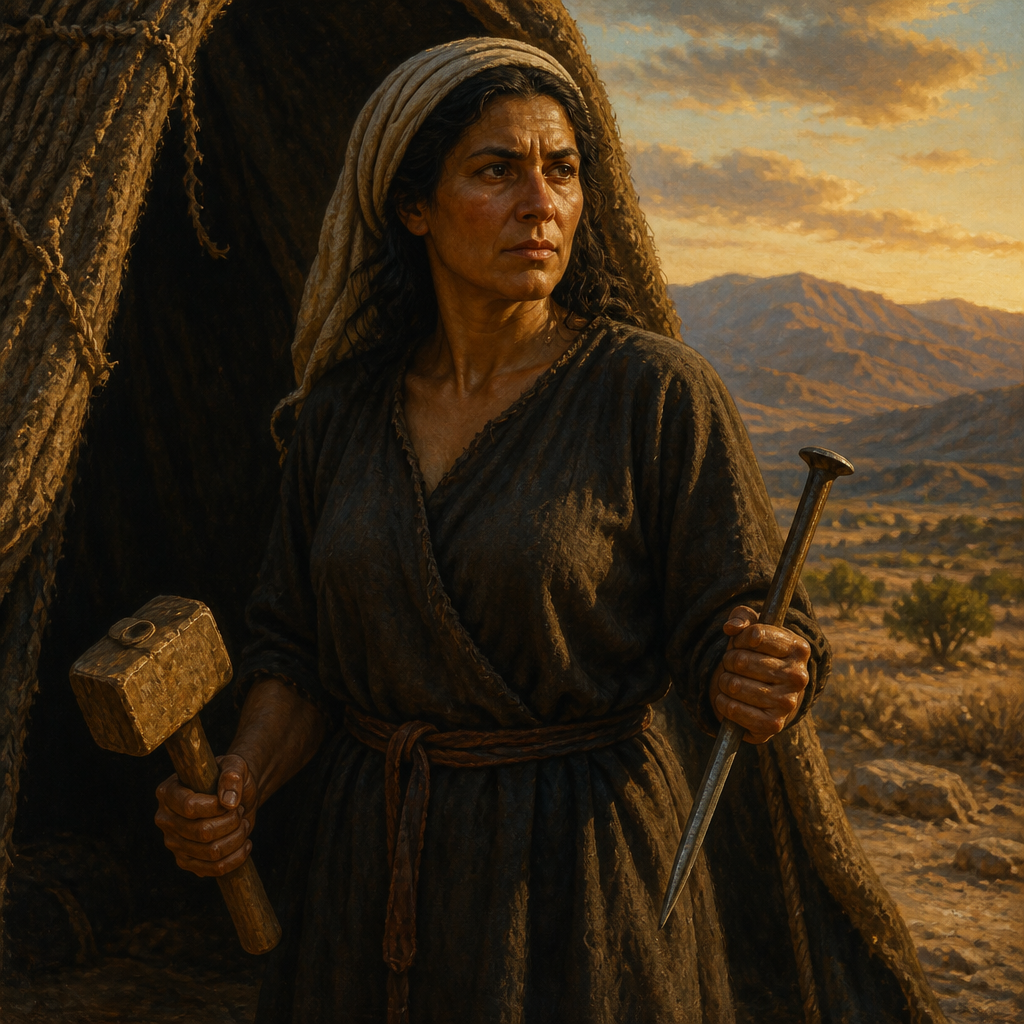
Jael
Wife
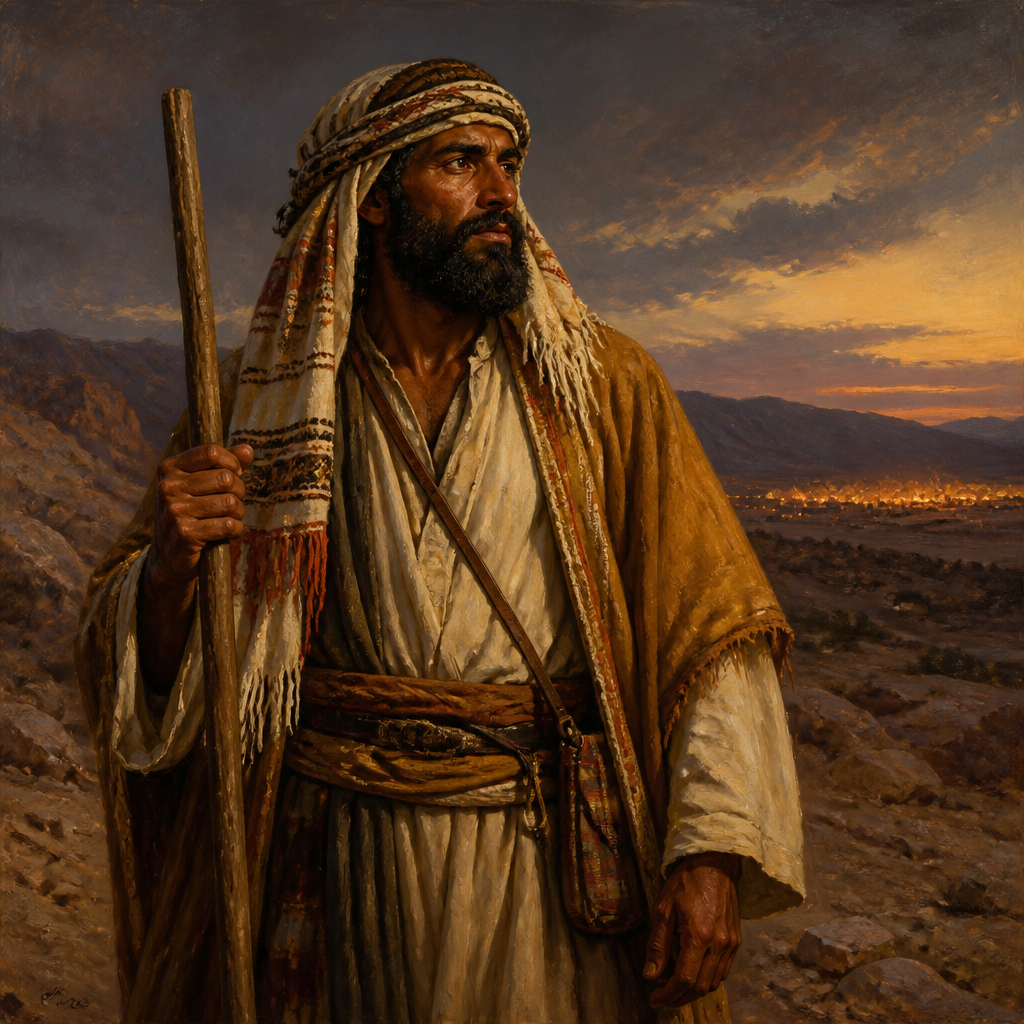
Hobab
Ancestor (Father-in-law of Moses)
Sisera
Treaty Ally (General of Jabin)
Jabin
Political Ally (King of Hazor)
Categories
Mentions by Book
- Judges4
Family & Relationships
Others Named Heber the Kenite
Heber, Son of Mered1 Chronicles 4:18
A descendant of Judah through Mered and Jehudijah, known as the father of Soco within the genealogical records of the Divided Monarchy.
Heber, Grandson of AsherGenesis 46:17
Heber was the grandson of Asher and founder of the Heberite clan, recorded among the Israelites who entered Egypt with Jacob and later listed in the wilderness census.
Heber, Son of Elpaal1 Chronicles 8:17
Heber was a prominent member of the tribe of Benjamin and a son of Elpaal, listed within the post-exilic genealogical records of the Divided Monarchy.