Hobab
Who was Hobab in the Bible?
A Midianite and son of Reuel who served as a guide and ally to the Israelites during their wilderness wanderings.
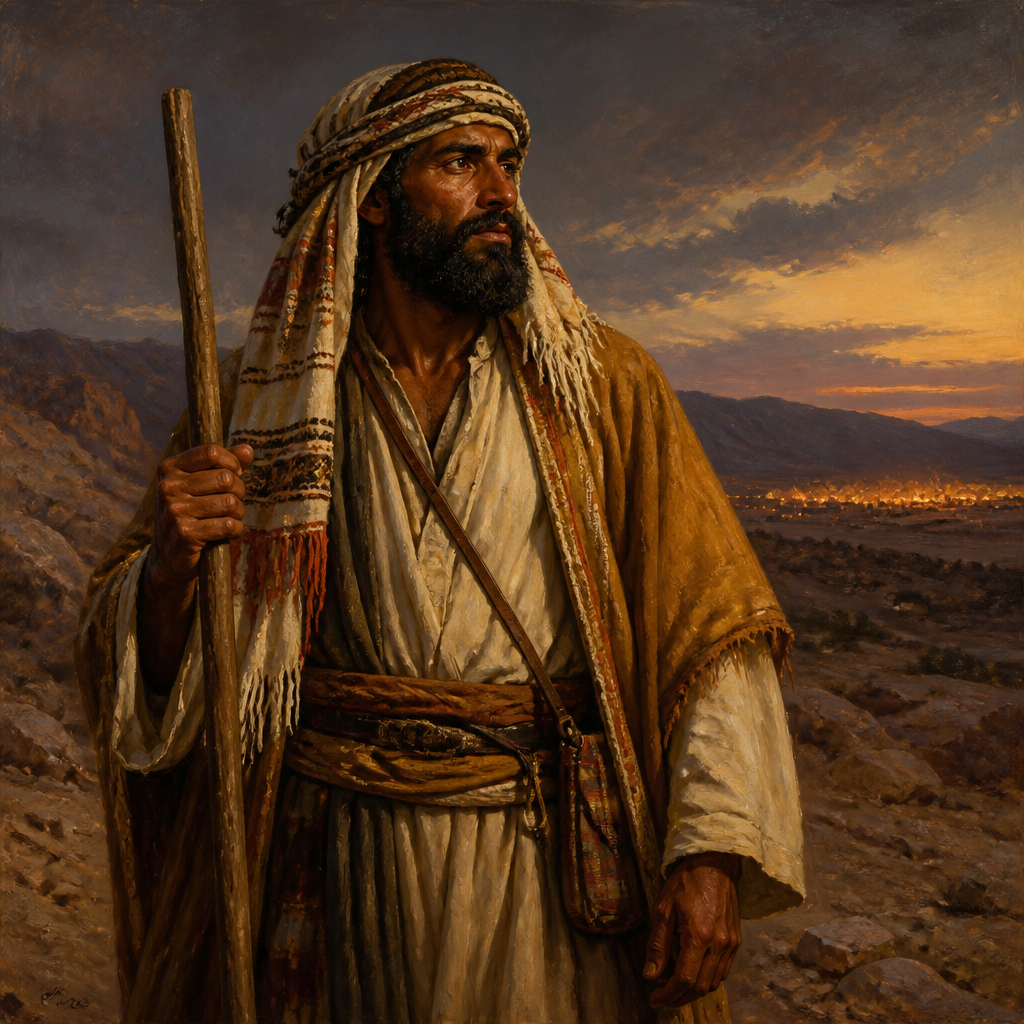
Hobab was a Midianite of the Kenite clan who played a specific, though brief, role during the Israelites' transition from Mount Sinai toward the Promised Land. As the son of Reuel (also known as Jethro), he was the brother-in-law of Moses, linked to the Hebrew leader through the marriage of his sister, Zipporah. His presence in the biblical narrative highlights the vital alliances formed between Israel and neighboring desert tribes during the Exodus period.
Hobab is primarily noted for his expertise in the terrain of the Sinai Peninsula. In the Book of Numbers, Moses explicitly requests Hobab’s assistance to serve as 'eyes' for the traveling congregation. Although the text initially records his hesitation, later historical references in the Book of Judges confirm that his descendants, the Kenites, remained integrated with the people of Israel, indicating his eventual cooperation and long-term impact on the tribal landscape of Canaan.
Background and Family
Hobab was a member of the Midianite people, specifically identified as a descendant of the Kenites. His father was Reuel (Numbers 10:29), a figure frequently identified with Jethro, the priest of Midian. This lineage placed Hobab in a position of significant social standing within his own tribe and established a familial bond with the leadership of Israel. His sister, Zipporah, was the wife of Moses, making Hobab Moses' brother-in-law.
The biblical record identifies Hobab’s father as 'Reuel the Midianite.' In the ancient Near East, the Kenites were known as a semi-nomadic group, often associated with metalworking and a deep knowledge of the desert wilderness. This background provided Hobab with the survival skills and navigational expertise that would become a point of discussion between him and Moses.
Major Life Events
The most detailed account of Hobab occurs in Numbers 10, as the Israelites prepared to depart from the region of Mount Sinai (Horeb). As the cloud of the Lord lifted to lead the people forward, Moses made a direct appeal to Hobab to accompany them. Moses promised that if Hobab joined them, the Israelites would share with him whatever 'good things' the Lord bestowed upon them.
"But he said to him, 'I will not go; I will instead go to my own land and to my own kindred.'" (Numbers 10:30)
Despite this initial refusal, Moses persisted, emphasizing that Hobab knew the camping places in the wilderness and could serve as a guide. While the narrative in Numbers does not explicitly record Hobab’s change of heart, the subsequent history of the Kenites suggests he did indeed go. By the time of the conquest and the era of the Judges, Hobab’s descendants are found living among the Israelites. Judges 4:11 notes that Heber the Kenite was a descendant of Hobab, proving that Hobab’s line had successfully migrated into the land of Canaan alongside the tribes of Israel.
Relationship to Other Biblical Figures
Hobab’s primary relationship in the text is with Moses. Their interaction is characterized by mutual respect and a pragmatic recognition of Hobab’s value to the community. While Moses relied on the divine guidance of the pillar of cloud and fire, he also saw the value in human wisdom and local knowledge, seeking Hobab’s practical expertise.
Through his sister Zipporah, Hobab was also the uncle of Moses’ sons, Gershom and Eliezer. This familial tie likely facilitated the trust necessary for a foreign Midianite to hold a position of such importance within the Israelite camp.
Spiritual Significance
Hobab represents the 'God-fearing' foreigner who, though not an Israelite by birth, chooses to align his destiny with the people of God. His inclusion in the narrative serves as a reminder that the Exodus was not an exclusively ethnic event, but included a 'mixed multitude' and allied groups who recognized the hand of the Lord upon Israel. His decision to leave his 'own land and kindred' mirrors the earlier call of Abraham, demonstrating a willingness to trade the familiar for a share in the divine promise. The lasting legacy of his descendants, the Kenites, serves as a testament to the fulfillment of Moses' promise that the Lord would 'treat them well.'
Theologically, Hobab illustrates the intersection of divine guidance and human agency. While Israel followed the supernatural pillar of cloud, Moses still sought Hobab’s geographical expertise, suggesting that God often works through natural means and the wisdom of others. Hobab’s inclusion in the camp also marks the early integration of the Kenites into the social fabric of Israel.
His role is historically significant because it establishes the origin of the Kenite presence in Canaan. The Kenites remained loyal allies to Israel for centuries, a relationship rooted in Hobab’s initial decision to join the trek through the wilderness. His life demonstrates how individuals outside the covenant community could become instrumental in the fulfillment of God’s purposes.
Frequently Asked Questions
Who was Hobab's father?
Hobab was the son of Reuel the Midianite, who is also known in the biblical text as Jethro.
What role did Moses want Hobab to play?
Moses asked Hobab to accompany the Israelites through the wilderness to serve as their 'eyes,' providing essential knowledge of desert survival and camping locations.
Did Hobab eventually go with the Israelites?
Although Numbers 10 records his initial refusal, Judges 4:11 confirms his descendants (the Kenites) were present in the land of Israel, implying he eventually agreed to go.
How was Hobab related to Zipporah?
Hobab was the brother of Zipporah, making him the brother-in-law of Moses.
What tribe did Hobab belong to?
Hobab was a Midianite from the clan of the Kenites.
Family & Relationships
Parents
 JethroFatherNumbers 10:29
Inferred
No verse names Hobab and Jethro together; the father link is carried from the surrounding genealogy and is not stated in Scripture.Evidence: Numbers 10:29
 HobabThis page
 ZipporahSisterExodus 2:21
Inferred
No verse names Hobab and Zipporah together; the sister link is carried from the surrounding genealogy and is not stated in Scripture.Evidence: Exodus 2:21
Extended family
 MosesBrother-in-lawExodus 2:21
Inferred
No verse names Hobab and Moses together; the brother-in-law link is carried from the surrounding genealogy and is not stated in Scripture.Evidence: Exodus 2:21
Connected Figures
Family
Father · Numbers 10:29
The Midianite priest and father-in-law of Moses who provided sanctuary, gave administrative counsel, and acknowledged the sovereignty of Yahweh during the Exodus.
Egypt and WildernessFirst: Exodus 2:1814 versesPriest of Midian
Sister · Exodus 2:21
The Midianite wife of Moses who saved his life by performing an emergency circumcision during his return to Egypt.
Egypt and WildernessFirst: Exodus 2:217 versesDaughter of a priest, Shepherdess
Brother-in-law · Exodus 2:21
The preeminent prophet and lawgiver of Israel who led the Hebrews out of Egyptian bondage and mediated the Covenant at Mount Sinai.
Egypt and WildernessFirst: Exodus 2:10844 versesProphet, Judge, and LawgiverLevi
Categories
Mentions by Book
- Exodus2
- Numbers3
- Judges1
Scripture References
All 6 indexed verses, in canonical order, from the Berean Standard Bible.
Exodus · 2
- Exodus 2:18Partial
When the daughters returned to their father Reuel, he asked them, “Why have you returned so early today?”
Cited as evidence on a family card; added so References, Key Verses and Mentions by Book share one index.
- Exodus 2:21Partial
Moses agreed to stay with the man, and he gave his daughter Zipporah to Moses in marriage.
Cited as evidence on a family card; added so References, Key Verses and Mentions by Book share one index.
Numbers · 3
- Numbers 10:29
Then Moses said to Hobab, the son of Moses’ father-in-law Reuel the Midianite, “We are setting out for the place of which the LORD said: ‘I will give it to you.’ Come with us, and we will treat you well, for the LORD has promised good things to Israel.”
- Numbers 10:31Partial
“Please do not leave us,” Moses said, “since you know where we should camp in the wilderness, and you can serve as our eyes.
Cited as a key verse; added so References, Key Verses and Mentions by Book share one index.
- Numbers 10:32Partial
If you come with us, we will share with you whatever good things the LORD gives us.”
Cited as a key verse; added so References, Key Verses and Mentions by Book share one index.
Judges · 1
- Judges 4:11
Now Heber the Kenite had moved away from the Kenites, the descendants of Hobab the father-in-law of Moses, and had pitched his tent by the great tree of Zaanannim, which was near Kedesh.