Dishon, Son of Anah
Dishon was a descendant of Seir the Horite and a son of Anah, established as a tribal figure within the territory of Edom.
Dishon, the son of Anah, was a figure of the Patriarchal Period whose lineage is documented within the genealogical records of Edom. As a member of the Horite descendants of Seir, his presence in the biblical text serves to establish the early ethno-political landscape of the Transjordan region before the full emergence of the Edomite kingdom. He is primarily identified through his parentage and his offspring, marking him as a significant link in the ancestral chain of the Seir region.
His place in the record is preserved in both the Pentateuch and the post-exilic chronicles, ensuring that his branch of the family tree was recognized throughout Israel's history. While he is not depicted through narrative action or spoken dialogue, his inclusion in the sacred genealogies signifies his importance as a forefather of a specific clan dwelling in the land that would eventually be inhabited by the descendants of Esau.
Background and Family
Dishon was born into the Horite lineage during the Patriarchal Period, a time when various clans and tribal groups were consolidating their presence in the Levant and Transjordan. According to Genesis 36:25, he was the son of Anah. The biblical record also notes that he had a sister named Oholibamah. This familial connection is significant because Oholibamah is identified elsewhere as a wife of Esau, the brother of Jacob, suggesting a high level of intermarriage and social integration between the descendants of Isaac and the local Horite populations.
In the genealogical structure of the era, Dishon represented the third generation from Seir the Horite. The Horites were the indigenous inhabitants of the mountainous region of Seir, which would later be known as Edom. The preservation of Dishon's name highlights the transition of the land from the Horite inhabitants to the Edomite nation.
Major Life Events
The biblical text does not record specific deeds, travels, or conflicts associated with Dishon. Instead, his "life events" are captured through his role as a progenitor. In 1 Chronicles 1:41, the Chronicler records that Dishon was the father of four sons: Hemdan, Eshban, Ithran, and Cheran.
Through these four sons, Dishon became the head of a significant familial branch. In the ancient Near Eastern context, the growth of a man's household into multiple sub-clans was the primary marker of success and divine favor. By naming his specific children, the Bible elevates Dishon from a mere name to the status of a patriarch within his own tribal sphere.
Relationship to Other Biblical Figures
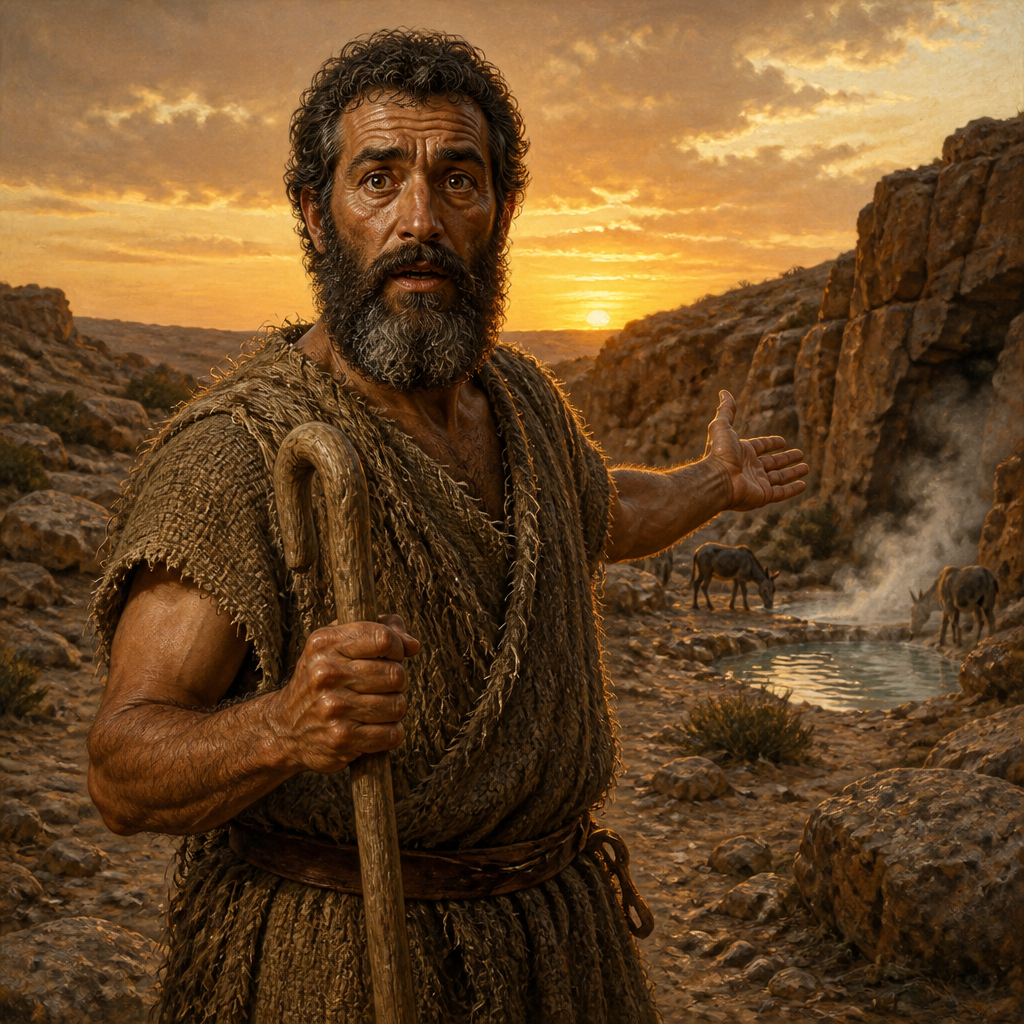
Dishon’s most important biblical relationship is his connection to his father, Anah. The text identifies Anah specifically as the one who found hot springs in the wilderness while pasturing the donkeys of his father Zibeon (Genesis 36:24), providing a geographical and occupational context for Dishon’s upbringing.
Furthermore, through his sister Oholibamah, Dishon was linked by marriage to the line of Esau. This connection implies that Dishon lived during the era when the family of Isaac was expanding and interacting with the established rulers of Seir. His descendants, mentioned in both Genesis and 1 Chronicles, represent the continued vitality of this line during the transition of power in the region.
Spiritual Significance
While Dishon is not a central figure in the redemptive narrative, his inclusion in the Word of God serves a specific theological purpose. The genealogies of Genesis 36 and 1 Chronicles 1 demonstrate God’s sovereignty over the nations and His attention to the details of human history. By recording the descendants of Seir, including Dishon, the Bible affirms that all nations are under God's purview, not just the chosen line of Israel.
Additionally, the specificity of Dishon’s family tree provides a historical anchor for the physical world in which the patriarchs Abraham, Isaac, and Jacob moved. It serves as a reminder that the land promised to Israel was already inhabited by organized, named families with their own distinct histories, making the eventual fulfillment of God’s promises even more striking against the backdrop of these established peoples.
Spiritual Significance
Dishon's significance lies in his role within the genealogy of the Horites, the original inhabitants of Mount Seir. His inclusion in both Genesis and 1 Chronicles emphasizes the historical continuity of the tribes that lived alongside the early Israelites and their Edomite cousins. By documenting his sons, the Bible provides a clear picture of the tribal expansion in the land of Edom, illustrating the complex social web that existed during the Patriarchal Period.
Frequently Asked Questions
Who was Dishon's father?
Dishon was the son of Anah, a descendant of Seir the Horite.
Who were the children of Dishon?
According to 1 Chronicles 1:41, Dishon had four sons: Hemdan, Eshban, Ithran, and Cheran.
Was Dishon related to the family of Esau?
Yes, Dishon was the brother of Oholibamah, who was one of the wives of Esau.
What tribe or nation did Dishon belong to?
He belonged to the Horites, who inhabited the land of Edom (Mount Seir) before and during the time of the Edomite transition.
Where is Dishon mentioned in the Bible?
Dishon is mentioned in the genealogical records of Genesis 36:25 and 1 Chronicles 1:41.
Connected Figures

Categories
Mentions by Book
- 1 Chronicles1
- Genesis1
Family & Relationships
Sibling
Genesis 36:25
Parent
Genesis 36:2
Sibling
Genesis 36:2
Others Named Dishon
Dishon, Son of SeirGenesis 36:21
A Horite clan leader and son of Seir the Horite, Dishon served as a chief in the land of Edom during the Patriarchal Period.