Zaccur, Father of Hanan
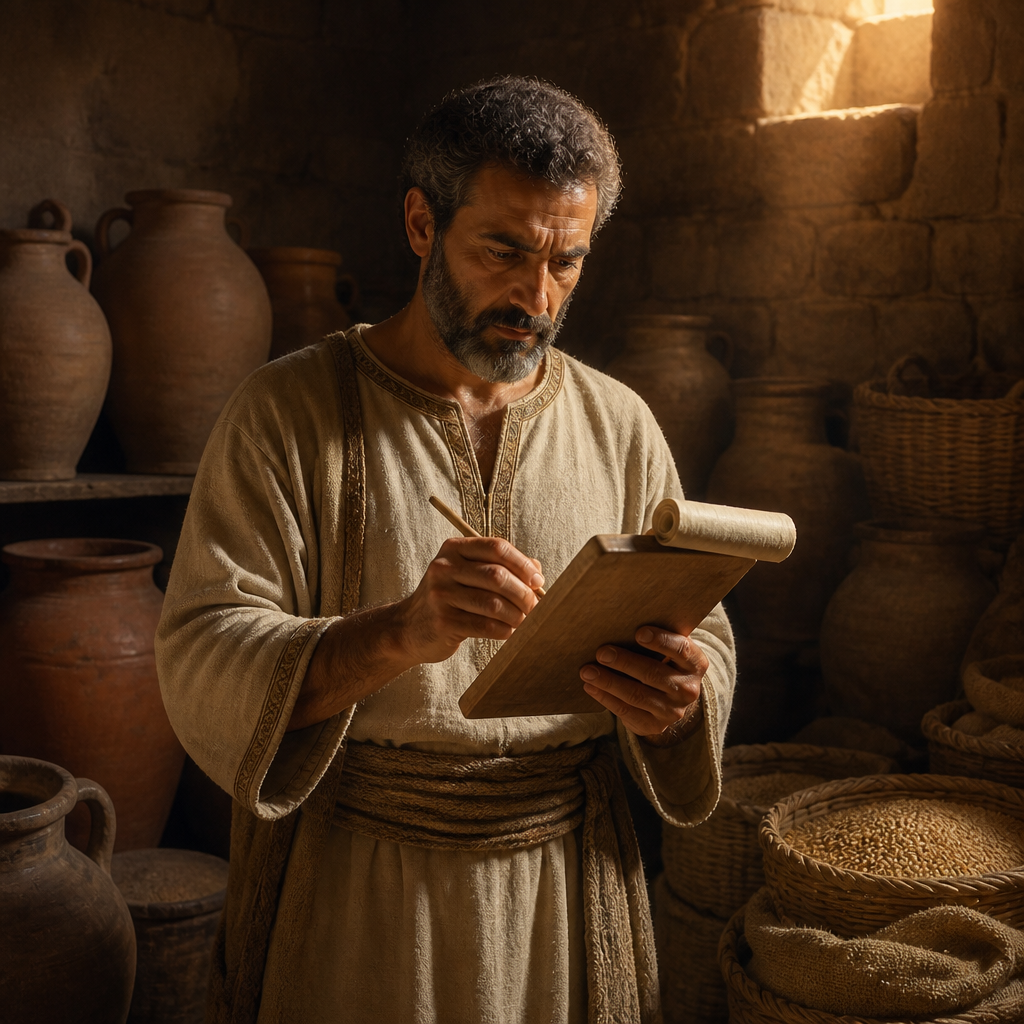
The son of Mattaniah and father of Hanan, Zaccur was a man whose lineage provided assistants for the administration of the temple storerooms.
Zaccur, son of Mattaniah, is a figure mentioned in the context of the Post-Exilic reforms led by Nehemiah in Jerusalem. He is defined primarily by his lineage, serving as a transitional link between his father, Mattaniah, and his son, Hanan. His family played a critical role in the restored Jewish community, specifically in the logistical support of the Levites and the management of sacred resources.
Historically, Zaccur belongs to the era of the 'Return,' a period when the Jewish exiles returned from Babylon to rebuild the walls of Jerusalem and re-establish the religious life of the nation. While he is not credited with a specific title himself, the reliability and appointment of his son indicate that Zaccur belonged to a family of high standing and recognized integrity within the community of Judah.
Background and Family
Zaccur appears in the biblical record as the son of Mattaniah and the father of Hanan (Nehemiah 13:13). The name Zaccur is derived from a Hebrew root meaning "mindful" or "remembered," a common name among the returning exiles. While the biblical text does not explicitly state his tribe, the context of his family’s service suggests a connection to the Levitical or administrative classes of Jerusalem.
His father, Mattaniah, is a name often associated with the descendants of Asaph, the Levite musicians, though the text in Nehemiah 13 does not definitively link this specific Mattaniah to that lineage. Regardless of his specific tribal sub-group, Zaccur represents the generation that lived during the tenuous years of the restoration, ensuring that the next generation—represented by his son Hanan—was prepared for the service of the Lord.
Major Life Events
Zaccur is mentioned in the context of Nehemiah’s second governorship. Upon Nehemiah’s return to Jerusalem from the Persian court, he found that the temple provisions had been neglected. The storerooms were not being managed correctly, and the Levites had fled to their fields because their portions were not being distributed. To rectify this, Nehemiah appointed a team of trustworthy treasurers.
While Zaccur is not listed as one of the four primary treasurers (Shelemiah the priest, Zadok the scribe, Pedaiah the Levite, and Hanan), he is the immediate ancestor of Hanan. The text notes that Hanan, son of Zaccur, was appointed to assist these treasurers specifically "because they were considered trustworthy" (Nehemiah 13:13). Zaccur’s primary legacy in the text is the character of his son. The inclusion of Zaccur’s name in this administrative list serves to authenticate Hanan’s identity and social standing in the community.
Relationship to Other Biblical Figures
Zaccur’s primary relationship is to his son, Hanan. In the ancient Near East, a man's reputation was often tied to his ancestry. By identifying Hanan as the "son of Zaccur, the son of Mattaniah," Nehemiah provides a three-generation pedigree that confirms Hanan’s right to handle the sacred tithes of grain, new wine, and olive oil.
Zaccur is also indirectly linked to the leaders of the restoration, including Nehemiah the governor. His family was part of the inner circle of trusted Judeans who were tasked with maintaining the economic stability of the temple during a time of significant social and spiritual reform.
Spiritual Significance
Though Zaccur is mentioned only once, his presence in the genealogy of the temple assistants underscores the importance of generational faithfulness. The spiritual health of Jerusalem depended not only on the wall but on the internal integrity of the people managing God's resources. Zaccur’s contribution was the raising of a son whose character was so beyond reproach that the governor entrusted him with the distribution of supplies to the Levites. In the biblical narrative, Zaccur represents the quiet, foundational role of parents who prepare their children for a life of service and trustworthiness in the house of God.
Spiritual Significance
The significance of Zaccur lies in the character of his household. During the Post-Exilic period, the reliability of temple administrators was paramount for the survival of the religious system. Zaccur is honored by proxy through his son Hanan, who was deemed 'trustworthy' by Nehemiah to handle the distribution of supplies to the Levites. This highlights the biblical theme that a man's legacy is often found in the integrity and service of his children.
Furthermore, the mention of Zaccur in the Book of Nehemiah reinforces the historical precision of the text. By recording the names of specific families involved in the logistics of the temple, the chronicler emphasizes that the restoration of Jerusalem was a physical, administrative, and genealogical reality, not merely a theological abstraction.
Frequently Asked Questions
Who was Zaccur's son?
Zaccur's son was Hanan, who served as an assistant treasurer under Nehemiah's administration.
What was Zaccur's role in the Bible?
Zaccur is mentioned as the father of Hanan, an assistant appointed by Nehemiah to manage the temple storerooms and distribute supplies to the Levites.
Who was Zaccur's father?
Zaccur's father was Mattaniah.
Why is Zaccur mentioned in Nehemiah 13?
He is mentioned to identify the lineage of Hanan, ensuring the reader knows Hanan's family background and status among the returning exiles.
Connected Figures
Categories
Mentions by Book
- Nehemiah1
Family & Relationships
Child
Nehemiah 13:13
Parent
Mattaniah, Grandfather of Hanan
Nehemiah 13:13
Others Named Zaccur
Zaccur, descendant of BigvaiEzra 8:14
A member of the clan of Bigvai who returned to Jerusalem with Ezra during the second wave of the Jewish restoration.
Zaccur, Father of ShammuaNumbers 13:4
A man of the tribe of Reuben whose son, Shammua, was selected as one of the twelve spies sent by Moses to scout the land of Canaan.
Zaccur, son of ImriNehemiah 3:2
A Jewish returnee from the Babylonian exile who participated in the reconstruction of the walls of Jerusalem under the leadership of Nehemiah.
Zaccur, Levite Musician of the Divided Monarchy1 Chronicles 25:2
A prominent Levite musician and son of Asaph who served in the third musical division under King David during the Divided Monarchy period.
Zaccur, Signatory of the CovenantNehemiah 10:12
A Jewish leader during the time of Nehemiah who signed the solemn covenant to observe God's law after the return from Babylonian exile.
Zaccur, son of Jaaziah1 Chronicles 24:27
A Levite of the clan of Merari who served during the Divided Monarchy as a listed descendant of Jaaziah.
Zaccur, son of Hammuel1 Chronicles 4:26
A descendant of the tribe of Simeon whose lineage is preserved in the genealogical records of the Divided Monarchy period.