Pelaiah, Levite of the Return
A Levite during the time of Ezra and Nehemiah who interpreted the Law for the people and signed the covenant of renewal.
Pelaiah was a prominent Levite active in Jerusalem during the mid-5th century BC, specifically during the governance of Nehemiah. As a member of the clerical class returned from the Babylonian Exile, he played a critical role in the religious restoration of the Jewish community. His primary function was that of a teacher and liturgical leader, bridging the gap between the formal reading of the Torah and the understanding of the common people.
He is mentioned in two significant contexts within the Book of Nehemiah: the public reading of the Law by Ezra the Scribe and the subsequent formal sealing of a covenant between the people and God. Though the biblical record regarding his personal life is sparse, his inclusion in these lists marks him as a high-ranking official within the Levite ranks, entrusted with the spiritual instruction of the post-exilic community.
Background and Family
The biblical record identifies Pelaiah specifically as a Levite, a member of the tribe set apart for the service of the Tabernacle and later the Temple. While his specific lineage within the Levitical houses is not detailed in the surviving texts of Nehemiah, his status as a Levite is confirmed by his association with other prominent clerical figures like Jeshua, Bani, and Sherebiah. He lived during the era of the Return from Exile, a period characterized by the reconstruction of the Jerusalem walls and the re-establishment of Mosaic Law as the governing authority of the province of Judah (Yehud).
Major Life Events
The Interpretation of the Law
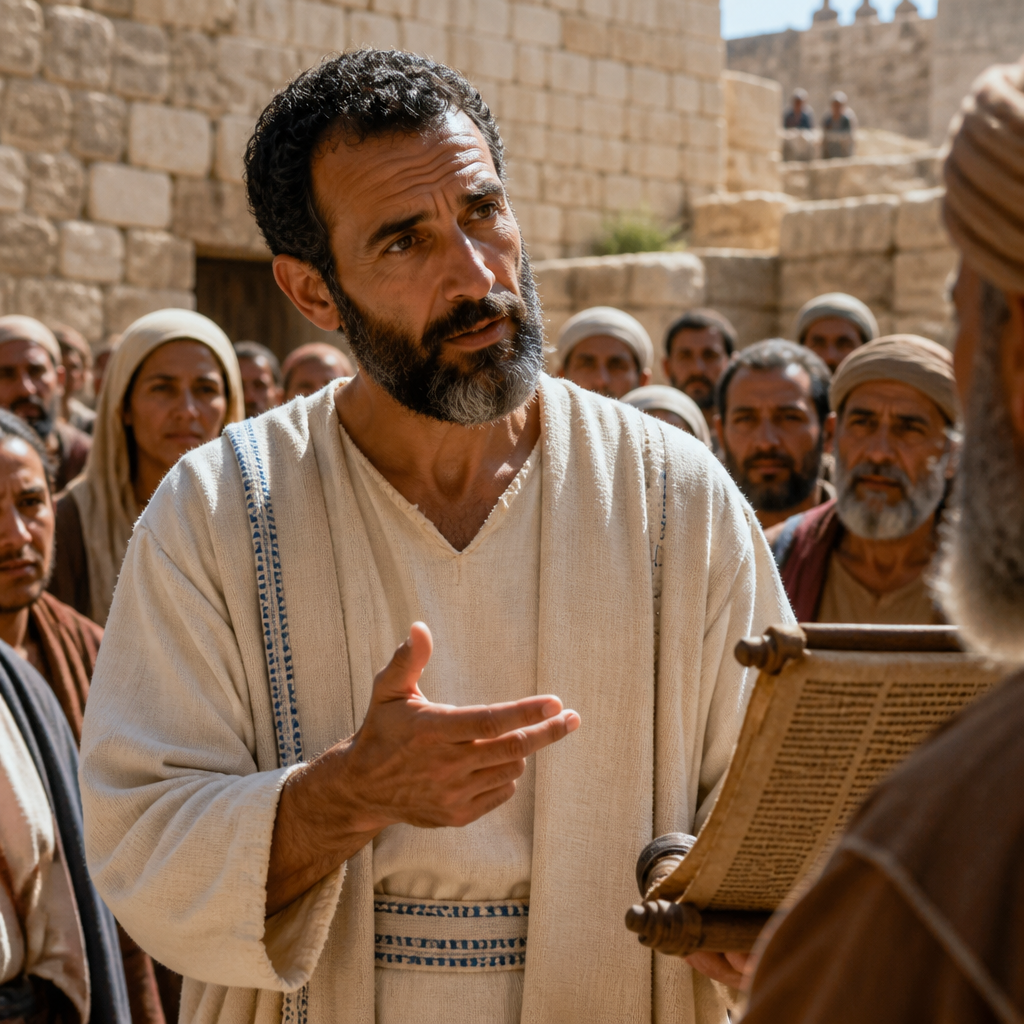
The most notable appearance of Pelaiah occurs in Nehemiah 8. Following the completion of the walls of Jerusalem, the people gathered at the Water Gate to hear Ezra the Scribe read from the Book of the Law of Moses. According to Nehemiah 8:7, Pelaiah was one of thirteen Levites standing by to assist the assembly.
"The Levites—Jeshua, Bani, Sherebiah, Jamin, Akkub, Shabbethai, Hodiah, Maaseiah, Kelita, Azariah, Jozabad, Hanan, and Pelaiah—instructed the people in the Law as they stood in their places."
His role was not merely passive; the text suggests that these Levites moved among the people, explaining the meaning of the Hebrew scriptures so that the audience could understand what was being read. This was a pivotal moment in Jewish history, marking the transition toward a faith centered on the study and comprehension of the written Word.
The Sealing of the Covenant
Pelaiah’s second appearance is found in Nehemiah 10, in the context of the "Firm Covenant" (amanah). After a period of national confession and prayer, the leaders of Israel committed to a written agreement to walk in God's Law and to avoid intermarriage with neighboring pagan nations. Pelaiah is listed in Nehemiah 10:10 as one of the Levites who set their seal to this document. By signing this covenant, Pelaiah acted as a representative of his tribe, pledging to uphold the purity of the Temple worship and the social holiness of the people.
Relationship to Other Biblical Figures
Pelaiah served under the leadership of Nehemiah (the Governor) and Ezra (the Priest and Scribe). He is consistently grouped with Kelita and Hanan, suggesting a specific cohort of Levites who specialized in teaching. There are no recorded familial relationships such as parents or children for this specific Pelaiah in the post-exilic record.
Spiritual Significance
The ministry of Pelaiah represents the vital role of the "interpreter" in the biblical tradition. His work ensured that the Law of God was not a dead letter or an inaccessible ritual, but a living guide that the common person could comprehend. In the theological framework of the Book of Nehemiah, Pelaiah embodies the post-exilic shift toward education and personal accountability to the covenant.
Spiritual Significance
Pelaiah is significant as a representative of the teaching ministry established after the Babylonian Exile. His work at the Water Gate alongside Ezra emphasizes the necessity of clear exposition of Scripture, ensuring that the 'sense' of the text was communicated to the people. This act is often cited by scholars as a precursor to the developments of the synagogue and the rabbinic tradition of midrash.
Furthermore, Pelaiah's participation in the signing of the covenant in Nehemiah 10 highlights the themes of leadership and communal responsibility. As a Levite, his signature served as a public witness to the community’s renewed commitment to the Mosaic Law, demonstrating that the restoration of Jerusalem was as much a spiritual rebuilding as it was a physical one.
Frequently Asked Questions
Was Pelaiah a priest or a Levite?
Pelaiah is explicitly identified as a Levite in Nehemiah 8:7. While priests and Levites both served in the Temple, Levites like Pelaiah often focused on assisting the priests, managing Temple logistics, and teaching the Law to the public.
What did Pelaiah do during the reading of the Law?
Pelaiah helped the people understand the Law as Ezra read it. He and his colleagues 'gave the sense' of the reading, likely translating or explaining the Hebrew text into the Aramaic vernacular that many returning exiles spoke.
What covenant did Pelaiah sign?
Pelaiah signed the 'Firm Covenant' recorded in Nehemiah 10, which was a formal pledge by the leaders of Israel to keep God's commandments, support the Temple, and remain separate from the surrounding pagan cultures.
Which book of the Bible mentions Pelaiah?
This specific Pelaiah is mentioned exclusively in the Book of Nehemiah, specifically in chapters 8 and 10.
Connected Figures
Categories
Mentions by Book
- Nehemiah2
Others Named Pelaiah
Pelaiah, Descendant of David1 Chronicles 3:24
A member of the royal Davidic line in Judah, Pelaiah was one of the seven sons of Elioenai listed in the genealogical records of the Divided Monarchy.