Jedaiah, Exile from Babylon
A returning exile from Babylon who provided gold and silver for the symbolic crowning of the High Priest Joshua during the restoration of Jerusalem.
Jedaiah was a Jewish exile who returned to Jerusalem from Babylon during the post-exilic period, specifically during the ministry of the prophet Zechariah around 520 BC. While biographical details regarding his lineage or occupation are absent from the biblical text, he is distinguished as one of the prominent individuals who brought gifts of precious metals from the Jewish community remaining in Mesopotamia to assist in the reconstruction and spiritual revitalization of the Judean community.
Background and Family
The biblical record for Jedaiah is found exclusively within the prophetic book of Zechariah. He is identified as one of the exiles who arrived in Jerusalem from Babylon during the critical years of the restoration. While many Jews had returned under the decree of Cyrus the Great in 538 BC, Jedaiah appears to be part of a subsequent group or a specific delegation tasked with delivering resources to the struggling community in Jerusalem. No specific tribe or family lineage is provided for this Jedaiah, though his presence among the returning elite suggests he held a position of respect or wealth within the Babylonian diaspora.
Major Life Events
Jedaiah’s significance centers on a single prophetic act recorded in Zechariah 6. The prophet is instructed by God to meet with a specific group of men—Heldai, Tobijah, and Jedaiah—who had recently arrived from Babylon. They were staying at the house of Josiah son of Zephaniah.
Zechariah was commanded to take the silver and gold brought by these men and fashion it into an elaborate crown (or multiple crowns). This crown was then placed on the head of Joshua son of Jozadak, the High Priest. This ceremony was deeply symbolic, pointing toward a future figure known as "The Branch," who would serve as both King and Priest. Jedaiah, as one of the primary donors and witnesses to this event, played a vital role in providing the physical materials necessary for this divine object lesson.
Relationship to Other Biblical Figures
Jedaiah is linked directly to his traveling companions, Heldai and Tobijah. Together, they represented the ongoing support and connection between the Jews who remained in Babylon and those who had returned to rebuild the Temple. He is also associated with Josiah son of Zephaniah, who hosted the delegation, and the High Priest Joshua, who was the recipient of the crown made from Jedaiah’s contribution. Most notably, he is a recipient of a direct prophetic instruction through Zechariah.
Spiritual Significance
The contribution of Jedaiah served a dual purpose: practical and memorial. After the crowning ceremony, the crown was not kept by the High Priest but was placed in the Temple of the LORD. Zechariah 6:14 specifies that the crown would remain in the sanctuary as a "memorial" to Helem (a variation of Heldai), Tobijah, Jedaiah, and Hen (the son of Zephaniah). This ensured that Jedaiah’s devotion and his role in the prophetic announcement of the Messiah would be remembered by future generations of worshippers. His life illustrates the importance of the diaspora's contribution to the work of God in the promised land, even when they were not among the initial wave of returnees.
Spiritual Significance
Jedaiah serves as a representative of the faithful diaspora, demonstrating that those who remained in exile still played a crucial role in the restoration of Israel. His donation of gold and silver was not merely a financial transaction but provided the physical medium for one of the most significant Messianic types in the Minor Prophets—the crowning of the Priest-King.
The inclusion of his name in the permanent memorial in the Temple signifies God's recognition of individual faithfulness. In the context of Zechariah’s visions, Jedaiah represents the 'far off' who come to help build the Temple of the Lord, fulfilling the promise that the restoration of Israel would involve the gathered wealth and presence of the scattered people.
Frequently Asked Questions
What did Jedaiah bring from Babylon?
Jedaiah, along with Heldai and Tobijah, brought silver and gold as an offering from the exiles in Babylon to the community in Jerusalem.
Where did Jedaiah stay when he arrived in Jerusalem?
He stayed at the house of Josiah son of Zephaniah, which is where the prophet Zechariah was sent to meet them.
What was made from Jedaiah’s gift?
The silver and gold he provided were used to fashion a crown that was placed on the head of Joshua the High Priest as a symbolic act.
Why is Jedaiah remembered in the Temple?
According to Zechariah 6:14, the crown was placed in the Temple as a memorial to Jedaiah and his companions to honor their contribution and the prophecy it represented.
Who were Jedaiah's companions?
He traveled and served alongside Heldai (also called Helem) and Tobijah.
Connected Figures
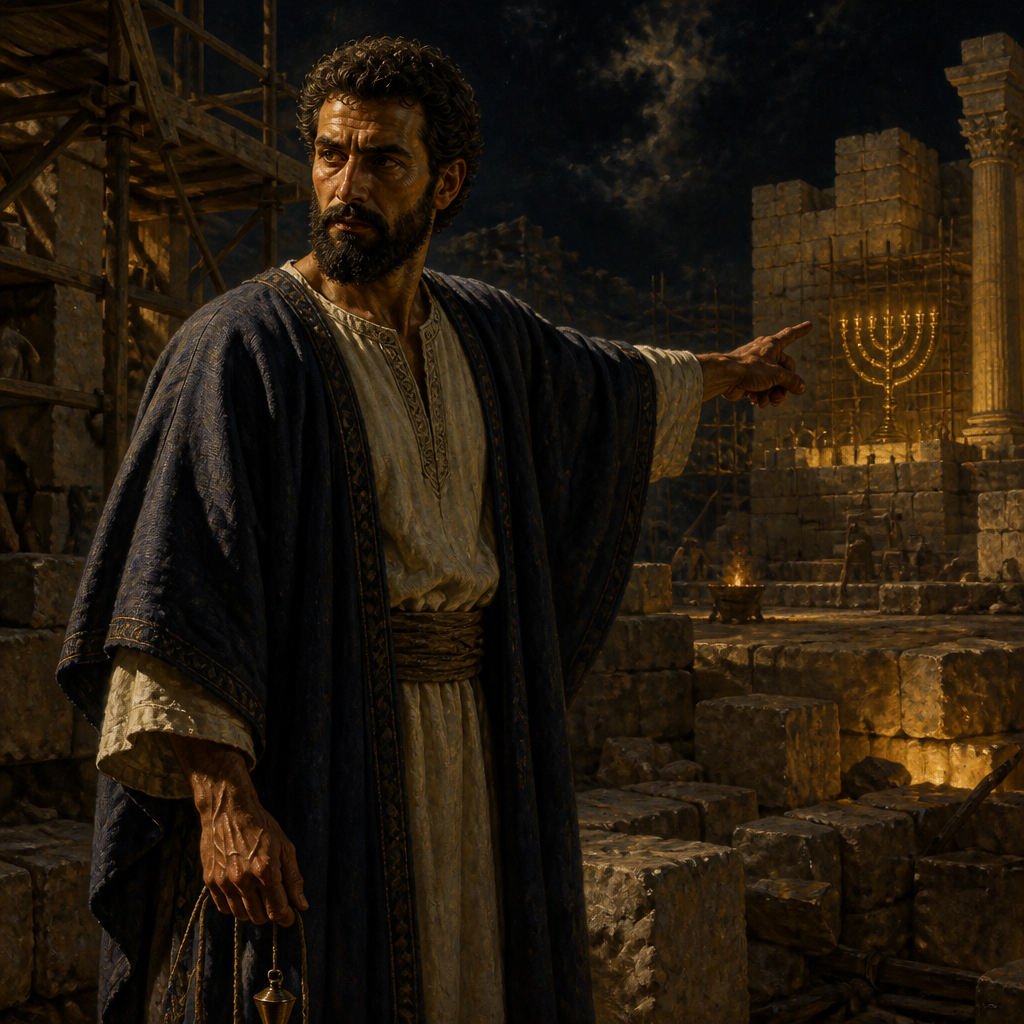
Zechariah
Prophet who received instructions regarding him
Joshua the High Priest
Recipient of the crown Jedaiah helped provide
Tobijah
Companion and fellow exile
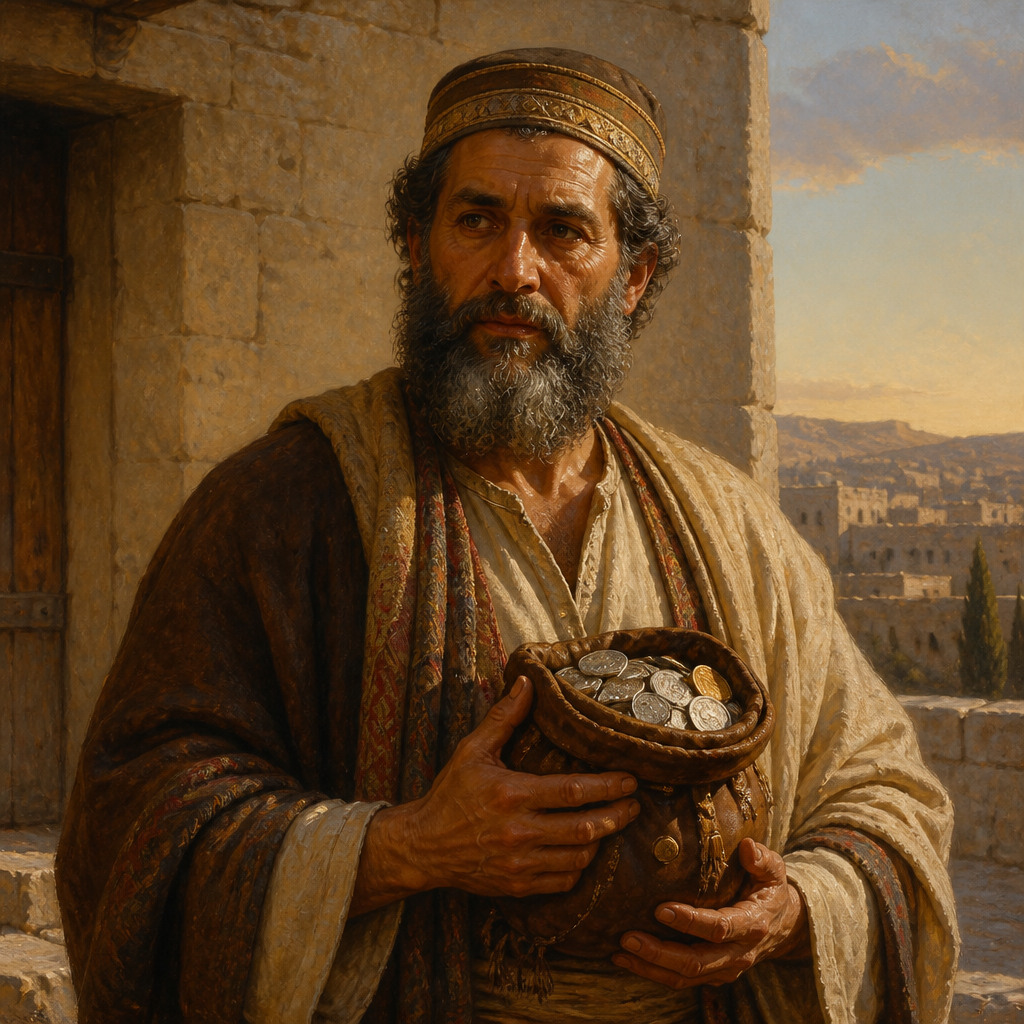
Heldai
Companion and fellow exile
Categories
Mentions by Book
- Zechariah2
Others Named Jedaiah
Jedaiah, Priestly Leader of the First ReturnNehemiah 12:7
A prominent priest and leader who returned to Jerusalem from the Babylonian exile during the days of High Priest Jeshua.
Jedaiah, Son of HarumaphNehemiah 3:10
A participant in the post-exilic restoration of Jerusalem who repaired the section of the city wall directly opposite his own home.
Jedaiah, son of Joiarib1 Chronicles 9:10
A prominent priest of the tribe of Levi who returned from the Babylonian exile and served as a head of a paternal house in Jerusalem.
Jedaiah, Priest of the Second Division1 Chronicles 24:7
Jedaiah was a prominent priest during the Divided Monarchy whose lineage was selected as the second of the twenty-four priestly divisions established for service in the Temple.
Jedaiah, Son of Shimri1 Chronicles 4:37
A descendant of Simeon during the Divided Monarchy whose lineage is preserved in the genealogical records of the chronicler.