Ezer, Priest of the Post-Exilic Choir
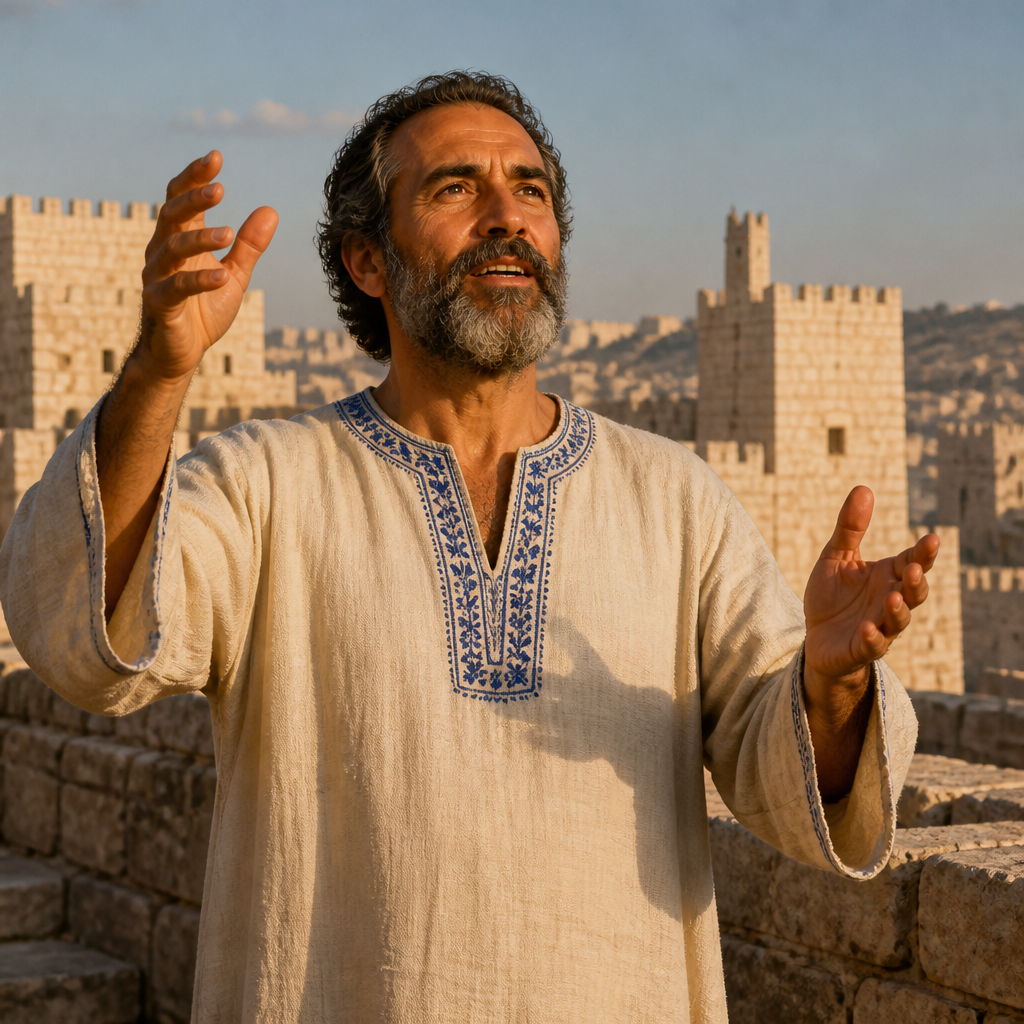
Ezer was a priest or Levite who participated in the joyous musical dedication of the rebuilt walls of Jerusalem under Nehemiah.
Ezer was a Jewish official, likely of priestly or Levitical status, who lived during the Post-Exilic Period. He is specifically documented in the biblical record for his participation in the monumental celebration following the completion of Jerusalem’s defensive walls. This event, led by the governor Nehemiah and the priest Ezra, marked a turning point in the restoration of Jewish national and religious identity after the Babylonian captivity.
His role was specifically musical and liturgical. During the dedication ceremony, the leaders organized two large thanksgiving choirs to process atop the newly constructed walls. Ezer is listed among a group of eight individuals who sang under the direction of Jezrahiah, contributing to a sound of praise that was famously heard from a great distance.
Background and Family
The biblical record for this specific Ezer is found exclusively within the liturgical and administrative lists of Nehemiah 12. While his tribal affiliation is not explicitly stated, his inclusion in a list of individuals performing sacred musical duties strongly suggests he was a member of the tribe of Levi, specifically within the guilds of the singers or the priesthood. He lived in the late 5th century BC, a time when the returnees from Babylon were struggling to re-establish the sanctity of Jerusalem amidst opposition from neighboring regions.
Major Life Events
The single definitive event associated with Ezer is the dedication of the wall of Jerusalem. After the physical labor of rebuilding was completed, Nehemiah organized a dual procession to sanctify the structure. Ezer was positioned in one of these groups, walking and singing as they processed toward the House of God.
and also Maaseiah, Shemaiah, Eleazar, Uzzi, Jehohanan, Malchijah, Elam, and Ezer. Then the choirs sang out under the direction of Jezrahiah. (Nehemiah 12:42, BSB)
This event was not merely a civic parade but a profound religious act. Ezer and his companions represented the voice of the community, offering "great sacrifices" and rejoicing because God had given them "great joy."
Relationship to Other Biblical Figures
Ezer is mentioned alongside seven other men: Maaseiah, Shemaiah, Eleazar, Uzzi, Jehohanan, Malchijah, and Elam. They functioned as a cohesive unit of vocalists under the leadership of Jezrahiah. While he served during the administration of Nehemiah and the spiritual leadership of Ezra the Scribe, the text does not record any specific personal interactions between Ezer and these prominent leaders, emphasizing instead his role as a vital member of the collective worship body.
Spiritual Significance
Though Ezer appears only once, his presence in the text highlights the importance of corporate worship in the restoration of Israel. In the theology of the Post-Exilic period, the rebuilding of the walls was incomplete without the consecration of the people's voices. Ezer represents the "ordinary" servant whose specific talent—singing—was essential for the fulfillment of the divine celebration. His inclusion by name in the eternal record of Scripture underscores the biblical principle that every individual contribution to the community of faith is observed and valued by God.
Spiritual Significance
Ezer’s significance lies in his participation in the completion of the Post-Exilic restoration. By singing in the choir during the wall's dedication, he helped fulfill the liturgical requirements of the covenant community, demonstrating that the physical security of Jerusalem (the walls) was inextricably linked to the spiritual vitality of the people (the worship).
Frequently Asked Questions
What does the name Ezer mean in Hebrew?
The name Ezer (עָזֶר) translates to 'help' or 'succor,' a common root in Hebrew names signifying divine assistance.
Was Ezer a priest?
While the text does not explicitly use the title 'priest' for Ezer, he is listed among priests and Levites performing sacred musical duties, making it highly probable he belonged to one of these groups.
When did Ezer live?
Ezer lived during the Post-Exilic Period, specifically during the mid-to-late 5th century BC, during the governorship of Nehemiah.
What instrument did Ezer play?
The text in Nehemiah 12:42 specifies that the group 'sang out,' indicating Ezer was primarily a vocalist, though many Levites also played cymbals, harps, or lyres.
Where is Ezer mentioned in the Bible?
This specific Ezer is mentioned only once, in Nehemiah 12:42.
Connected Figures
Nehemiah
Governor during Ezer's service
Jezrahiah
Choir director of Ezer
Maaseiah
Fellow singer in the dedication ceremony
Categories
Mentions by Book
- Nehemiah1
Others Named Ezer
Ezer, Son of Hur1 Chronicles 4:4
Ezer was a descendant of Judah through the line of Hur and the father of Hushah, recognized in the genealogies of the chronicler.
Ezer, Son of Ephraim1 Chronicles 7:21
Ezer was a son of the patriarch Ephraim who was killed by the men of Gath while attempting to seize livestock in the land of Canaan.
Ezer, Ruler of MizpahNehemiah 3:19
Ezer, the son of Jeshua and ruler of Mizpah, was a community leader who directed a specific portion of the Jerusalem wall reconstruction under Nehemiah.
Ezer, Gadite Chief of the Divided Monarchy1 Chronicles 12:9
Ezer was a prominent Gadite military leader who defected to support David at Ziklag during the Divided Monarchy period.
Ezer, Chief of the HoritesGenesis 36:21
Ezer was a Horite chief and son of Seir, recognized as a patriarch and ancestral leader within the land of Edom.