Elam, Participant in the Wall Dedication
Elam was a prominent individual among the leaders or singers who participated in the joyful dedication of the rebuilt walls of Jerusalem under Nehemiah.
Elam was a member of the Jewish community during the Post-Exilic Period, specifically during the governorship of Nehemiah. His historical footprint is captured during one of the most significant liturgical events in the history of the Second Temple period: the formal dedication of the completed walls of Jerusalem. Following the successful reconstruction of the city's defenses, Nehemiah organized a massive celebration involving two large choirs, and Elam is recorded as one of the figures accompanying the second choir.
While his specific role—whether as a priest, a Levite, or a civil leader—is not explicitly detailed in the text, his inclusion in the list of names alongside notable figures such as Maaseiah and Eleazar indicates his standing within the community. He stands as a representative of the restored remnant of Israel, contributing his presence and voice to the public thanksgiving for God's protection of the holy city.
Background and Family
The biblical record provides no specific details regarding the genealogy, tribe, or immediate family of this Elam. He appears in the context of the Post-Exilic Period, an era defined by the return of Jewish exiles from Babylon to Judah under the decrees of the Persian Empire. This Elam is distinct from other individuals of the same name who appear earlier in Hebrew genealogies or as heads of clans during the return. His identity is firmly rooted in the local administration or religious service of Jerusalem during the mid-fifth century BC.
Major Life Events
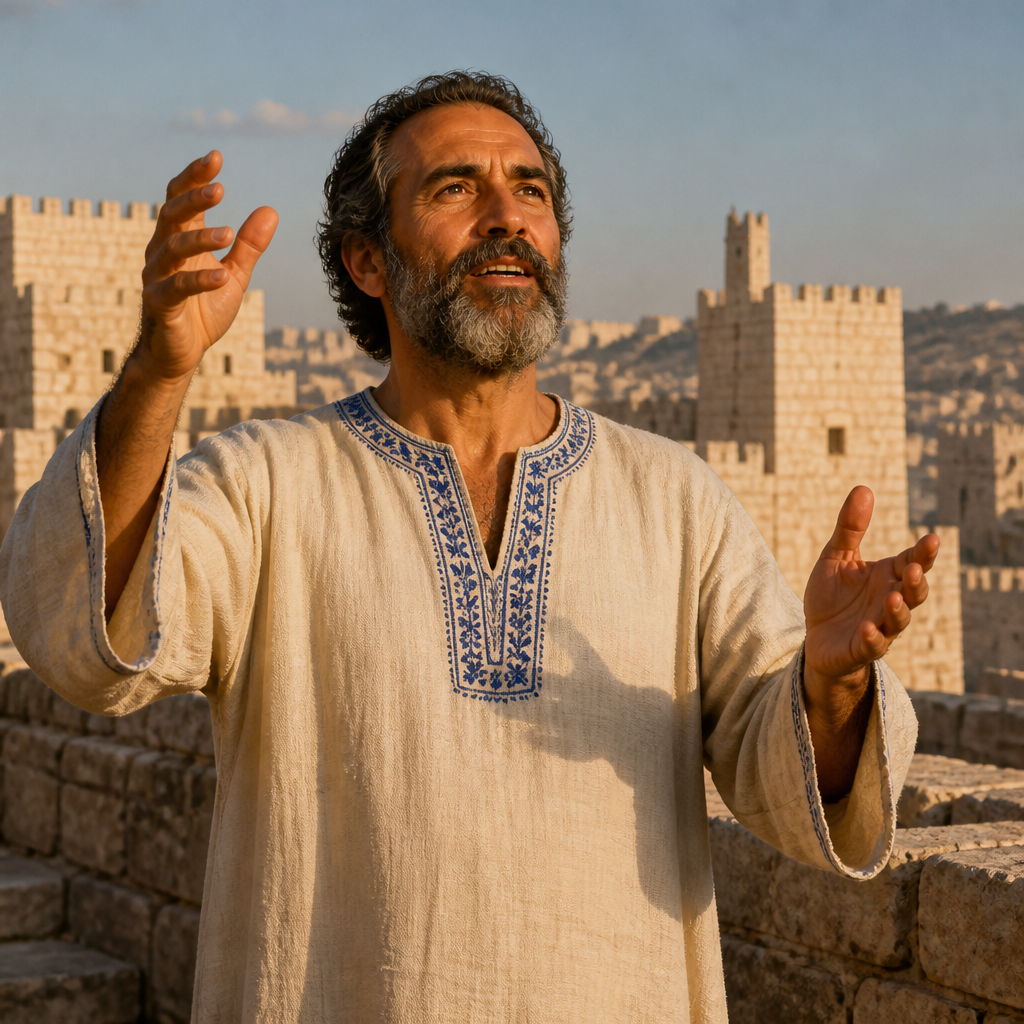
The single recorded event in the life of Elam is his participation in the dedication of the Jerusalem wall, an event described in Nehemiah 12. After Nehemiah had overseen the rapid rebuilding of the city walls despite intense local opposition, he organized a grand ceremony to consecrate the structure to God.
According to the text, Nehemiah appointed two great choirs to give thanks. One choir went to the right upon the wall toward the Dung Gate, while the other, which Elam accompanied, proceeded in the opposite direction. Nehemiah 12:42 lists Elam among a group of men—Maaseiah, Shemaiah, Eleazar, Uzzi, Jehohanan, Malchijah, and Ezer—who were present as the choirs "sang out under the direction of Jezrahiah."
and also Maaseiah, Shemaiah, Eleazar, Uzzi, Jehohanan, Malchijah, Elam, and Ezer. Then the choirs sang out under the direction of Jezrahiah. (Nehemiah 12:42)
This procession culminated at the House of God (the Temple), where the groups converged to offer great sacrifices and rejoice. The text emphasizes that the joy of Jerusalem was heard from a great distance, and Elam was a direct participant in this audible and visible testimony of national restoration.
Relationship to Other Biblical Figures
Elam is listed in immediate proximity to several other leaders of the restoration period. He is associated with Nehemiah, the governor who orchestrated the dedication, and Jezrahiah, the leader of the singers. While the text does not define a biological relationship between Elam and the others listed in Nehemiah 12:42, their collective grouping suggests they were peers in the civic or religious hierarchy of the city. He worked in concert with Maaseiah and Eleazar to ensure the ceremonial procession was conducted with the appropriate solemnity and joy required for the occasion.
Spiritual Significance
The spiritual significance of Elam lies in his role as a witness to the fulfillment of prophecy. His presence on the walls of Jerusalem serves as a living testament to the restoration of the covenant people to their land. By participating in the dedication, Elam helped transition the wall from a secular construction project into a sanctified boundary that protected the worship of Yahweh. Though his mention is brief, he represents the individual's role in the collective worship of the community, illustrating that the restoration of Israel was accomplished by the combined efforts and voices of many specific, named individuals who remained faithful to the task.
Spiritual Significance
Elam's significance is primarily ceremonial and communal. He represents the fulfillment of the hope of the exiles, standing on the physical evidence of God's favor—the rebuilt walls of Jerusalem. His participation in the liturgy of dedication underscores the biblical theme that God’s work is celebrated by the community he has gathered and preserved.
In the broader context of the Book of Nehemiah, Elam is a symbol of the 'living stones' that make up the restored Jerusalem. His inclusion in the text ensures that the historical reality of the event is grounded in real people who occupied specific roles in the worship life of the nation after the Babylonian captivity.
Frequently Asked Questions
What role did Elam play in the dedication of Jerusalem's wall?
Elam was one of the individuals who accompanied the choirs during the ceremonial procession on top of the walls, participating in the public worship and thanksgiving led by Nehemiah.
Was Elam a priest or a singer?
The Bible does not explicitly state Elam's office, but he is listed among men like Maaseiah and Eleazar during a musical and liturgical procession, suggesting he was either a priest, a Levite, or a prominent community leader.
In which book of the Bible is this Elam mentioned?
This specific Elam is mentioned only once in the Book of Nehemiah, specifically in chapter 12, verse 42.
When did Elam live?
Elam lived during the Post-Exilic Period, specifically during the time when Nehemiah served as the governor of Judah, roughly in the mid-5th century BC.
Connected Figures
Nehemiah
Governor who organized the wall dedication
Jezrahiah
Leader of the singers during the ceremony
Maaseiah
Associate listed alongside Elam in the procession
Categories
Mentions by Book
- Nehemiah1
Others Named Elam
Elam, Signatory of the CovenantNehemiah 10:14
A Jewish leader who joined Nehemiah in signing the firm covenant to follow God's Law after the return from Babylonian exile.
Elam, Ancestor of ReturneesEzra 2:7
An ancestral figure whose numerous descendants were among the first Jewish exiles to return from Babylon to Jerusalem under Zerubbabel and Ezra.
Elam, Son of Shashak1 Chronicles 8:24
A Benjamite leader and son of Shashak listed in the genealogies of the Divided Monarchy period.
Elam, Levite of the Divided Monarchy1 Chronicles 26:3
A Levite gatekeeper of the Korahite clan who served in the sanctuary during the Divided Monarchy as the fifth son of Meshelemiah.
Elam, Son of ShemGenesis 10:22
The eldest son of Shem and grandson of Noah, recognized as the eponymous ancestor of the Elamite people in the Table of Nations.