Shedeur
Who was Shedeur in the Bible?
A prominent father within the tribe of Reuben during the Exodus, known primarily as the father of Elizur, the prince and leader of the Reubenites.
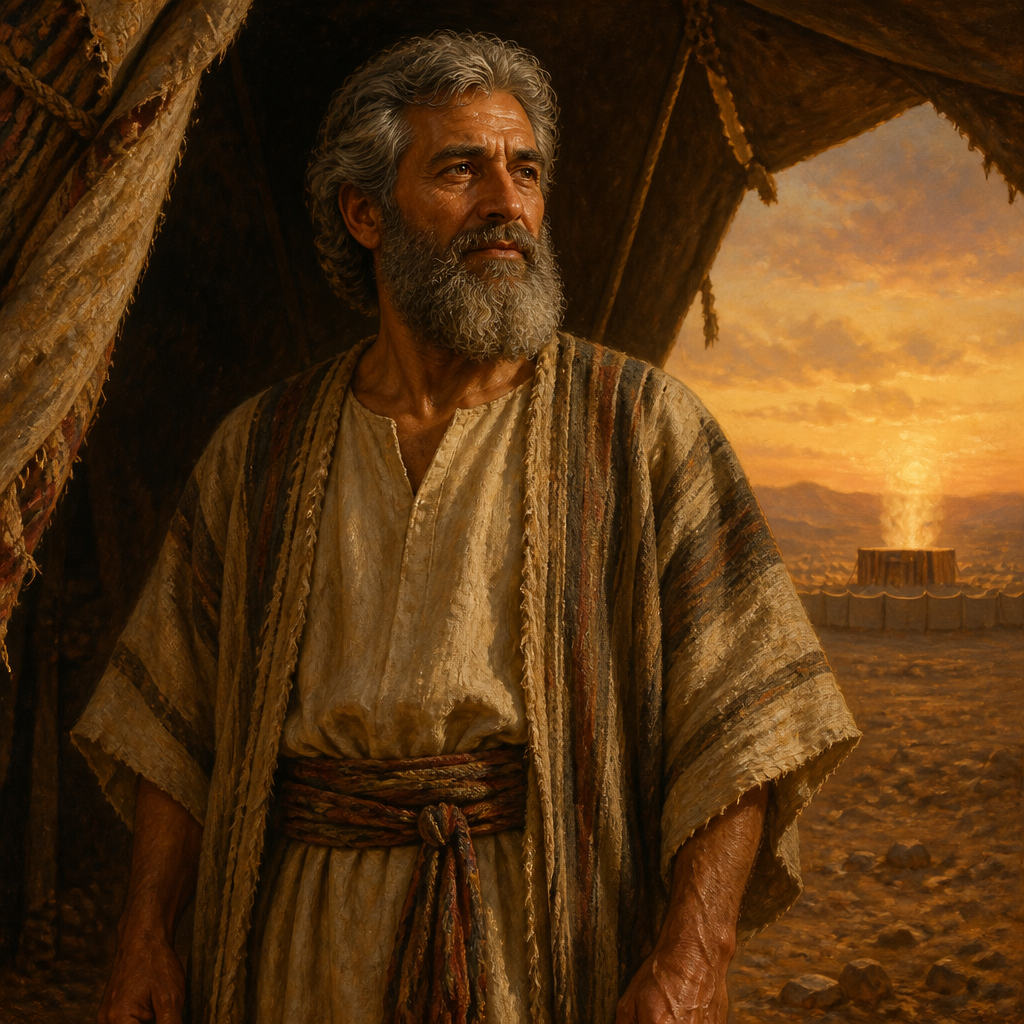
Shedeur was a member of the tribe of Reuben who lived during the pivotal era of the Egyptian Sojourn and the subsequent Wilderness wanderings. While the biblical text does not provide a detailed biography of his personal life or specific deeds, he is consistently identified as the father of Elizur, a man of significant status who served as the tribal leader (nasi) of Reuben during the census and the dedication of the Tabernacle.
His name, Shedeur, is traditionally interpreted in Hebrew to mean "Shaddai is Light" or "Spreader of Light," suggesting a family heritage rooted in the worship of the Almighty. Although Shedeur himself is not listed as the active leader during the Sinai period, his genealogical position serves as a vital identifier for his son, Elizur, in the formal administrative and liturgical records of the nation of Israel.
Background and Family
Shedeur belonged to the tribe of Reuben, the firstborn son of the patriarch Jacob. Based on the timing of the Exodus (c. 1446 BC), Shedeur would have been born during the later years of the Israelite sojourn in Egypt. As a Reubenite, his family occupied a significant, albeit complex, position within the tribal hierarchy. Although Reuben had lost his birthright due to his conduct with Bilhah, the tribe remained the first to be listed in many official tallies, and Shedeur’s lineage was central to that order.
The biblical record identifies Shedeur exclusively through his paternity. He is the father of Elizur, a man who rose to become one of the twelve tribal leaders chosen to assist Moses and Aaron in the governance of the fledgling nation.
Major Life Events
Shedeur is mentioned five times in the Book of Numbers, always in the context of his son's leadership. The first mention occurs in Numbers 1:5, where God instructs Moses to select one man from each tribe to assist in taking a census of the men of war. Elizur, son of Shedeur, is the named representative for Reuben. This indicates that Shedeur’s family held high social standing and authority within their tribal unit.
While Shedeur is not recorded as performing the duties himself, he was present during the formative events of the Wilderness period. His son represented the family and the tribe during the following key events:
- The First Census: Assisting Moses in counting the fighting men of Israel (Numbers 1).
- The Camp Arrangement: Positioning the tribe of Reuben on the south side of the Tabernacle under their specific standard (Numbers 2:10).
- The Tabernacle Dedication: On the fourth day of the dedication of the altar, Elizur presented a substantial offering of silver, gold, grain, and livestock on behalf of the tribe (Numbers 7:30-35).
- The Departure from Sinai: Leading the division of Reuben as the Israelites moved from the Wilderness of Sinai toward the Promised Land (Numbers 10:18).
Relationship to Other Biblical Figures
Shedeur’s primary relationship in the text is with his son, Elizur. The frequent repetition of the phrase "Elizur son of Shedeur" emphasizes the importance of lineage in ancient Israelite society. By naming the father, the text validates the son's legitimacy and right to lead. Shedeur was also a contemporary of Moses and Aaron, though he functioned in the background while his son interacted directly with the national leadership. As a Reubenite, he would have been a kinsman to other prominent Reubenites of the era, such as Dathan and Abiram, though the text does not link him to their later rebellions.
Spiritual Significance
The significance of Shedeur lies in the preservation of the covenant line. In the Book of Numbers, the repetitive listing of names like Shedeur serves a theological purpose: it demonstrates God’s faithfulness to the individual families of Israel. Even though Shedeur is a "minor" figure in terms of recorded dialogue or actions, his inclusion in the Holy Scripture ensures that his name is remembered as part of the generation that witnessed the wonders of the Exodus and the giving of the Law. His name, referencing "Shaddai" (The Almighty), points to a continued recognition of the God of the Patriarchs during the long years of Egyptian bondage.
Shedeur represents the generational bridge between the Israelites who suffered in Egypt and the generation that organized into a liturgical and military force at Mount Sinai. His primary theological contribution is his role as a father; he produced a leader, Elizur, who faithfully served the Tabernacle and the congregation. In the context of the Pentateuch, Shedeur’s name contributes to the 'Book of Life' quality of the census lists, proving that God knows His people by name and by family.
Furthermore, the recurring mention of 'Elizur son of Shedeur' reinforces the biblical theme of patriarchal honor. Shedeur’s legacy is defined by the service of his son, illustrating how the previous generation provided the foundation for the leadership that guided Israel through the wilderness.
Frequently Asked Questions
What does the name Shedeur mean?
The name Shedeur (שְׁדֵיאוּר) is generally understood to mean 'Shaddai is Light' or 'Field of Light,' incorporating a reference to the divine name El Shaddai.
Was Shedeur a leader of the tribe of Reuben?
No, the Bible identifies his son, Elizur, as the leader (prince) of the tribe. Shedeur is mentioned only as the father of the leader.
In which book of the Bible is Shedeur mentioned?
Shedeur is mentioned exclusively in the Book of Numbers, appearing in chapters 1, 2, 7, and 10.
Did Shedeur enter the Promised Land?
The Bible does not explicitly state his death date, but as a member of the generation that came out of Egypt and was counted in the first census, he likely died in the wilderness during the forty years of wandering, according to the judgment in Numbers 14.
Family & Relationships
 ShedeurThis page
Children
 ElizurSonNumbers 1:5Stated
Connected Figures
Family
Son · Numbers 1:5
The leader of the tribe of Reuben during the Exodus, responsible for military census and ceremonial offerings.
Egypt and WildernessFirst: Numbers 1:55 versesMilitary CommanderReuben
Categories
Mentions by Book
- Numbers5
Scripture References
All 5 indexed verses, in canonical order, from the Berean Standard Bible.
Numbers · 5
- Numbers 1:5
These are the names of the men who are to assist you: From the tribe of Reuben, Elizur son of Shedeur;
- Numbers 2:10
On the south side, the divisions of Reuben are to camp under their standard: The leader of the Reubenites is Elizur son of Shedeur,
- Numbers 7:30
On the fourth day Elizur son of Shedeur, the leader of the Reubenites, drew near.
- Numbers 7:35
and a peace offering of two oxen, five rams, five male goats, and five male lambs a year old. This was the offering of Elizur son of Shedeur.
- Numbers 10:18
Then the divisions of the camp of Reuben set out under their standard, with Elizur son of Shedeur in command.