Bithiah
Who was Bithiah in the Bible?
Bithiah was a daughter of Pharaoh and the wife of Mered, an inhabitant of Judah, noted for her inclusion in the Davidic-era genealogical records of 1 Chronicles.
Bithiah is a figure appearing in the genealogical records of the tribe of Judah during the Egypt and Wilderness era. Though her presence in the biblical text is confined to a single verse, her inclusion is significant due to her identification as a daughter of Pharaoh.
She is specifically identified as the mother of Miriam, Shammai, and Ishbah. Her marriage to Mered, a man from the Judean lineage, represents one of the few instances in the Old Testament where an Egyptian royal woman is recorded as marrying into an Israelite family. The name Bithiah itself is of particular interest to scholars, as it translates to 'daughter of Yahweh,' suggesting a possible conversion or a high level of assimilation into the faith of her husband’s people.
Background and Family
Bithiah is introduced in the context of the extensive genealogies found in 1 Chronicles, specifically within the lineage of Judah. The text identifies her clearly as the "daughter of Pharaoh" (1 Chronicles 4:18). In the biblical record, she is the mother of three children: Miriam, Shammai, and Ishbah. Her husband is identified as Mered. The verse also mentions another wife of Mered, a Judean woman who bore Jered, Heber, and Jekuthiel, creating a distinct contrast between the two branches of Mered's household.
Major Life Events
The biblical record does not provide a narrative account of Bithiah’s life, arrival in Judah, or the circumstances of her marriage. Her primary "event" in the scriptural canon is her inclusion in the tribal census of Judah. This inclusion is noteworthy because she is an Egyptian princess living within a Judean social structure. While the identity of her father—the specific Pharaoh—is not mentioned, her presence in the text serves to document the historical reality of cross-cultural marriages between the Egyptian elite and Judean leadership during this era.
Relationship to Other Biblical Figures
Bithiah’s primary relationships are defined by her domestic roles as wife and mother. She was the wife of Mered and the mother of Miriam (not to be confused with the sister of Moses), Shammai, and Ishbah (the father of Eshtemoa). The text distinguishes her offspring from those of Mered’s other wife, who is described simply as his "Judean wife." This distinction emphasizes Bithiah's foreign royal status while affirming her children's legitimate standing within the tribe of Judah.
Spiritual Significance
The spiritual significance of Bithiah lies largely in her name. The Hebrew Bithyah (bt + yh) means "Daughter of Yahweh." For a daughter of a Pharaoh—the ruler of a nation with a vast pantheon—to bear a name honoring the God of Israel is highly significant. Scholars often interpret this as evidence of her devotion to the God of her husband. Her inclusion in the sacred genealogies of 1 Chronicles serves as a testament to the fact that even those from nations historically antagonistic to Israel, such as Egypt, could be brought into the covenant community and honored within the lineage of God's people.
Bithiah's significance is primarily genealogical and sociological. She represents the integration of foreign royalty into the tribe of Judah, the tribe from which the Davidic kings and eventually the Messiah would descend. Her name, meaning 'Daughter of Yahweh,' suggests a spiritual transition from Egyptian polytheism to the monotheism of Israel.
Furthermore, Bithiah serves as a historical marker of the diplomatic or social ties that existed between Egypt and Judah. Her presence in the text validates the diversity within the Judean lineage and highlights the biblical theme of God's grace extending beyond the ethnic boundaries of Israel to include those who joined themselves to the covenant community.
Frequently Asked Questions
Who was Bithiah in the Bible?
Bithiah was an Egyptian princess, the daughter of Pharaoh, who married Mered of the tribe of Judah and bore him three children.
What does the name Bithiah mean?
The name Bithiah means 'Daughter of Yahweh' in Hebrew.
Who were Bithiah's children?
According to 1 Chronicles 4:18, Bithiah was the mother of Miriam, Shammai, and Ishbah.
Which tribe did Bithiah belong to by marriage?
By marriage to Mered, Bithiah was associated with the tribe of Judah.
Is Bithiah the same person as the Pharaoh's daughter who found Moses?
No. While tradition sometimes identifies them, the Bithiah in 1 Chronicles 4:18 is listed in a different chronological context and is specifically linked to the family of Mered during the monarchic period.
Family & Relationships
Parents
 Pharaoh, Father of BithiahFather1 Chronicles 4:18Stated
 MeredHusband1 Chronicles 4:17Stated
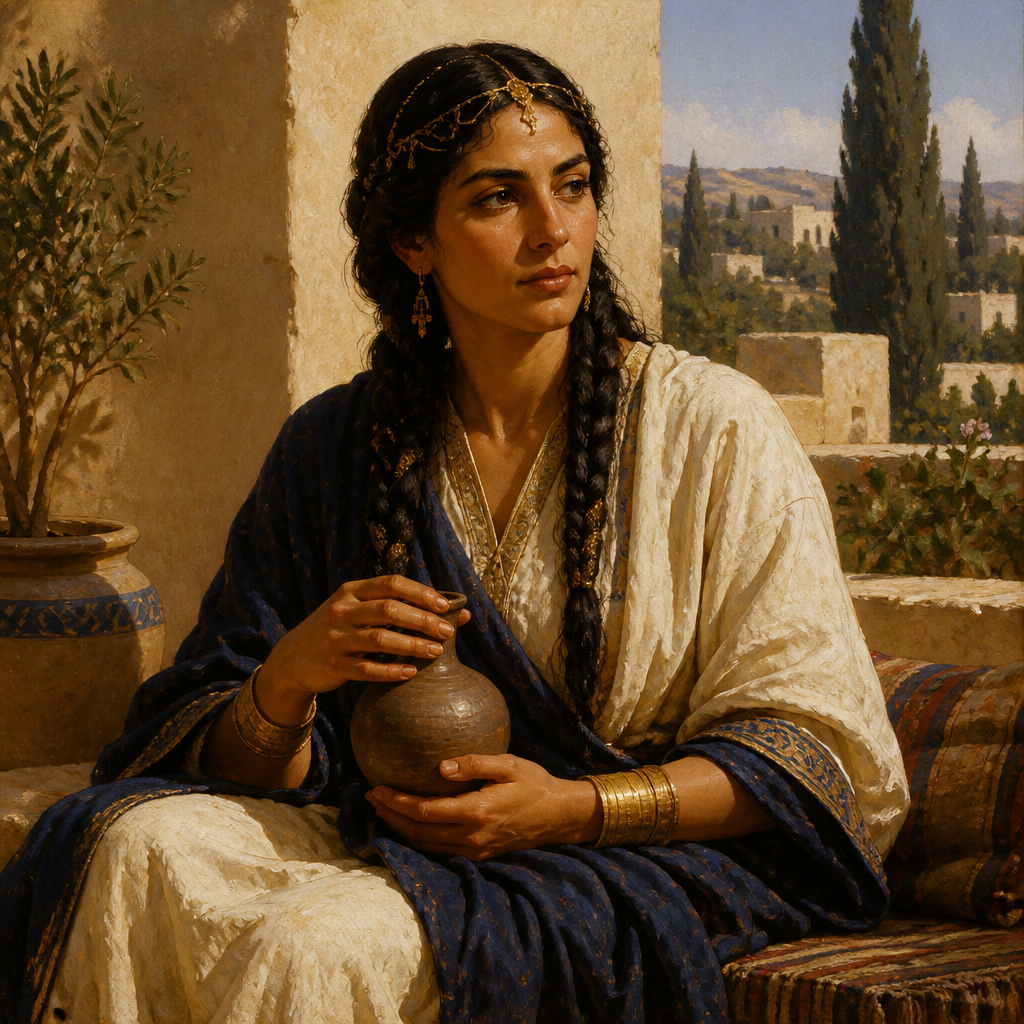 BithiahThis page
Children
 IshbahSon1 Chronicles 4:17Stated
 Miriam, Daughter of MeredDaughter1 Chronicles 4:17Stated
 Shammai, Son of MeredSon1 Chronicles 4:17Stated
Connected Figures
Family
Father · 1 Chronicles 4:18
An Egyptian monarch whose daughter, Bithiah, married Mered of the tribe of Judah.
Egypt and WildernessFirst: 1 Chronicles 4:182 versesMonarch of Egypt
Husband · 1 Chronicles 4:17
A descendant of Judah during the Egypt and Wilderness era known for his notable marriage to Bithiah, a daughter of Pharaoh.
Egypt and WildernessFirst: 1 Chronicles 4:172 versesprogenitorJudah
Son · 1 Chronicles 4:17
Ishbah was a descendant of the tribe of Judah, specifically known as the son of Mered and Bithiah and the father of Eshtemoa.
Egypt and WildernessFirst: 1 Chronicles 4:173 versesfounder of EshtemoaJudah
Daughter · 1 Chronicles 4:17
A member of the Tribe of Judah and daughter of Mered, recorded in the genealogies of the chronicler during the Egypt and Wilderness era.
Son · 1 Chronicles 4:17
A descendant of Judah through the line of Ezrah, born to Mered and his Egyptian wife Bithiah.
Egypt and WildernessFirst: 1 Chronicles 4:172 versesPatriarchJudah
Mentions by Book
- 1 Chronicles2
Scripture References
All 2 indexed verses, in canonical order, from the Berean Standard Bible.
1 Chronicles · 2
- 1 Chronicles 4:17
The sons of Ezrah: Jether, Mered, Epher, and Jalon. And Mered’s wife Bithiah gave birth to Miriam, Shammai, and Ishbah the father of Eshtemoa.
Cited as evidence on a family card; added so References, Key Verses and Mentions by Book share one index.
- 1 Chronicles 4:18
These were the children of Pharaoh’s daughter Bithiah. Mered also took a Judean wife, who gave birth to Jered the father of Gedor, Heber the father of Soco, and Jekuthiel the father of Zanoah.