Ishbah
Who was Ishbah in the Bible?
Ishbah was a descendant of the tribe of Judah, specifically known as the son of Mered and Bithiah and the father of Eshtemoa.
Ishbah is a figure identified within the complex genealogical records of the tribe of Judah found in the first book of Chronicles. His life and lineage are situated during the Egypt and Wilderness era.
He is primarily distinguished by his immediate family connections, being the son of Mered and Bithiah, a daughter of Pharaoh. This unique heritage links a Judean line with Egyptian nobility, though the biblical record focuses specifically on his role as the progenitor, or 'father,' of the inhabitants of Eshtemoa.
Background and Family
Ishbah appears in the genealogical listings of 1 Chronicles 4, a chapter dedicated to the descendants of Judah. According to 1 Chronicles 4:17, Ishbah was the son of Mered. The text indicates that Mered had two wives: one from the tribe of Judah (often identified through the term 'his Judean wife') and Bithiah, the daughter of Pharaoh. Ishbah is listed among the children born to Mered and Bithiah. This specific parentage makes Ishbah the brother of Miriam and Shammai.
His lineage is of particular interest to scholars because it documents an intermarriage between the line of Judah and an Egyptian royal house. While the historical timing of Bithiah’s arrival in the Judean line is debated, Ishbah occupies a legitimate place within the tribal inheritance of Judah during the Egypt and Wilderness era.
Major Life Events
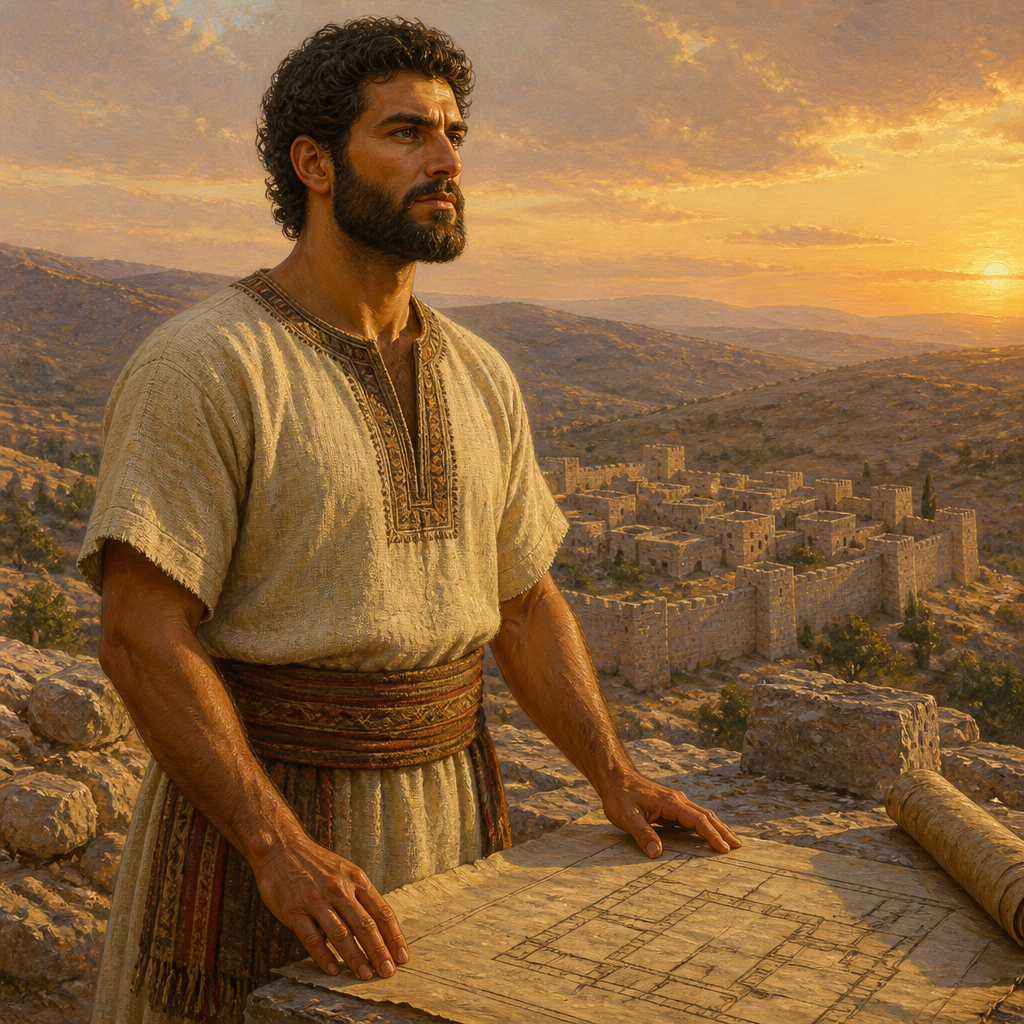
The biblical narrative does not record specific biographical events, speeches, or actions performed by Ishbah. His presence in the canon is strictly genealogical. His primary identification is as the 'father of Eshtemoa.' In the context of Hebrew genealogies, being the 'father' of a place name often signifies that Ishbah was the founder of the settlement or that his descendants became the primary inhabitants of that specific town. Eshtemoa was a significant town located in the hill country of Judah, later designated as a Levitical city.
Relationship to Other Biblical Figures
Ishbah’s closest recorded relations are his siblings, Miriam and Shammai. The text also connects him to his father, Mered, and his mother, Bithiah. Because the verse structure in 1 Chronicles 4:17-18 is somewhat fluid, there is scholarly discussion regarding his relationship to Jered, Heber, and Jekuthiel; while some traditions view them as his brothers through Mered’s other wife, others see them as part of a larger extended household. His most lasting legacy is his link to Eshtemoa, establishing a geographical anchor for his branch of the family tree.
Spiritual Significance
While Ishbah is not a central protagonist in the biblical drama, his inclusion in the Chronicles serves a specific theological and national purpose. The genealogies were written to provide the returning exiles and the people of the Divided Monarchy a sense of continuity and divine election. By naming Ishbah, the text affirms that every branch of the tribe of Judah—even those with foreign maternal roots like the son of an Egyptian princess—belonged to the covenant community and held a rightful stake in the land of Israel.
Ishbah serves as a genealogical link that validates the settlement of Eshtemoa within the tribe of Judah. His existence highlights the integration of diverse backgrounds—specifically his Egyptian mother Bithiah—into the Judean lineage, demonstrating that the community of Israel was defined by both bloodline and covenantal inclusion. For students of the Bible, he represents the preservation of specific family identities during the turbulent era of the Egypt and Wilderness era.
Frequently Asked Questions
Who was Ishbah's father?
Ishbah was the son of Mered, a descendant of Judah.
Who was Ishbah's mother?
His mother was Bithiah, who is identified in the biblical text as a daughter of Pharaoh.
What city is Ishbah associated with?
Ishbah is described as the 'father' of Eshtemoa, suggesting he founded the town or his descendants settled there.
Who were Ishbah's siblings?
His siblings through Bithiah include Miriam and Shammai.
In which book of the Bible is Ishbah mentioned?
Ishbah is mentioned only once in the Bible, in 1 Chronicles 4:17.
Family & Relationships
 Hodiah of the Tribe of JudahWife1 Chronicles 4:17
Inferred
No verse names Hodiah and Ishbah together; the husband link is carried from the surrounding genealogy and is not stated in Scripture.Evidence: 1 Chronicles 4:17; 1 Chronicles 4:19
 IshbahThis page
 Heber, Son of MeredBrother1 Chronicles 4:17–18Stated
 JekuthielBrother1 Chronicles 4:17–18Stated
 JeredBrother1 Chronicles 4:17–18Stated
 Miriam, Daughter of MeredSister1 Chronicles 4:17Stated
 Shammai, Son of MeredBrother1 Chronicles 4:17Stated
Peoples descended from Ishbah
Scripture lists these as clans and nations rather than as individual people.
Connected Figures
Family

Mother · 1 Chronicles 4:17
Bithiah was a daughter of Pharaoh and the wife of Mered, an inhabitant of Judah, noted for her inclusion in the Davidic-era genealogical records of 1 Chronicles.
Egypt and WildernessFirst: 1 Chronicles 4:182 versesPrincess

Father · 1 Chronicles 4:17
A descendant of Judah during the Egypt and Wilderness era known for his notable marriage to Bithiah, a daughter of Pharaoh.
Egypt and WildernessFirst: 1 Chronicles 4:172 versesprogenitorJudah
Wife · 1 Chronicles 4:17
A woman of the tribe of Judah recorded in the genealogies of 1 Chronicles as the wife of an unnamed man and the sister of Naham.
Egypt and WildernessFirst: 1 Chronicles 4:192 versesMatriarchJudah
Brother · 1 Chronicles 4:17–18
A descendant of Judah through Mered and his Judean wife, known as the father of Soco within the genealogical records of the Egypt and Wilderness era.
Egypt and WildernessFirst: 1 Chronicles 4:182 versesFounder of SocoJudah
Brother · 1 Chronicles 4:17–18
A member of the tribe of Judah and the father of Zanoah, noted in the post-exilic genealogical records of the Chronicler.
Egypt and WildernessFirst: 1 Chronicles 4:182 versesFounder and leader of ZanoahJudah
Brother · 1 Chronicles 4:17–18
A descendant of Judah through Mered and his Judean wife, known primarily as the father of Gedor.
Sister · 1 Chronicles 4:17
A member of the Tribe of Judah and daughter of Mered, recorded in the genealogies of the chronicler during the Egypt and Wilderness era.
Brother · 1 Chronicles 4:17
A descendant of Judah through the line of Ezrah, born to Mered and his Egyptian wife Bithiah.
Egypt and WildernessFirst: 1 Chronicles 4:172 versesPatriarchJudah
Mentions by Book
- 1 Chronicles3
Scripture References
All 3 indexed verses, in canonical order, from the Berean Standard Bible.
1 Chronicles · 3
- 1 Chronicles 4:17
The sons of Ezrah: Jether, Mered, Epher, and Jalon. And Mered’s wife Bithiah gave birth to Miriam, Shammai, and Ishbah the father of Eshtemoa.
- 1 Chronicles 4:18Partial
These were the children of Pharaoh’s daughter Bithiah. Mered also took a Judean wife, who gave birth to Jered the father of Gedor, Heber the father of Soco, and Jekuthiel the father of Zanoah.
Cited as evidence on a family card; added so References, Key Verses and Mentions by Book share one index.
- 1 Chronicles 4:19Partial
The sons of Hodiah’s wife, the sister of Naham, were the fathers of Keilah the Garmite and of Eshtemoa the Maacathite.
Cited as evidence on a family card; added so References, Key Verses and Mentions by Book share one index.