Libni, Son of Gershon
Libni was the eldest son of Gershon and a grandson of the patriarch Levi, serving as the eponymous founder of the Libnite clan within the Levite priesthood.
Libni was a prominent figure within the tribe of Levi during the pivotal era of the Egyptian Sojourn and the subsequent Wilderness Wanderings. As the firstborn son of Gershon (also spelled Gershom), Libni occupied a significant position in the genealogical hierarchy of Israel. His lineage was established at a time when the Israelites were transitioning from a large family group into a structured nation organized by tribal and ancestral divisions.
In the biblical narrative, Libni is primarily identified through genealogical records that define the administrative and religious duties of the Levites. As the head of a major sub-clan, his name became synonymous with the 'Libnites,' a group designated for specific responsibilities regarding the Tabernacle. His life and descendants reflect the meticulous organization of the Hebrew people as they moved through the Sinai Peninsula toward the Promised Land.
Background and Family
Libni was born into the tribe of Levi, the third son of Jacob. According to the record in Exodus 6:17, Libni was the son of Gershon and the brother of Shimei. This lineage places him in the third generation of Levites born during the Israelite stay in Egypt. As the grandson of Levi, Libni was part of the foundational structure of what would become the priestly class of Israel.
His family ties are consistently reinforced across the Pentateuch and the books of Chronicles. The genealogical lists in Numbers 3:18 and 1 Chronicles 6:17 confirm his status as the firstborn of Gershon. In the broader scope of the Levite tribe, he was a contemporary of other significant figures such as Amram (the father of Moses and Aaron), who was his cousin through their grandfather Kohath.
Major Life Events
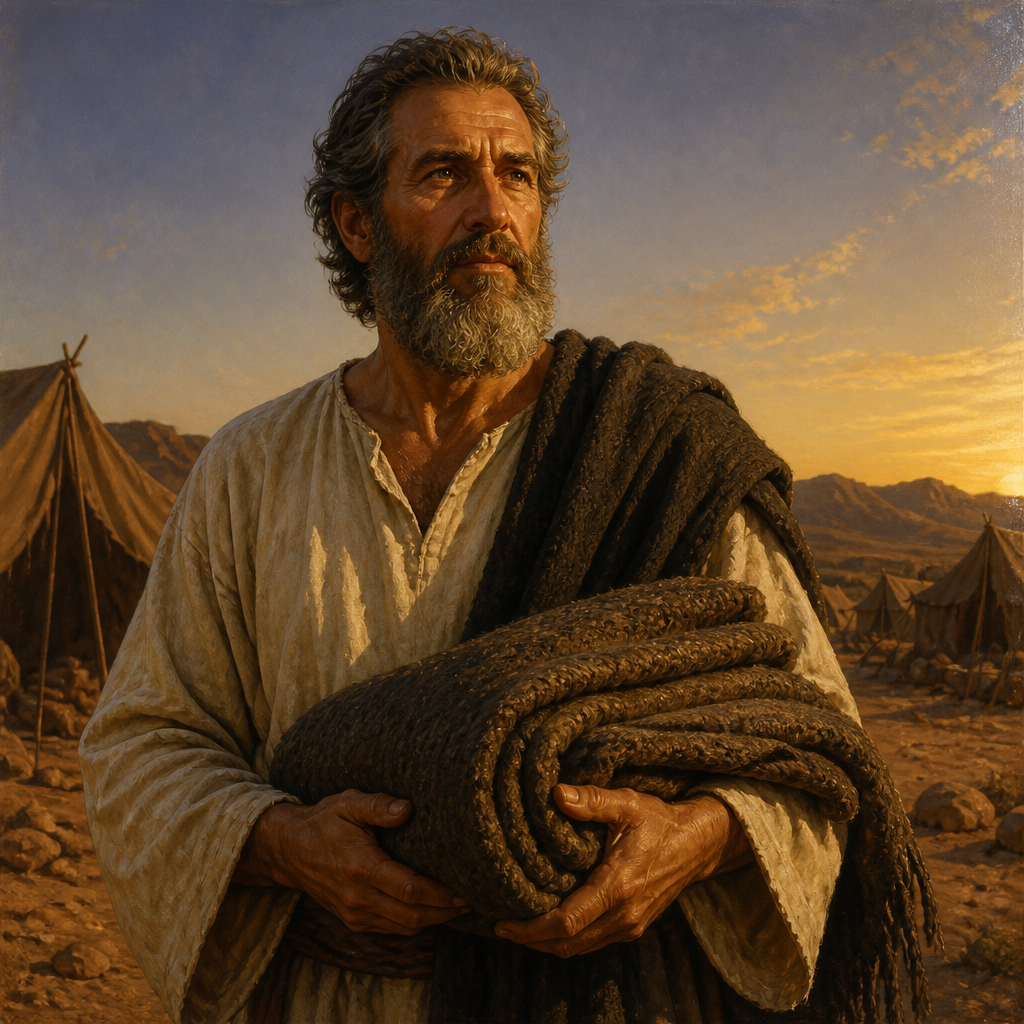
The life of Libni is characterized by the establishment of his clan, the Libnites. During the census conducted in the Wilderness of Sinai, the Libnites were numbered among the Gershonites. The Gershonites, including the descendants of Libni, were assigned the critical task of transporting and maintaining the textiles of the Tabernacle, including the curtains, coverings, and screens (Numbers 3:25–26). While Libni himself is not recorded performing specific miraculous deeds, his role as a clan patriarch was essential for the logistical and spiritual functioning of the Israelite camp.
In later genealogical accounts, there is a complex shift in nomenclature. 1 Chronicles 23:7 identifies the Gershonite divisions as 'Ladan and Shimei.' Scholarly consensus generally identifies 'Ladan' as a secondary name or a variant lineage for Libni, as both are listed as the primary sons of Gershon. Under the name Ladan, his descendants are listed as Jehiel, Zetham, and Joel, who served as heads of the families and treasurers of the Lord’s house (1 Chronicles 23:8; 26:21).
Relationship to Other Biblical Figures
Libni’s primary relationships are defined by his immediate kin. He is the brother of Shimei, and together they formed the two main branches of the Gershonite clan. As a son of Gershon, he was the nephew of Kohath and Merari. This placed him in the highest echelon of Levite society. His sons—or the prominent descendants of his line—included Jehiel, who is noted for his role in the administrative oversight of the sanctuary's treasures.
In the administrative census of Numbers 26:58, Libni is listed alongside other major Levite families, such as the Hebronites and Korahites. This positioning highlights that the Libnite clan maintained its distinct identity and social standing for centuries, from the time of the Exodus through the organization of the Temple service under King David.
Spiritual Significance
The spiritual significance of Libni lies in the principle of inherited service. The tribe of Levi was set apart by God to be His special possession in place of the firstborn of all Israel. Within this consecrated tribe, Libni represented the order and continuity of the divine mandate. His inclusion in the genealogies of Exodus, Numbers, and 1 Chronicles emphasizes that every family within the nation had a specific, God-ordained place in the community of faith.
Furthermore, the transition of his descendants from wilderness tent-carriers to Temple treasurers illustrates the evolution of Levite service. Libni’s legacy is one of institutional stability; he provided the ancestral root for those who would guard the sacred wealth and holy items of Israel for generations. His name, derived from the Hebrew word for 'white' (lavan), often carries connotations of purity or transparency, fitting for a family tasked with the care of the sanctuary.
Spiritual Significance
Libni serves as a foundational figure in the administrative theology of the Old Testament. By establishing one of the primary clans of the Gershonites, he ensures that the duties of the Tabernacle—and later the Temple—were distributed according to divine order rather than random selection. His presence in multiple genealogies underscores the biblical emphasis on heritage and the preservation of sacred callings through family lines.
Theologically, the Libnites represent the 'middle management' of the Tabernacle service. While they were not the high priests (a role reserved for Aaron’s line), their work in maintaining the Tabernacle’s structure was vital. Libni’s life demonstrates that in the biblical worldview, every role within the religious community, whether high-profile or supportive, is essential to the holistic worship of God.
Frequently Asked Questions
Who was Libni's father?
Libni was the son of Gershon (also known as Gershom), who was the son of Levi.
What tribe did Libni belong to?
Libni belonged to the Tribe of Levi, specifically the Gershonite branch.
What was the Libnite clan responsible for?
As part of the Gershonites, the Libnite clan was responsible for the curtains, hangings, and coverings of the Tabernacle during the Wilderness Wanderings.
Are Libni and Ladan the same person?
Most biblical scholars believe Ladan (mentioned in 1 Chronicles 23:7) is either another name for Libni or a prominent descendant whose name became synonymous with the clan, as both are identified as the primary branch of Gershon's family.
Who were Libni's children?
The Bible identifies his descendants through the line of Ladan as Jehiel, Zetham, and Joel.
Connected Figures
Categories
Mentions by Book
- 1 Chronicles5
- Numbers3
- Exodus1
Family & Relationships
Child
Exodus 6:17
Child
Joel, Treasurer of the House of the LORD
Exodus 6:17
Child
ZethamDisputed
Exodus 6:17
Sibling
Exodus 6:17
Parent
Genesis 46:11
Sibling
Exodus 6:17
Others Named Libni
Libni, Son of Mahli1 Chronicles 6:29
A Levite of the Merari clan during the era of the Egyptian sojourn, identified as the son of Mahli and father of Shimei.