Bezalel, Artisan of the Tabernacle
The master craftsman chosen by God to design and construct the Tabernacle, its sacred furniture, and the Ark of the Covenant during the Israelite wilderness wanderings.
Bezalel was the primary architect and craftsman of the Tabernacle, the portable dwelling place of God’s presence during the Israelites' journey from Egypt to Canaan. A man of the tribe of Judah, he is distinguished in the biblical narrative as the first individual described as being 'filled with the Spirit of God' for the purpose of artistic and technical mastery. His role was not merely that of a laborer but of a visionary director who translated divine instructions into physical reality.
Commissioned directly by God through Moses, Bezalel was responsible for the most sacred objects in Israelite worship, including the Ark of the Covenant and the Bronze Altar. His work established the aesthetic and structural foundations of the Hebrew cultus, ensuring that the earthly sanctuary mirrored the heavenly pattern revealed to Moses on Mount Sinai. His legacy persisted long after the wilderness period, with his craftsmanship specifically noted in the records of King Solomon’s reign centuries later.
Background and Family
Bezalel was the son of Uri and the grandson of Hur, belonging to the prominent tribe of Judah. His lineage is meticulously recorded in Exodus 31:2 and reaffirmed in the genealogical records of 1 Chronicles 2:20. The mention of his grandfather, Hur, is significant in the context of the Exodus narrative; Hur was a close associate of Moses and Aaron, famously assisting Aaron in holding up Moses’ arms during the battle against the Amalekites. This heritage placed Bezalel within a family of proven leadership and faithfulness.
Born into the era of the Egyptian sojourn and the subsequent Exodus (c. 1446 BC or 1290 BC, depending on the dating of the Exodus), Bezalel likely developed his foundational skills in craftsmanship while in Egypt. The Egyptians were renowned for their sophisticated metalwork, weaving, and stone-cutting—skills that Bezalel would later sanctify for the service of Yahweh.
Major Life Events
The Divine Appointment
The defining moment of Bezalel’s life occurred at Mount Sinai. As Moses received the Law, God specifically named Bezalel as the one to lead the construction of the Tabernacle. Exodus 31:3-5 records that God filled him with 'the Spirit of God, in wisdom, in understanding, in knowledge, and in all manner of workmanship.' This endowment was intended to enable him to 'design artistic designs' in gold, silver, bronze, stone, and wood.
Construction of the Tabernacle
Under Bezalel’s direction, the construction project was a massive communal effort. He was paired with Oholiab of the tribe of Dan, and together they led a team of 'skilled persons' whose hearts were stirred to contribute to the work. Bezalel’s personal handiwork is specifically credited in the construction of the most holiest object: the Ark of the Covenant. According to Exodus 37:1, Bezalel himself fashioned the Ark out of acacia wood and overlaid it with pure gold.
His oversight extended to the entirety of the sanctuary, including the curtains of fine linen, the golden lampstand, the table for the Bread of the Presence, and the various altars. The text emphasizes that Bezalel 'made everything that the LORD had commanded Moses' (Exodus 38:22), highlighting his strict adherence to the divine blueprints provided to him.
Relationship to Other Biblical Figures
Bezalel’s primary relationship in the text is with Moses, acting as the executor of Moses’ visionary instructions. While Moses served as the mediator of the word, Bezalel served as the mediator of the craft. He also worked in a close partnership with Oholiab, representing a tribal unity between Judah (the leading tribe) and Dan.
Furthermore, Bezalel’s influence reached into the era of the United Monarchy. In 2 Chronicles 1:5, the text notes that the 'bronze altar made by Bezalel' was still in use during the time of King Solomon. Before Solomon built the Temple in Jerusalem, he and the assembly of Israel traveled to Gibeon to inquire of God at the very altar Bezalel had fashioned in the wilderness hundreds of years prior. This connects Bezalel’s work directly to the peak of Israel’s liturgical history under Solomon.
Spiritual Significance
Bezalel holds a unique position in biblical theology as the first person said to be filled with the Holy Spirit (Ruach Elohim). In the Pentateuch, the Spirit typically falls upon leaders or prophets, but in Bezalel’s case, the Spirit is given for technical skill, aesthetic beauty, and administrative oversight. This elevates the vocation of the artist and the laborer to a spiritual calling, suggesting that human creativity, when aligned with divine command, is a form of worship.
His work also serves as a type of 'New Creation' motif. Just as God took six days to create the world and rested on the seventh, the instructions for the Tabernacle (which conclude with a reminder of the Sabbath in Exodus 31) suggest that Bezalel was participating in the construction of a micro-cosmos where God could dwell among His people. His faithfulness ensured that the 'pattern' shown on the mountain was accurately represented on earth, allowing the glory of the Lord to eventually fill the Tabernacle.
Spiritual Significance
Bezalel represents the sanctification of human skill and the theology of labor. His appointment demonstrates that God values aesthetic beauty and physical craftsmanship as essential components of communal worship. By being 'called by name,' Bezalel exemplifies the biblical principle that God equips specific individuals with unique talents to serve the broader community and fulfill divine purposes.
Furthermore, Bezalel’s role underscores the importance of precision in obeying God’s word. The repeated refrain that he did 'everything just as the LORD commanded' serves as a model for biblical obedience. His work provided the physical center for Israel’s identity for centuries, proving that the tangible elements of worship—art, architecture, and design—are not secondary to the spiritual, but are vehicles through which the spiritual is experienced.
Frequently Asked Questions
What does the name Bezalel mean?
The name Bezalel (בְּצַלְאֵל) in Hebrew literally means 'In the shadow [protection] of God.'
What specific items did Bezalel personally build?
While he supervised the whole project, the Bible specifically credits him with constructing the Ark of the Covenant (Exodus 37:1) and the bronze altar (2 Chronicles 1:5).
Who was Bezalel's primary assistant?
His primary partner was Oholiab son of Ahisamach, from the tribe of Dan, who was especially skilled in weaving and embroidery.
Was Bezalel a priest?
No, Bezalel was from the tribe of Judah, not the tribe of Levi. He was a craftsman and architect, not a member of the priesthood, though his work served the priests.
How did Bezalel learn his craft?
While the Bible credits his supreme ability to the 'Spirit of God,' he likely acquired foundational skills in metallurgy and woodwork during the Israelites' time in Egypt, where such trades were highly developed.
Connected Figures
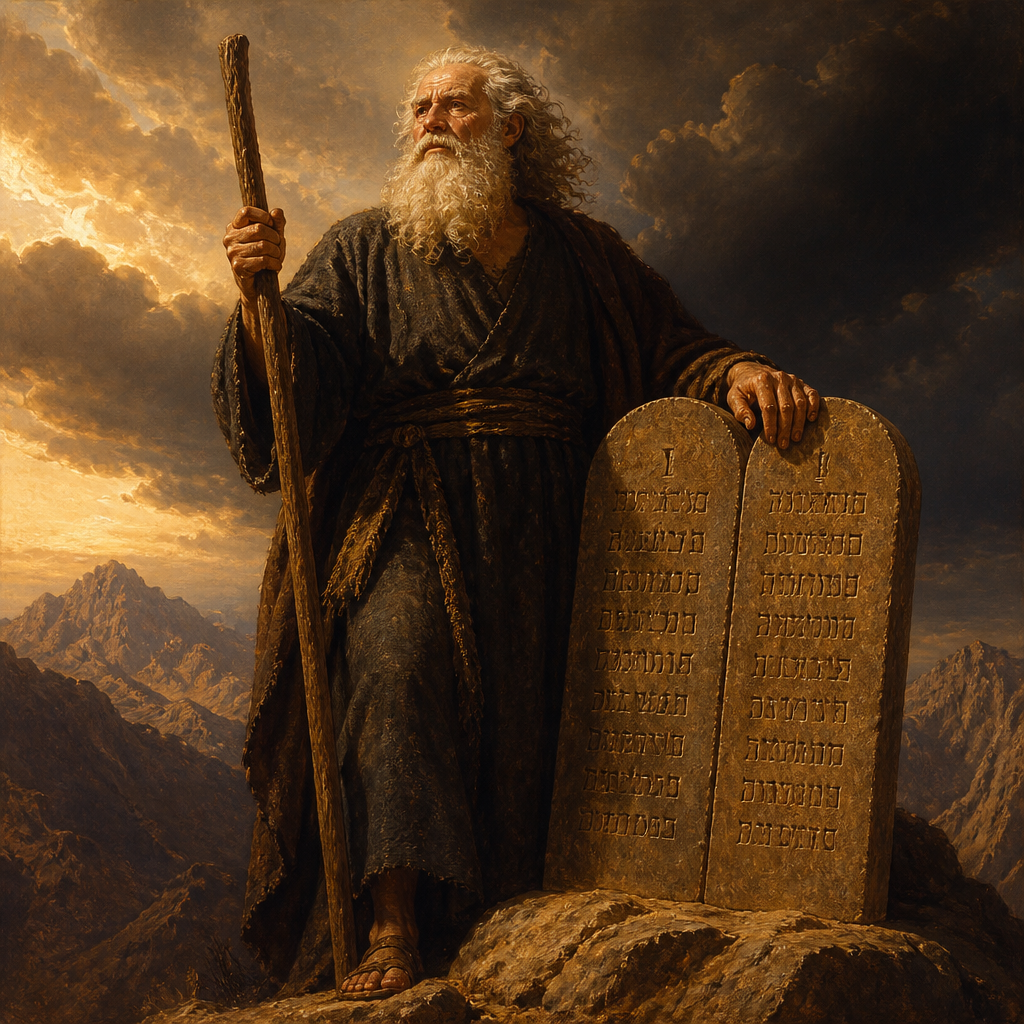
Moses
Leader who commissioned his work
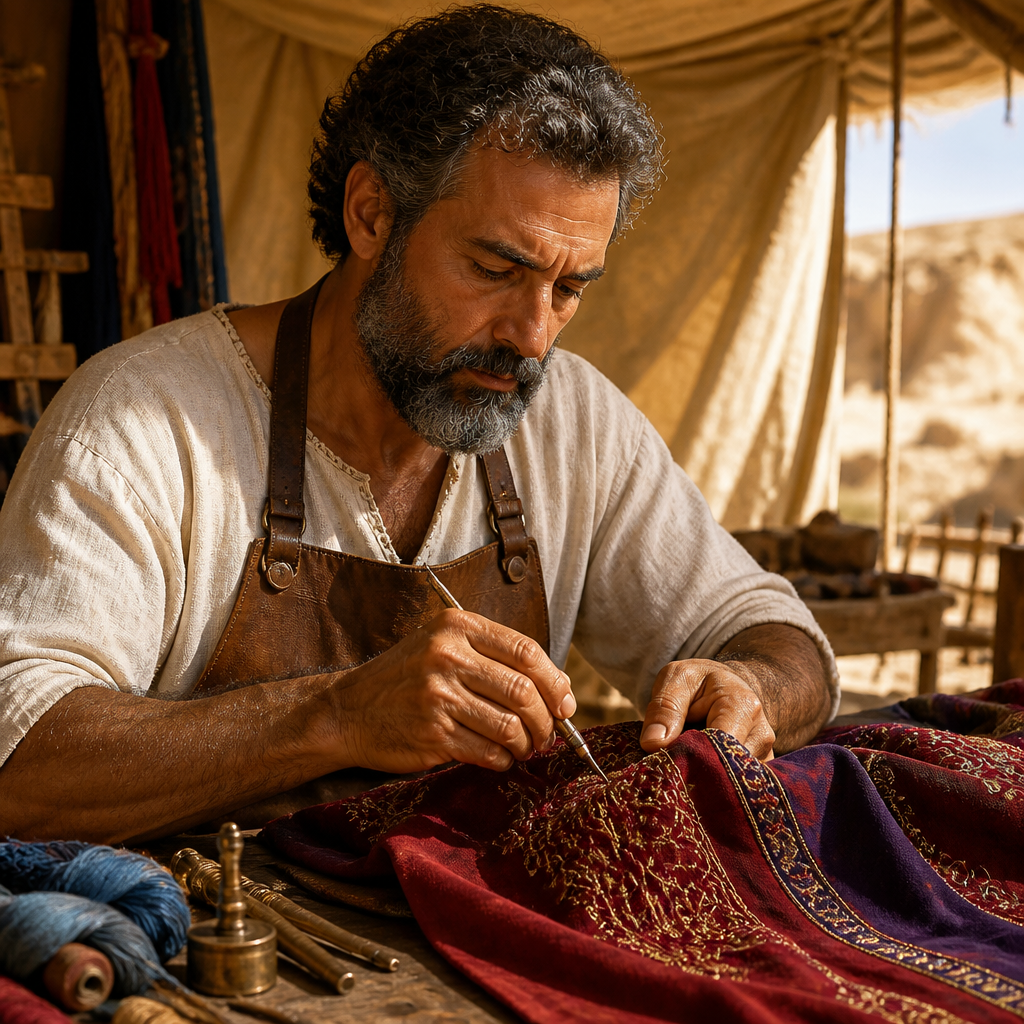
Oholiab
Chief assistant and fellow craftsman
Uri
Father
Hur
Grandfather
Categories
Mentions by Book
- Exodus6
- 1 Chronicles1
- 2 Chronicles1
Family & Relationships
Parent
Exodus 31:2
Others Named Bezalel
Bezalel, Descendant of Pahath-moabEzra 10:30
An Israelite during the post-exilic period who was among those required to dissolve marriages with foreign wives according to the decree of Ezra.