Zimri, King of Israel
A military commander of Israel who assassinated King Elah, reigned for only seven days, and died by suicide as his palace fell to a rival.
Zimri was a high-ranking military official in the Northern Kingdom of Israel during the era of the Divided Monarchy. Serving as the commander of half the royal chariot force, he occupied a position of significant strategic influence under the reign of King Elah, the son of Baasha. His brief entry into the biblical narrative is defined by a violent coup and an equally swift downfall, marking one of the shortest and most tumultuous reigns in the history of the Hebrew monarchies.
Zimri’s rise to power occurred during a period of instability and spiritual decline in Israel. While the nation’s army was occupied with a siege against the Philistines, Zimri took advantage of the king's physical and moral vulnerability to seize the throne. However, his lack of broad military support and the swift reaction of the common soldiers led to a rapid siege of the capital city, Tirzah, resulting in Zimri’s death and the end of his seven-day rule.
Background and Family
The biblical record provides no genealogical information regarding Zimri’s ancestry or tribe. Unlike many other kings of Israel whose fathers are named to establish their lineage, Zimri appears in the text primarily defined by his professional role. He was a "servant" of King Elah, specifically the commander of half the chariots (1 Kings 16:9). This title suggests he was a member of the elite military class, responsible for the kingdom's most advanced mobile weaponry.
At the time of Zimri’s emergence, Israel was ruled by the house of Baasha. Baasha had originally seized the throne by force, and his son Elah continued a reign characterized by the "sins of Jeroboam." The political atmosphere of the Divided Monarchy during this era—roughly the 9th century BC—was one of frequent internal strife and external conflict with neighboring Judah and the Philistines.
Major Life Events
The Assassination of Elah
Zimri’s primary recorded action is the assassination of King Elah in the twenty-seventh year of King Asa of Judah. The biblical account emphasizes the ignoble circumstances of the coup: while the Israelite army was encamped at Gibbethon fighting the Philistines, King Elah remained in the capital city of Tirzah. He was at the house of Arza, his palace steward, where he was "getting drunk" (1 Kings 16:9). Zimri entered the house, struck down the incapacitated king, and immediately declared himself the ruler of Israel.
The Massacre of the House of Baasha
Upon seizing the throne, Zimri acted swiftly to eliminate any potential for a blood feud or restoration of the previous dynasty. He executed the entire household of Baasha, leaving no male survivors among his relatives or friends (1 Kings 16:11-12). The author of 1 Kings notes that this bloody purge served as the fulfillment of a prophecy delivered by Jehu the prophet, who had foretold the total destruction of Baasha’s line due to their idolatry.
The Seven-Day Reign and Death
Zimri’s tenure as king was the shortest in the history of the Northern Kingdom, lasting only seven days. News of the assassination reached the Israelite troops at the siege of Gibbethon. Rather than accepting Zimri, the army proclaimed their general, Omri, as king. Omri immediately abandoned the siege and led the forces to Tirzah, surrounding the city.
Recognizing that the city had been captured and his cause was lost, Zimri retreated into the inner citadel of the royal palace. In a final act of desperation or defiance, he set the palace on fire around himself. He died in the flames, an event the text attributes to his own sins and his continuation of the unauthorized worship practices established by Jeroboam (1 Kings 16:18-19).
Relationship to Other Biblical Figures
Zimri’s relationship to the broader biblical narrative is largely defined by his conflict with Omri, the man who would eventually establish a long-lasting and powerful dynasty. His name also became a historical proverb for treachery. Decades later, when Jehu—another military commander—assassinated King Joram and Queen Jezebel, Jezebel greeted him with the scathing rhetorical question: "Have you come in peace, O Zimri, murderer of your master?" (2 Kings 9:31). This indicates that Zimri's name had become synonymous with a subordinate who betrays his sovereign.
Spiritual Significance
The story of Zimri serves as a cautionary tale within the Deuteronomistic history concerning the futility of seeking power through violence without divine mandate. Although his actions fulfilled a prophecy against the house of Baasha, Zimri himself is not depicted as a righteous instrument of God. The text explicitly states that he died "because of the sins he had committed, doing evil in the eyes of the LORD" (1 Kings 16:19). His brief, fiery end illustrates the biblical theme that "those who live by the sword will die by the sword," particularly within the volatile political landscape of the Northern Kingdom.
Spiritual Significance
Theologically, Zimri represents the chaotic cycle of judgment that plagued the Northern Kingdom of Israel. While his purge of Baasha's family was the mechanical fulfillment of prophetic judgment, Zimri's own lack of piety and his subsequent suicide underscore the spiritual vacuum of the era. He is categorized not as a reformer, but as a participant in the ongoing apostasy of the nation, continuing the golden calf worship that defined the Israelite monarchy.
His legacy persists in the Bible as a symbol of the 'treacherous servant.' The mention of his name by Jezebel in 2 Kings suggests that his seven-day reign left a lasting mark on the cultural memory of Israel as the quintessential example of a failed, bloody coup. His life demonstrates that even when a man’s actions align with a divine decree (the end of Baasha’s line), the motives and methods of the individual are still subject to divine scrutiny and judgment.
Frequently Asked Questions
How long did Zimri reign as King of Israel?
Zimri reigned for only seven days in the city of Tirzah before being overthrown by Omri.
How did Zimri die?
When he saw that the city of Tirzah was captured by Omri's forces, Zimri went into the citadel of the royal palace and burned it down upon himself, dying in the fire.
What prophecy did Zimri fulfill?
By killing the entire family and all friends of King Baasha, Zimri fulfilled the prophecy of Jehu son of Hanani, who had predicted the total destruction of Baasha's house due to their sins.
Who was Zimri's rival for the throne?
His primary rival was Omri, the commander of the army, whom the Israelite troops proclaimed king after learning of Zimri's coup.
Why did Jezebel call Jehu 'Zimri'?
Jezebel called Jehu 'Zimri' as an insult and a warning, comparing Jehu to the historical figure who murdered his master only to meet a swift and violent end.
Connected Figures
Elah
King whom Zimri assassinated
Omri
Military rival who succeeded Zimri

Baasha
King whose entire household Zimri destroyed
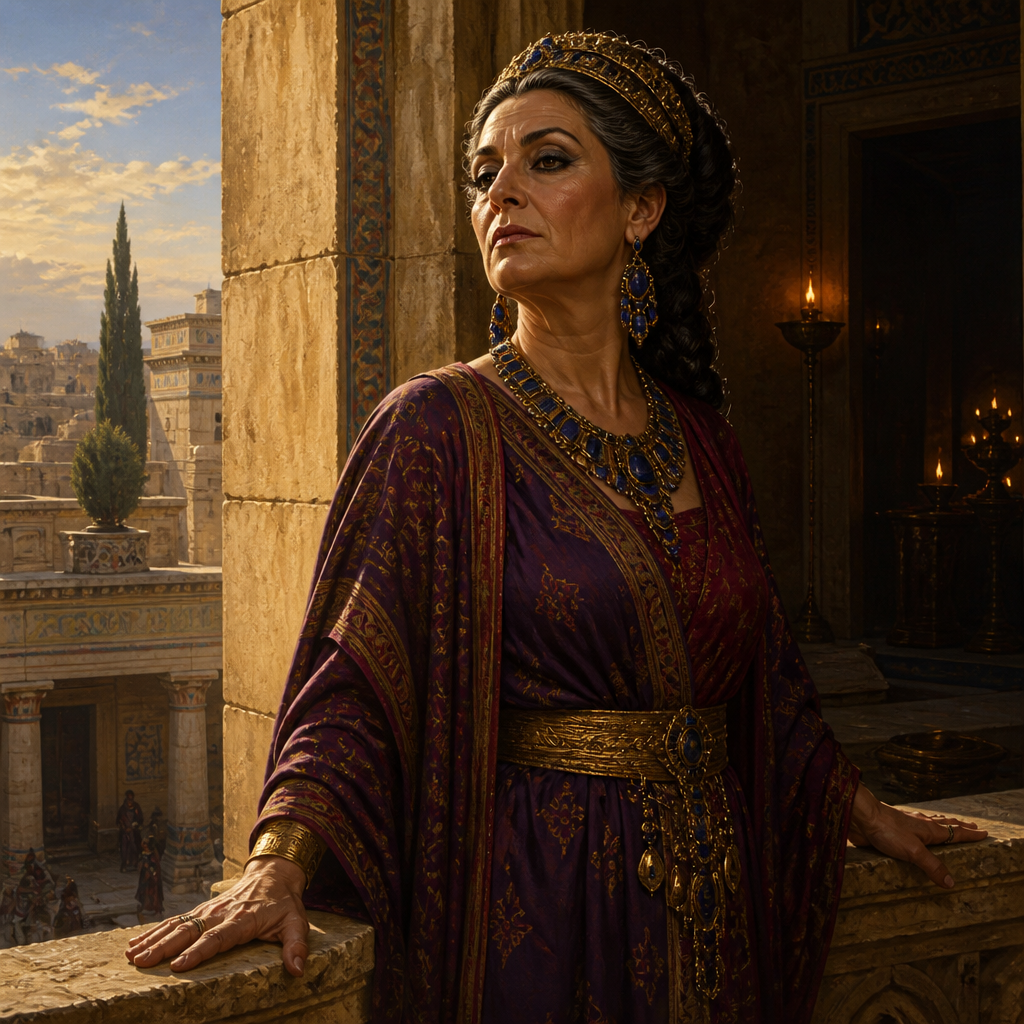
Jezebel
Later queen who used Zimri's name as a taunt
Categories
Mentions by Book
- 1 Kings7
- 2 Kings1
Others Named Zimri
Zimri, Descendant of Saul1 Chronicles 8:36
A Benjamite descendant of King Saul and son of Jehoaddah, recorded in the genealogies of the tribe of Benjamin.
Zimri, Son of SaluNumbers 25:14
Zimri, son of Salu, was a Simeonite leader whose public act of defiance at Shittim resulted in his execution during the Baal of Peor incident.