The Prophetess, Wife of Isaiah
Who was the Prophetess, Wife of Isaiah, in the Bible?
The wife of the prophet Isaiah during the Divided Monarchy, whose title and the birth of her son served as a prophetic sign to Judah.
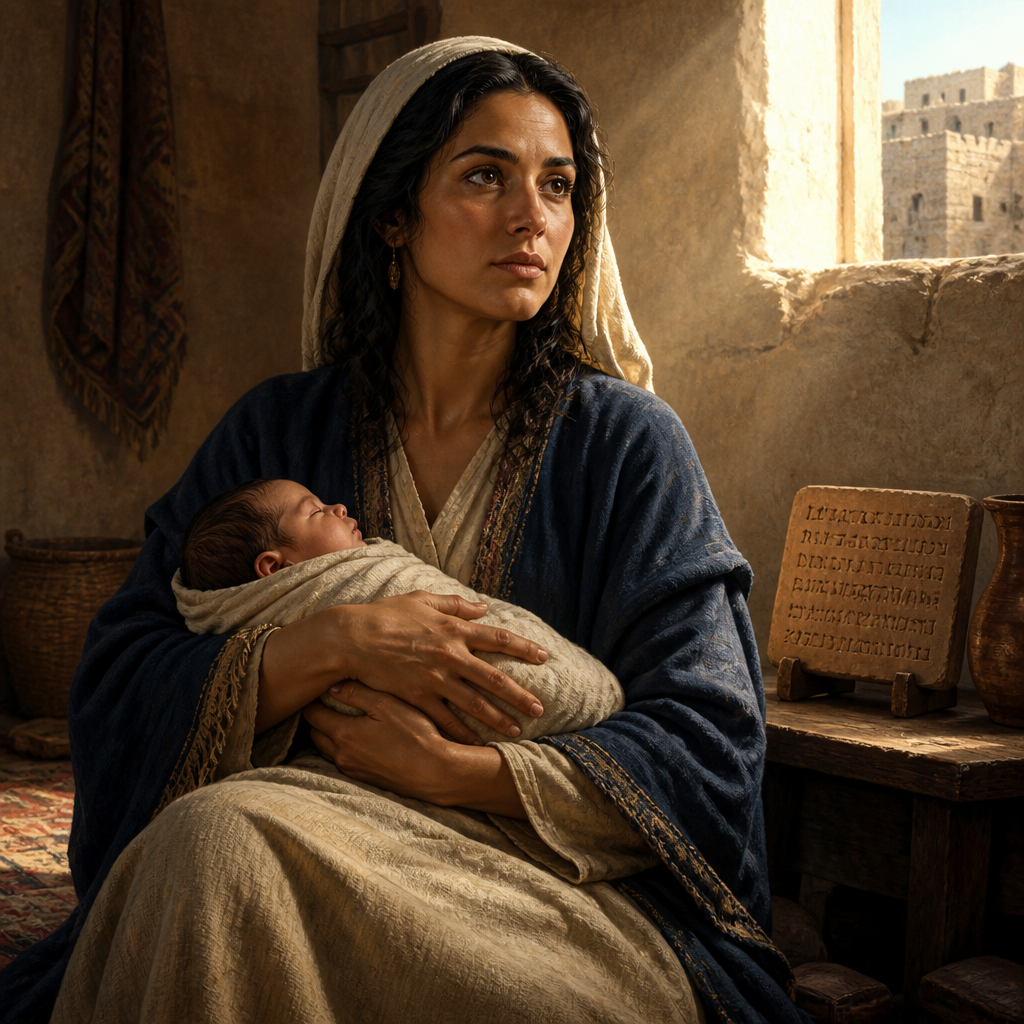
The Prophetess is a figure mentioned during the reign of King Ahaz of Judah. While her name is never recorded, she is identified by the title 'the prophetess' (Hebrew: ha-nebiah). Her brief inclusion in the biblical narrative is inextricably linked to the ministry of her husband, Isaiah, and the geopolitical crises facing the Southern Kingdom during the late 8th century BC.
She appears exclusively in Isaiah 8:3, which documents her conception and the birth of her son, Maher-shalal-hash-baz. This event was not merely a domestic update but a living prophecy regarding the imminent destruction of Israel and Syria by the Assyrian Empire. Despite the brevity of her mention, her title suggests a role that may have extended beyond being a simple spouse.
Background and Family
The Prophetess lived in Jerusalem during the Divided Monarchy, specifically during the Syro-Ephraimite War (c. 735–732 BC). While her lineage and tribe are unknown, she was part of the household of Isaiah, one of Judah's most influential prophets. The biblical text provides no information regarding her upbringing or the circumstances of her marriage. Her primary identification is through her husband and her specific designation as a 'prophetess.'
The Title of Prophetess
Scholars have long debated the meaning of the title applied to her in Isaiah 8:3. In the Hebrew Bible, the term nebiah is used for women such as Miriam and Deborah, who exercised independent prophetic giftings. Some commentators suggest she held this title by virtue of her own spiritual office. Others argue the title was a courtesy designation as the wife of a prophet, though there is little linguistic evidence elsewhere in the Old Testament to support such a convention for other prophets' wives. If she was indeed a prophetess in her own right, her ministry likely paralleled the themes of judgment and redemption found in Isaiah's own work.
Major Life Events
The single recorded event in the life of the Prophetess is the birth of her son, Maher-shalal-hash-baz. This occurred at a time of extreme national distress for Judah. The kings of Israel and Syria had formed an alliance to pressure Judah into a coalition against Assyria.
"And I had relations with the prophetess, and she conceived and gave birth to a son. The LORD said to me, 'Name him Maher-shalal-hash-baz.'" (Isaiah 8:3)
Following the child's birth, the Lord instructed that he be given this lengthy name, which means 'Quick to the plunder, swift to the spoil.' The child served as a chronological marker for the divine timeline: before the boy was old enough to speak, the wealth of Damascus and the spoil of Samaria would be carried off by the king of Assyria.
Relationship to Other Biblical Figures
Her most significant relationship was with Isaiah. Together, they functioned as a family of signs. Isaiah states in the same chapter, "Here am I, and the children the LORD has given me. We are signs and symbols in Israel from the LORD Almighty" (Isaiah 8:18). Through her marriage and motherhood, the Prophetess was an active participant in the symbolic actions required of Isaiah’s ministry.
Spiritual Significance
The Prophetess represents the total immersion of the prophetic household into the message of God. Her domestic life—her pregnancy and the nursing of her child—became the medium through which God spoke to a panicked nation. The inclusion of her title, even without a personal name, underscores the gravity of her position within the community of faith during the turbulent years of the Divided Monarchy. She stands as one of the few women in the Old Testament associated with the prophetic office during the era of the kings.
The Prophetess is significant for her role in providing a 'living sign' to the people of Judah. Her son’s name and birth served as a divine guarantee that the immediate threats to Jerusalem would be neutralized. Her designation as 'the prophetess' also highlights the presence of women in the spiritual leadership or prophetic circles of the 8th century BC, even when their specific words are not recorded.
Theologically, she illustrates the concept of the prophetic family. In the book of Isaiah, the prophet's life and household are not private; they are public testimonies. By participating in this sign-act, she shared in the burden of Isaiah’s message, demonstrating that the prophetic call often encompassed the entire family unit.
Frequently Asked Questions
Was she a prophet herself or just the wife of a prophet?
The Bible calls her 'the prophetess,' which is the same term used for Miriam and Deborah. While some think it is just a title for a prophet's wife, many scholars believe it indicates she had her own prophetic gift.
What was the name of her son?
Her son was named Maher-shalal-hash-baz, which means 'Quick to the plunder, swift to the spoil.'
Where in the Bible is she mentioned?
She is mentioned only once, in Isaiah 8:3.
What tribe did the Prophetess belong to?
The Bible does not record her tribe or her family lineage.
During which time period did she live?
She lived during the Divided Monarchy, specifically during the 8th century BC in the Kingdom of Judah.
Family & Relationships
 IsaiahHusband2 Kings 19:2
Inferred
No verse names The Prophetess, Wife of Isaiah and Isaiah together; the husband link is carried from the surrounding genealogy and is not stated in Scripture.Evidence: 2 Kings 19:2
 The Prophetess, Wife of IsaiahThis page
Children
 Maher-shalal-hash-bazSonIsaiah 8:3Stated
Connected Figures
Family
Husband · 2 Kings 19:2
Isaiah, the son of Amoz, was a major prophet in Judah whose ministry spanned the reigns of four kings and who is widely quoted in the New Testament for his messianic and redemptive visions.
Son · Isaiah 8:3
The second son of the prophet Isaiah whose symbolic name predicted the imminent plunder of Damascus and Samaria by the Assyrian Empire.
Divided MonarchyFirst: Isaiah 8:14 versesProphetic sign-child
Categories
Mentions by Book
- 2 Kings1
- Isaiah1
Scripture References
All 2 indexed verses, in canonical order, from the Berean Standard Bible.
2 Kings · 1
- 2 Kings 19:2Partial
And he sent Eliakim the palace administrator, Shebna the scribe, and the leading priests, all wearing sackcloth, to the prophet Isaiah son of Amoz
Cited as evidence on a family card; added so References, Key Verses and Mentions by Book share one index.
Isaiah · 1
- Isaiah 8:3
And I had relations with the prophetess, and she conceived and gave birth to a son. The LORD said to me, “Name him Maher-shalal-hash-baz.