Shephatiah the Haruphite
A skilled Benjamite warrior who joined David at Ziklag during his exile from King Saul in the Divided Monarchy era.
Shephatiah the Haruphite was a specialized warrior who pledged his loyalty to David during the period when David was a fugitive from King Saul. He is listed among the 'mighty men' who traveled to Ziklag to bolster David’s forces. This group was distinct for their ambidextrous combat skills and their willingness to abandon the service of the reigning monarch to support the future king of Israel.
His identification as a 'Haruphite' connects him to the clan of Hariph or the town of Hareph. While his individual exploits are not detailed in the biblical narrative, his presence in the list of David’s earliest elite supporters marks him as a man of significant military standing and political conviction during a volatile era of Israelite history.
Background and Family
Shephatiah is identified in the biblical record as a 'Haruphite' (1 Chronicles 12:5). This gentilic name likely refers to his ancestry within the family of Hariph or his origin from a specific location such as Hareph. In the genealogical and military records of the tribe of Benjamin, such distinctions were vital for maintaining tribal identity. Although he was a Benjamite—the same tribe as King Saul—Shephatiah chose to side with David, showing a shift in tribal loyalties that characterized the transition toward the Davidic dynasty.
Major Life Events
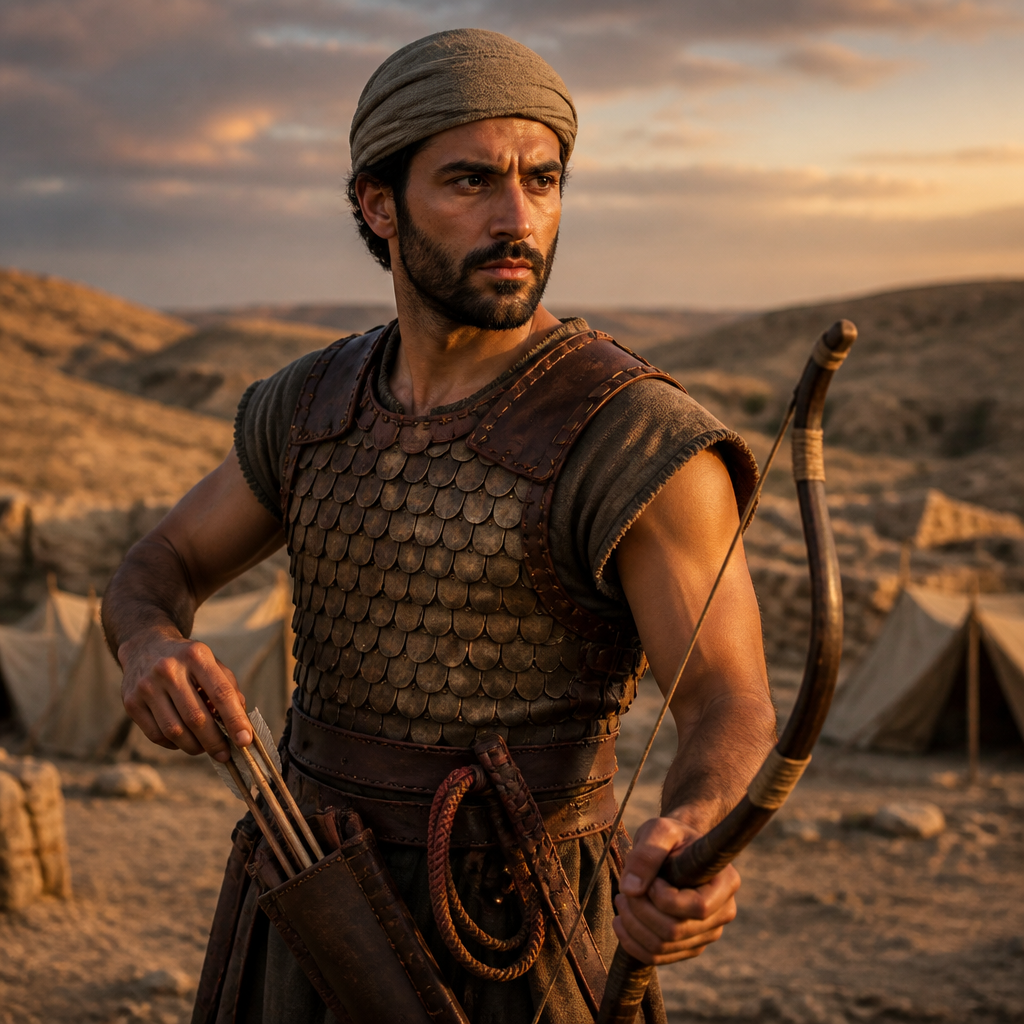
The primary event associated with Shephatiah is his arrival at Ziklag. The Chronicler notes that he was part of a group of 'mighty men' who helped David in his wars. These warriors were uniquely skilled; according to 1 Chronicles 12:2, they were 'armed with bows, and could use both the right hand and the left in hurling stones and shooting arrows out of a bow.'
Shephatiah joined David at a time when David was still an outlaw. By joining David at Ziklag, Shephatiah participated in the strategic build-up of the force that would eventually secure David’s throne in Hebron and later Jerusalem. His commitment was a high-risk political and military move, as it constituted rebellion against the house of Saul.
Relationship to Other Biblical Figures
Shephatiah is grouped with other elite warriors such as Eluzai, Jerimoth, Bealiah, and Shemariah. Together, they formed the core of David’s specialized military unit. While he is not mentioned as a personal advisor, his inclusion in this specific list indicates he was among the 'first responders' to David’s call for aid.
Spiritual Significance
While the text does not record a specific prophetic word or spiritual discourse from Shephatiah, his significance lies in his providential timing. The Chronicler emphasizes that these men came to David 'to turn the kingdom of Saul to him, according to the word of the Lord' (1 Chronicles 12:23). Thus, Shephatiah is viewed as an instrument of divine will, contributing to the fulfillment of the prophecy that the scepter would belong to the house of Judah through David. His story represents the theme of choosing God’s anointed leader over established, yet failing, human institutions.
Spiritual Significance
Shephatiah’s significance is found in his role as a 'helper of the war' during David’s rise to power. As an ambidextrous warrior from Benjamin, he represents the segment of Saul’s own tribe that recognized David as the divinely appointed successor. His inclusion in the sacred record highlights the diverse military support necessary to transition the kingdom from Saul to David.
His presence in the biblical text serves to validate David’s legitimacy. The fact that elite Benjamites like Shephatiah would desert Saul to serve David suggests a widespread recognition of David's favor with God, even before he was officially crowned king over all Israel.
Frequently Asked Questions
What does the name Shephatiah mean?
The name Shephatiah (Shephatyahu) means 'Yahweh has judged' or 'The Lord is Judge'.
What tribe did Shephatiah the Haruphite belong to?
He was a Benjamite, the same tribe as King Saul.
What were the special skills of Shephatiah and his companions?
They were ambidextrous warriors, capable of using both their right and left hands to shoot arrows and sling stones.
Where did Shephatiah join David?
He joined David at Ziklag while David was hiding from King Saul.
How many times is this Shephatiah mentioned in the Bible?
This specific Shephatiah is mentioned once, in 1 Chronicles 12:5.
Connected Figures
Categories
Mentions by Book
- 1 Chronicles1
Others Named Shephatiah the Haruphite
Shephatiah, child of Reuel1 Chronicles 9:8
Shephatiah was a Benjamite of the Post-Exilic period whose lineage was recorded among those resettling Jerusalem after the Babylonian captivity.
Shephatiah, Officer of the Simeonites1 Chronicles 27:16
A tribal officer who served as the leader of the Simeonites during the reign of King David in the Divided Monarchy era.
Shephatiah, Son of David2 Samuel 3:4
Shephatiah was the fifth son of King David, born in Hebron to his wife Abital during the early years of the United Monarchy.
Shephatiah, Ancestor of a Returning ClanEzra 2:4
A family patriarch whose descendants returned to Jerusalem from the Babylonian exile under Zerubbabel and Ezra.
Shephatiah, Son of Jehoshaphat2 Chronicles 21:2
A prince of Judah and son of King Jehoshaphat, Shephatiah was one of several brothers murdered by Jehoram during his consolidation of power.
Shephatiah, Ancestor of AthaiahNehemiah 11:4
A descendant of Judah and Perez whose lineage was recorded among those resettling Jerusalem in the Post-Exilic period.
Shephatiah, Ancestor of Solomon's ServantsEzra 2:57
Shephatiah was the progenitor of a family of 'Solomon’s servants' who returned to Jerusalem from the Babylonian exile during the restoration period.
Shephatiah, Son of MattanJeremiah 38:1
A Judean official who opposed the prophet Jeremiah during the final siege of Jerusalem.