Jonadab, Son of Rechab
Who was Jonadab, Son of Rechab, in the Bible?
A fervent devotee of Yahweh and patriarch of the Rechabites who supported King Jehu’s purge of Baal worship and established a lasting ascetic lifestyle for his descendants.
This is one of 2 people named Jonadab in the Bible. See all 2 →
Jonadab (also rendered as Jehonadab), the son of Rechab, was a significant figure during the Divided Monarchy, primarily known for his zealous commitment to the worship of Yahweh and his strict asceticism. His life intersected with pivotal moments in the history of the Northern Kingdom of Israel and served as a moral archetype for the Southern Kingdom of Judah centuries later. As the founder of the Rechabite community, Jonadab established a lifestyle of nomadic simplicity and abstinence that persisted for generations.
He first appears in the historical narrative of 2 Kings as an ally to King Jehu during the violent transition of power from the Omride dynasty. Later, in the prophetic writings of Jeremiah, Jonadab is cited by God as a model of faithfulness and obedience. His legacy is defined by a refusal to conform to the agricultural and religious syncretism of his day, choosing instead a life of devotion that earned his lineage a divine promise of perpetual service to God.
Background and Family
Jonadab was the son of Rechab, a figure associated with the Kenites, who were traditionally allies of Israel. According to the record in 1 Chronicles, the Rechabites were a branch of the Kenites who had integrated into the life of the Tribe of Judah but maintained a distinct cultural identity. Jonadab emerged as the patriarch who codified this identity during a time of intense spiritual conflict in the Northern Kingdom of Israel.
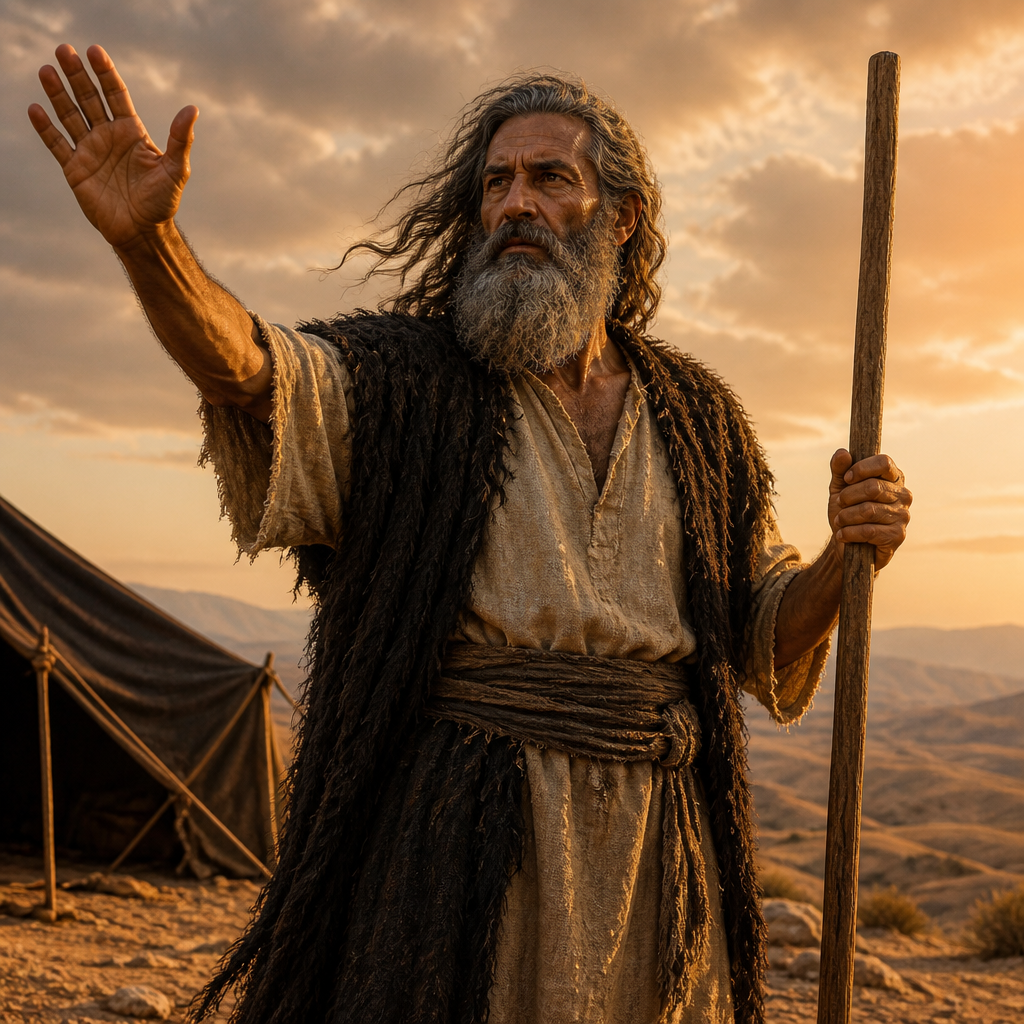
While he is rooted in the social fabric of the Divided Monarchy, Jonadab’s primary contribution to his family was a set of rigorous commands. He forbade his descendants from drinking wine, building houses, sowing seed, or planting vineyards. Instead, he commanded them to live in tents all their days. This lifestyle was not merely a cultural preference but a protest against the sedentary life of the Canaanites, which Jonadab believed was inextricably linked to the worship of Baal and the abandonment of the simple, desert-rooted faith of early Israel.
Major Life Events
Alliance with King Jehu
The most dramatic event in Jonadab’s life occurred around 841 BC during the reign of Jehu. As Jehu traveled to Samaria to eradicate the remaining house of Ahab and the priests of Baal, he encountered Jonadab. The meeting was not accidental; Jonadab was coming to meet the king, signaling his approval of Jehu’s bloody reforms. Jehu asked him, "Is your heart as true to mine as my heart is to yours?" to which Jonadab replied, "It is!" (2 Kings 10:15).
Jehu took Jonadab into his chariot, saying, "Come with me and see my zeal for the Lord." Jonadab accompanied the king into the temple of Baal in Samaria, standing as a witness and supporter as Jehu identified and executed the servants of Baal. His presence provided moral and religious legitimacy to Jehu’s purge, suggesting that the most conservative and devout elements of society supported the destruction of the Phoenician cult.
The Rechabite Legacy
Centuries after his death, Jonadab’s influence remained potent. During the reign of King Jehoiakim in Jerusalem (c. 600 BC), the prophet Jeremiah brought Jonadab’s descendants into a chamber of the Temple and offered them wine. They refused, citing the command of their forefather Jonadab:
"We do not drink wine... for our forefather Jonadab son of Rechab commanded us, 'Neither you nor your descendants are ever to drink wine'" (Jeremiah 35:6).
This event demonstrated that even after nearly 250 years, Jonadab’s authority was more respected by his children than God’s authority was by the people of Judah.
Relationship to Other Biblical Figures
Jonadab’s relationship with King Jehu was one of mutual interest. While Jehu was a man of violence and political ambition, Jonadab represented the puritanical core of Yahwism. Their partnership symbolized the union of political power and religious reform.
In the book of Jeremiah, Jonadab is positioned as a foil to the rebellious residents of Jerusalem. Jeremiah uses Jonadab’s descendants as a living object lesson to shame the Judeans. While Jonadab was a human father whose commands were strictly followed for centuries, the Judeans had consistently ignored the commands of their Heavenly Father.
Spiritual Significance
The spiritual significance of Jonadab lies in his unwavering commitment to holiness and separation from worldly influence. In a period where Israelite culture was blending with pagan practices, Jonadab called for a return to the fundamentals. He recognized that the luxuries of settled life—vineyards, permanent houses, and stored wine—often led to spiritual complacency and idolatry.
God’s response to Jonadab’s faithfulness is unique. In Jeremiah 35:19, a divine decree is issued: "Jonadab son of Rechab will never fail to have a man to stand before Me." This suggests a priestly or quasi-priestly status for his line, promising that the spiritual integrity Jonadab instilled in his family would ensure their perpetual presence in God’s service. Jonadab remains a powerful example of how one individual's conviction can shape the morality and survival of a community for centuries.
Jonadab serves as a paramount example of the 'remnant' theology—those who remain faithful to the covenant despite widespread apostasy. His inclusion in the narrative of Jehu's purge validates the reform as a necessary return to Yahwism, while his mention in Jeremiah highlights the concept of filial obedience as a mirror for divine worship. His lifestyle choices established a precedent for later ascetic movements within Judaism and Christianity, emphasizing that true devotion often requires a physical separation from the prevailing culture.
Theologically, the promise that Jonadab’s line would 'stand before' God forever is a rare honor, usually reserved for the Levites. This underscores that God values the heart's devotion and the transmission of godly values through generations as much as formal cultic appointments. Jonadab's life teaches that the legacy of a righteous man can provide a spiritual refuge for his descendants long after his death.
Frequently Asked Questions
Why did Jonadab forbid his descendants from drinking wine?
Jonadab likely associated wine and vineyards with the sedentary Canaanite lifestyle and the worship of Baal. By forbidding wine, he ensured his descendants remained distinct, sober, and focused on the nomadic traditions of their ancestors who followed Yahweh in the wilderness.
Was Jonadab a king or a prophet?
Jonadab was neither a king nor a prophet in the official sense; he was a tribal patriarch and a leader of the Rechabites. However, he acted as a high-level advisor and religious legitimizer for King Jehu.
What happened when Jeremiah offered the Rechabites wine?
The Rechabites strictly refused to drink the wine, explaining that they were obeying the commands given by Jonadab hundreds of years earlier. This refusal was used by God to highlight the disobedience of the people of Judah.
How did Jonadab help King Jehu?
Jonadab joined Jehu in his chariot and entered the temple of Baal with him. His presence signaled to the people that the religious purists supported Jehu's mission to execute the priests of Baal and destroy the pagan temple.
What was the 'blessing' given to Jonadab's family?
God promised through Jeremiah that Jonadab son of Rechab would never lack a descendant to 'stand before' Him, indicating a perpetual line of faithful servants recognized by God.
Family & Relationships
Parents
 Rechab, Patriarch of the RechabitesFatherJeremiah 35:6Stated
 Jonadab, Son of RechabThis page
Connected Figures
Family
Father · Jeremiah 35:6
Rechab was a Kenite leader whose descendants, the Rechabites, became a symbol of unwavering obedience to God and ancestral tradition throughout the Divided Monarchy.
Divided MonarchyFirst: 2 Kings 10:158 versesPatriarch of the Kenite RechabitesJudah
Categories
Mentions by Book
- 2 Kings1
- Jeremiah7
Scripture References
All 8 indexed verses, in canonical order, from the Berean Standard Bible.
2 Kings · 1
- 2 Kings 10:15Partial
When he left there, he found Jehonadab son of Rechab, who was coming to meet him. Jehu greeted him and asked, “Is your heart as true to mine as my heart is to yours?” “It is!” Jehonadab replied. “If it is,” said Jehu, “give me your hand.” So he gave him his hand, and Jehu helped him into his chariot,
Cited as a key verse; added so References, Key Verses and Mentions by Book share one index.
Jeremiah · 7
- Jeremiah 35:6
“We do not drink wine,” they replied, “for our forefather Jonadab son of Rechab commanded us, ‘Neither you nor your descendants are ever to drink wine.
- Jeremiah 35:8
And we have obeyed the voice of our forefather Jonadab son of Rechab in all he commanded us. So we have not drunk wine all our lives—neither we nor our wives nor our sons and daughters.
- Jeremiah 35:10
But we have lived in tents and have obeyed and done exactly as our forefather Jonadab commanded us.
- Jeremiah 35:14
The words of Jonadab son of Rechab have been carried out. He commanded his sons not to drink wine, and they have not drunk it to this very day because they have obeyed the command of their forefather. But I have spoken to you again and again, and you have not obeyed Me!
- Jeremiah 35:16
Yes, the sons of Jonadab son of Rechab carried out the command their forefather gave them, but these people have not listened to Me.
- Jeremiah 35:18
Then Jeremiah said to the house of the Rechabites: “This is what the LORD of Hosts, the God of Israel, says: ‘Because you have obeyed the command of your forefather Jonadab and have kept all his commandments and have done all that he charged you to do,
- Jeremiah 35:19
this is what the LORD of Hosts, the God of Israel, says: Jonadab son of Rechab will never fail to have a man to stand before Me.’”
Others Named Jonadab
Compare all 2 bearers →Jonadab, Son of Shimeah2 Samuel 13:3
A cousin and advisor to Amnon, Jonadab was a shrewd man whose cunning advice facilitated the tragedy of Tamar and who later accurately predicted the murder of Amnon.