Joel, Son of Azariah
Who was Joel, Son of Azariah, in the Bible?
A Kohathite Levite who participated in the spiritual cleansing and restoration of the temple during the reign of King Hezekiah.
This is one of 14 people named Joel in the Bible. See all 14 →
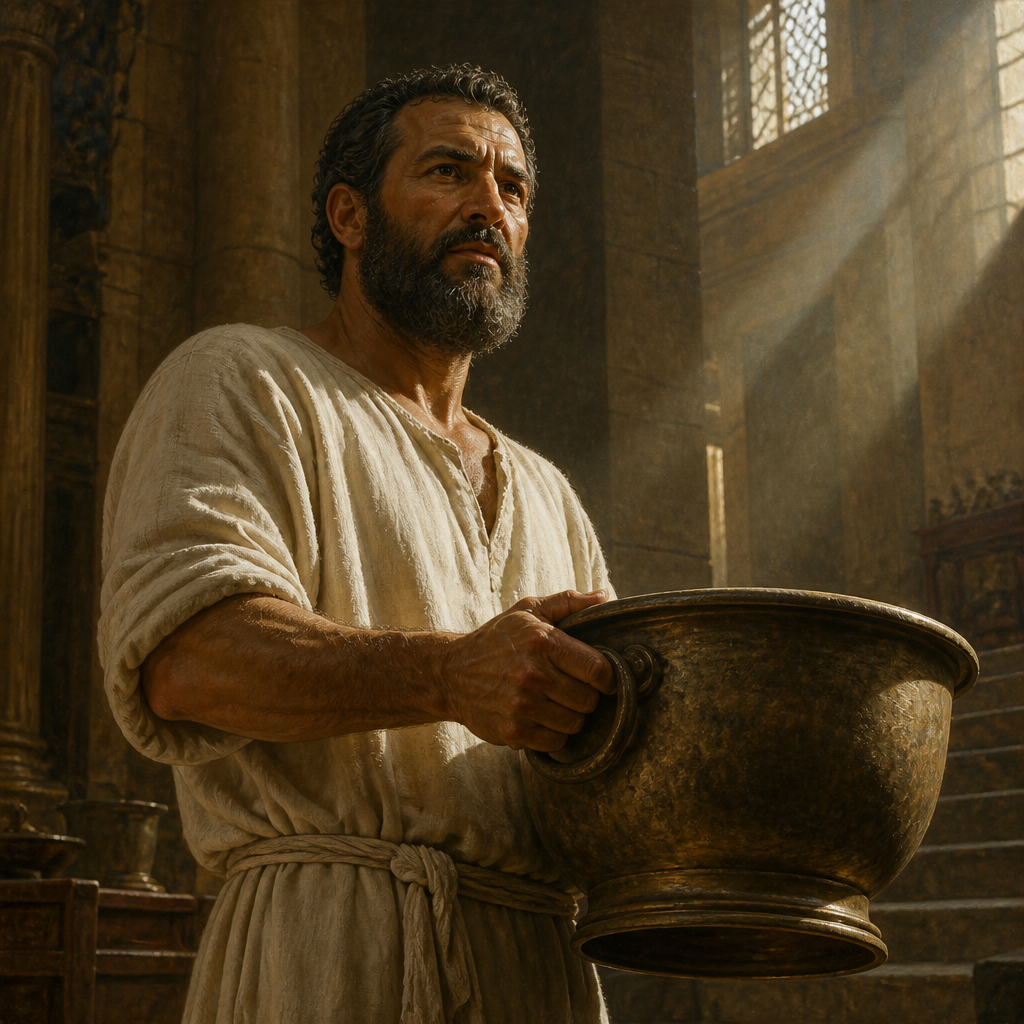
Joel, son of Azariah, was a Levite of the Kohathite clan who lived during the era of the Divided Monarchy in the southern kingdom of Judah. He is specifically documented in the biblical record as one of the religious leaders who responded to the call of King Hezekiah to sanctify the temple in Jerusalem. As a member of the Kohathites, one of the three primary divisions of the tribe of Levi, Joel held a significant hereditary responsibility for the maintenance of the sanctuary and its sacred objects.
His service occurred at a pivotal moment in Judah's history, following the idolatrous reign of King Ahaz, who had closed the doors of the temple. Joel was among the first group of Levites to initiate the massive project of removing ritual impurity from the temple and restoring it to functional worship. While he appears in only one verse, his inclusion in the genealogical and historical record of the Chronicler emphasizes the essential role of specific priestly families in maintaining the covenantal relationship between God and Israel.
Background and Family
Joel, son of Azariah, belonged to the tribe of Levi and specifically to the branch of the Kohathites. The Kohathites were descendants of Kohath, the second son of Levi, and were historically assigned the most sacred tasks concerning the tabernacle and later the temple, including the care of the Ark of the Covenant, the golden lampstand, and the altars (Numbers 3:31). Joel’s lineage indicates that he was a man of significant religious standing within the Judean community during the Divided Monarchy.
His father, Azariah, is named in the text of 2 Chronicles 29:12, distinguishing this Joel from several other Levites and officials bearing the same name in the Old Testament. The record places Joel in Jerusalem at the beginning of King Hezekiah’s reign, around 715 BC. This was a period of intense religious reform following the spiritual decline experienced under Hezekiah’s predecessor, Ahaz.
Major Life Events
Joel’s primary historical contribution is his involvement in the restoration of the Temple of Solomon. According to the record in 2 Chronicles, in the first year of his reign, King Hezekiah opened the doors of the House of the LORD and called upon the priests and Levites to sanctify themselves and the sanctuary. The king declared:
"Listen to me, O Levites! Consecrate yourselves now and consecrate the house of the Lord, the God of your fathers, and remove the filth from the Holy Place." (2 Chronicles 29:5, BSB)
Joel, son of Azariah, was one of the two Kohathites who stepped forward to lead this effort. Along with Mahath son of Amasai and representatives from the Merarite and Gershonite clans, Joel organized the Levites to carry out the physical and ritual purification of the temple. This process involved eight days of consecrating the temple and an additional eight days of clearing out the accumulated debris and pagan elements that had been introduced during previous years of neglect.
Relationship to Other Biblical Figures
Joel worked alongside a collaborative group of Levites representing the three major ancestral lines. His partner among the Kohathites was Mahath, son of Amasai. He also worked in coordination with Kish and Azariah (from the Merarites) and Joah and Eden (from the Gershonites). Ultimately, Joel was under the authority of King Hezekiah, whose zeal for the Law of Moses drove the national revival.
Because of his Kohathite lineage, Joel was part of the hereditary group responsible for the most sacred interior elements of the temple. His presence during the cleansing suggests he was a man of action and organizational capability, helping to lead the larger body of Levites in the logistical task of hauling "uncleanness" out of the sanctuary and into the Kidron Valley.
Spiritual Significance
Joel represents the faithful remnant of the tribe of Levi that remained committed to the service of Yahweh despite the apostasy of the ruling classes. His willingness to "set to work" (2 Chronicles 29:12) immediately upon the king's command illustrates a heart prepared for service. In the context of the Chronicler’s narrative, Joel serves as a model of the restoration of proper order. The specific naming of Joel and his peers validates the legitimacy of the reforms by showing that the ancient, divinely appointed families were once again presiding over the nation’s spiritual life. His life underscores the theme that national revival requires individual leaders to take responsibility for their specific spheres of influence—in Joel's case, the physical and ritual integrity of the House of God.
Theologically, Joel, son of Azariah, serves as an example of the essential role the Levites played in the preservation of the Jewish faith. His participation in the reforms of Hezekiah highlights the biblical principle that spiritual restoration involves both a return to the written Word (the Law) and a physical realignment of worship practices. By sanctifying himself and the temple, Joel assisted in making the atonement of the nation possible, as the subsequent chapters of 2 Chronicles detail the great Passover celebration that followed his cleaning efforts.
His inclusion in the text also highlights the Chronicler’s interest in the continuity of the Levitical priesthood. By recording the names of specific men like Joel, the text asserts that God’s promises to the tribe of Levi remained intact throughout the Divided Monarchy. Joel is a reminder that even in times of national crisis, there were individuals who maintained their ancestral dedication to the sanctuary, ready to serve when the call for revival was issued.
Frequently Asked Questions
Which clan of the Levites did Joel belong to?
Joel was a member of the Kohathites, one of the three major divisions of the tribe of Levi, historically responsible for the most sacred vessels of the sanctuary.
Under which king did Joel serve?
Joel served during the reign of King Hezekiah, specifically participating in the reforms during the first year of Hezekiah’s reign.
What specific task did Joel perform in the Bible?
He helped lead the effort to cleanse and sanctify the temple in Jerusalem after it had been neglected and defiled during the reign of King Ahaz.
Who was Joel's father?
According to 2 Chronicles 29:12, Joel was the son of Azariah.
Is this Joel the same person who wrote the Book of Joel?
No. The biblical data distinguishes this Joel, a Kohathite Levite under King Hezekiah, from the prophet Joel, who was the son of Pethuel.
Family & Relationships
Parents
 Azariah, Father of Joel the LeviteFather2 Chronicles 29:12Stated
 Joel, Son of AzariahThis page
Connected Figures
Family
Father · 2 Chronicles 29:12
A Levite of the Kohathite clan during the Divided Monarchy whose son, Joel, assisted in the sanctification of the Temple under King Hezekiah.
Divided MonarchyFirst: 2 Chronicles 29:121 versesLevite / Patriarch of a Kohathite familyLevi
Categories
Mentions by Book
- 2 Chronicles1
Scripture References
All 1 indexed verse, in canonical order, from the Berean Standard Bible.
2 Chronicles · 1
- 2 Chronicles 29:12
Then the Levites set to work: Mahath son of Amasai and Joel son of Azariah from the Kohathites; Kish son of Abdi and Azariah son of Jehallelel from the Merarites; Joah son of Zimmah and Eden son of Joah from the Gershonites;
Others Named Joel
Compare all 14 bearers →Joel, Chief of the Tribe of Gad1 Chronicles 5:12
A high-ranking tribal leader and chief within the tribe of Gad who resided in the region of Bashan during the era of the Divided Monarchy.
Joel, Brother of Nathan1 Chronicles 11:38
Joel was a member of King David’s elite warriors, known as the Mighty Men, and was the brother of Nathan of Zobah.
Joel, Son of Samuel1 Samuel 8:2
The firstborn son of the prophet Samuel and a Levite judge appointed to serve in Beersheba during the era of the conquest and the judges.
Joel, Levite of the United Monarchy1 Chronicles 15:7
A prominent Gershomite Levite and leader who assisted King David in the solemn relocation of the Ark of the Covenant to Jerusalem.
Joel, Treasurer of the House of the LORD1 Chronicles 23:8
A Gershonite Levite who served as a high-ranking treasurer of the house of the LORD.
Joel, Son of Pedaiah1 Chronicles 27:20
A tribal leader and official over the half-tribe of Manasseh who served during the administrative organization under King David.
Joel, Son of PethuelJoel 1:1
Joel was a prophet of the Divided Monarchy whose message focused on the 'Day of the LORD' and the outpouring of the Holy Spirit.
Joel, Ancestor of Bela1 Chronicles 5:8
A member of the tribe of Reuben and the grandfather of Bela, who settled in the regions of Aroer, Nebo, and Baal-meon.
Joel, Leader of the Tribe of Simeon1 Chronicles 4:35
A prominent Simeonite leader during the Divided Monarchy whose lineage is preserved in the genealogical records of 1 Chronicles.
Joel, Ancestor of Shemaiah1 Chronicles 5:4
A member of the tribe of Reuben who is listed in the genealogies of 1 Chronicles as a primary ancestor of Shemaiah.
Joel, Descendant of NeboEzra 10:43
A Jewish returnee from the Babylonian exile who was listed among those required to divorce foreign wives according to the decree of Ezra.
Joel, Chief of the Tribe of Issachar1 Chronicles 7:3
A tribal chief and leader within the Tribe of Issachar during the Egypt and Wilderness era, noted for his descent from Izrahiah.
Joel, Son of ZichriNehemiah 11:9
A Benjamite official who served as the overseer of Jerusalem's inhabitants during the Post-Exilic reconstruction led by Nehemiah.