Jezaniah
Who was Jezaniah in the Bible?
A military commander in Judah during the Babylonian occupation who initially sought the counsel of the prophet Jeremiah after the fall of Jerusalem.
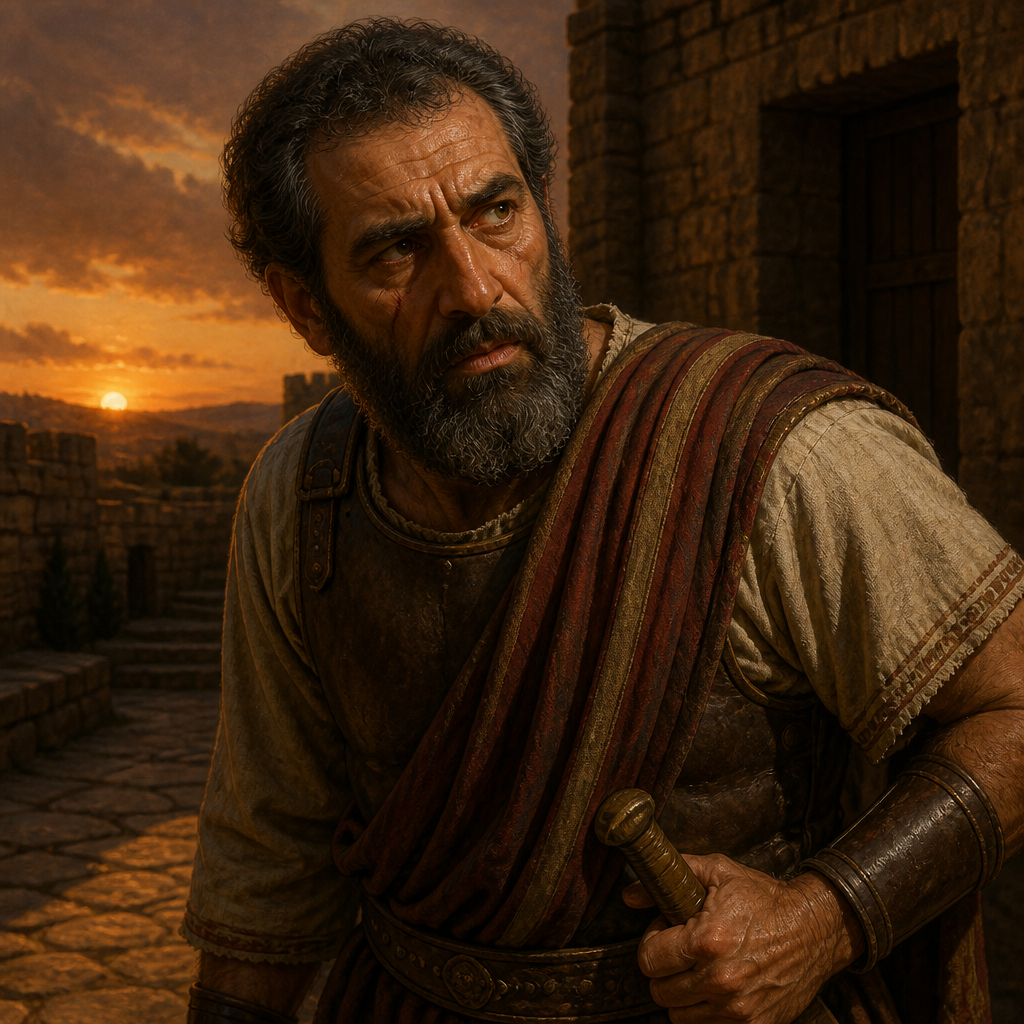
Jezaniah, son of Hoshaiah, was a prominent Judean military official during one of the most tumultuous periods in Hebrew history. Following the destruction of Jerusalem by Nebuchadnezzar II in 586 BC, Jezaniah emerged as one of the 'commanders of the forces' who remained in the land. He was part of the remnant that gathered around Gedaliah, the Babylonian-appointed governor at Mizpah, seeking a semblance of stability in the wake of national collapse.
His role is characterized by the tension between seeking divine guidance and following political expediency. While he is initially presented as a leader seeking to know the will of God through the prophet Jeremiah, his later actions—recorded under the likely variations of his name—reveal the deep-seated mistrust and arrogance that plagued the remaining Judean leadership. His story serves as a brief but vital witness to the final fractures of the Divided Monarchy period.
Background and Family
Jezaniah is identified in the biblical record as the son of Hoshaiah. In the social hierarchy of the late Judean Monarchy, he held the rank of a military commander. His family background is largely obscured, though his father Hoshaiah is mentioned alongside him in the accounts provided by the prophet Jeremiah. Some scholarly debate exists regarding his exact identification in the texts of 2 Kings 25:23 and Jeremiah 40:8, where a figure named 'Jaazaniah son of the Maacathite' appears in identical contexts. However, the specific identification of Jezaniah as the son of Hoshaiah remains the primary focus of the narrative in Jeremiah chapters 42 and 43.
Major Life Events
Following the assassination of Governor Gedaliah by Ishmael son of Nethaniah, the remaining Judean remnant was thrown into a state of panic. Fearing Babylonian reprisal for the murder of the governor, the military leaders, including Johanan son of Kareah and Jezaniah son of Hoshaiah, assumed control of the survivors.
In Jeremiah 42, Jezaniah is part of the delegation that approaches the prophet Jeremiah. They present themselves with outward humility, asking the prophet to pray to the Lord on their behalf. They explicitly vow to follow whatever word the Lord returns to them, whether it be 'good or bad' (Jeremiah 42:6). This moment represents a critical juncture for the remnant of Judah; they stood between staying in the land as God commanded or fleeing to Egypt in search of perceived safety.
After ten days, Jeremiah returned with the word of the Lord: if the people stayed in Judah, God would build them up and protect them from the King of Babylon. However, if they insisted on going to Egypt, they would face sword, famine, and plague. In Jeremiah 43:2, the response of the leaders is recorded. Although the text attributes the speech to 'Azariah son of Hoshaiah' (likely a variation or scribal alternative for Jezaniah) and Johanan, it marks the collective rejection of God’s warning. The leaders accused Jeremiah of lying, claiming that his disciple Baruch had incited him against them.
Relationship to Other Biblical Figures
Jezaniah’s primary associations are with the military elite of the post-collapse era, specifically Johanan son of Kareah. He also shares a direct, albeit confrontational, relationship with the prophet Jeremiah. While he initially showed deference to Jeremiah’s spiritual authority, the relationship soured when the divine word conflicted with the military leadership’s desire for self-preservation in Egypt. He is also linked to the governor Gedaliah, under whose brief administration he first appeared as a supportive commander.
Spiritual Significance
Jezaniah represents the 'arrogant man' described in Jeremiah 43:2. His spiritual significance lies in the warning he provides against performative piety. He sought God’s counsel with the appearance of submission, yet his heart was already committed to a specific course of action. When God’s will contradicted his personal fears and political instincts, he chose to rationalize his disobedience by attacking the integrity of the prophet. His life ends in the biblical record as he leads the remnant into Egypt—the very place of bondage from which Israel was originally delivered—symbolizing a full reversal of the Exodus due to a lack of faith.
Jezaniah serves as a cautionary figure illustrating the spiritual condition of Judah’s leadership at the end of the Divided Monarchy. He demonstrates the tendency to seek God's approval for pre-determined plans rather than seeking God's direction for future actions. His rejection of Jeremiah’s prophecy sealed the fate of the Judean remnant, leading them into the very destruction they sought to avoid in Egypt.
Frequently Asked Questions
Who was Jezaniah's father?
Jezaniah was the son of Hoshaiah.
What rank did Jezaniah hold?
He was a commander of the forces (a military officer) in the land of Judah.
Did Jezaniah obey the prophet Jeremiah?
No. Despite promising to obey whatever God said, he later accused Jeremiah of lying and fled to Egypt against God's command.
Where is Jezaniah mentioned in the Bible?
His primary mentions are found in the book of Jeremiah, specifically chapters 40, 42, and 43, with a parallel mention in 2 Kings 25.
Family & Relationships
Parents
 Hoshaiah, Father of JezaniahFatherJeremiah 42:1Stated
 JezaniahThis page
Connected Figures
Family
Father · Jeremiah 42:1
A father of military and political leaders during the final days of the Kingdom of Judah under the Babylonian occupation.
Categories
Mentions by Book
- Jeremiah3
Scripture References
All 3 indexed verses, in canonical order, from the Berean Standard Bible.
Jeremiah · 3
- Jeremiah 40:8
they came to Gedaliah at Mizpah—Ishmael son of Nethaniah, Johanan and Jonathan the sons of Kareah, Seraiah son of Tanhumeth, the sons of Ephai the Netophathite, and Jezaniah son of the Maacathite—they and their men.
- Jeremiah 42:1
Then all the commanders of the forces, along with Johanan son of Kareah, Jezaniah son of Hoshaiah, and all the people from the least to the greatest, approached
- Jeremiah 43:2
Azariah son of Hoshaiah, Johanan son of Kareah, and all the arrogant men said to Jeremiah, “You are lying! The LORD our God has not sent you to say, ‘You must not go to Egypt to reside there.’